
Planning New Roofing Companies Near Atascadero California?
Creative Roofing takes a roofing job from the first look to the last sweep of the yard, working in Atascadero California and nearby.
Reach out at 805-723-2381 and we will talk through what the roof needs.
The First Step in a Roofing Project
Every roofing job starts with someone climbing up to see what is actually there, since guessing from the ground leads to surprises later. Loose granules, lifted edges, cracked flashing and soft spots all say something about the layers below, and the findings are worth asking to see.
Sun and heat age a roof in ways that rain alone never would, and the sunniest side is usually the oldest-looking side.
Repair, Patch or Replace
Whether to fix or replace comes down to the condition of the layers beneath the surface, and the recommendation should come with the reasons attached. Ask to see the problem areas, either in photographs or from the ladder, since the plan should make sense to the person paying for it.
Rotted or soft sheathing changes the plan and often the schedule, and it is easy to overlook.
Picking a Roof Covering
The common choices are shingle, tile and metal, and each suits some houses better than others, and the style of the neighborhood often plays a part. The shade of a roof affects how hot it runs in July, and that is worth keeping in mind.
The Calendar and the Forecast
Roof work is easiest to schedule in the long dry stretch between rains, and crews watch the forecast closely. Roof surfaces get hot enough in July to change how materials behave, so the day usually begins at sunrise.
Tear-Off and Preparation
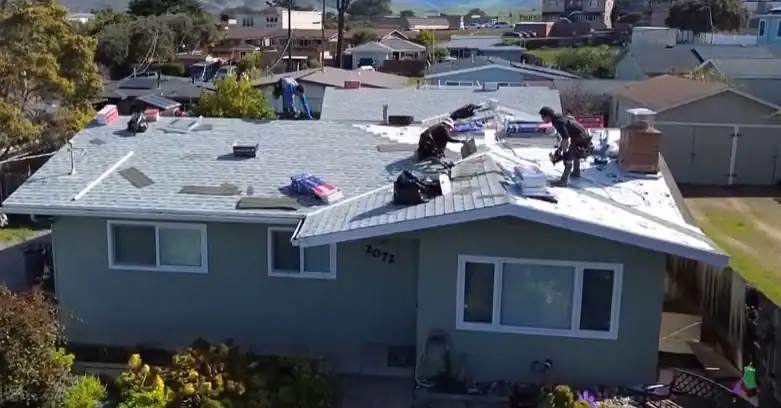
Taking the old roof off is the noisiest and messiest part of the job, and magnets and rakes pick up the nails that fall. Sound wood is the base everything else depends on, and it is easier to fix now than after the roof is finished.
The Hidden Layers
The surface you see is only the outer layer of a roof, and valleys, eaves and penetrations get extra layers. Reaching this stage quickly is a sensible way to protect the interior, and the finished surface is installed over a sound base.
Penetrations and Edges
Flashing is the thin metal that keeps water out where the roof meets something else, and the cost is small next to the roof it protects. The seal around a vent pipe rarely lasts as long as the surface around it, and a new roof should not depend on a seal that is already tired.
Keeping the Attic Cooler
A roof without enough ventilation bakes the attic and everything stored in it, and vents at the eaves let cooler air in. More vents are not always better, because intake and exhaust have to be balanced, and the answer should be part of the proposal.
Finishing the Job
A finished roof still leaves a yard full of scraps, nails and packaging, and that is worth keeping in mind. Photographs of the completed work are worth having for your own records, so keep the paperwork and pictures together.
Local Rules and Paper Trails
Local requirements shape the job before the first shingle is touched, and the process is easier when someone handles it for you. Fire safety rules in some neighborhoods affect which coverings are allowed, so ask how the plan meets the rules for your street. The best paperwork leaves little room for misunderstanding, and it is worth reading it slowly.
Looking After Your Property During the Work
The ground around a house takes a beating during a roof project, and it is reasonable to ask how this will be done. The area under the eaves is the one to avoid, and a little planning prevents most accidents. Hammering on the deck above can rattle a ceiling and drop dust into the rooms below, and a sheet over stored boxes keeps the grit off.
Disruption and How to Manage It
Most residential projects are finished within days, not weeks, and the crew should give you a realistic window. Neighbors appreciate a heads-up before the noise begins, so a friendly note goes a long way. Remote workers may want a quiet spot elsewhere for a day or two, and a plan for the loud days makes them easier.
Questions That Reveal the Difference
Ask how the crew protects the house when rain is in the forecast, and it pays to think it through. A proposal that only says shingles or tile is not specific enough, and it should be written on the proposal. Talk through how changes to the plan will be handled and agreed, and it is better to know in advance.
Looking After a New Roof
A roof that is never looked at tends to fail when it is least convenient, and it is easy to overlook. Keep the gutters clear of leaves and needles, especially at the end of the dry season, and it also reduces fire risk in dry months. Waiting on a small problem usually makes it more expensive, and a photograph helps explain what you saw.
Spring, Summer or Fall
Booking early in the dry season leaves time to compare more than one proposal, and a calm decision is nearly always a better one. Early fall is popular because the weather is still dry and the heat has eased, and a good roofer will explain the trade-offs.
What the Crew Sees Inside the House
The attic is the roof as seen from below, and it often gives the clearest picture of how the roof has been performing, and the findings can change the scope.
Talk to Us About Your Roof
Homeowners comparing New Roofing Companies in Atascadero California can simply pick up the phone, with 805-723-2381 ready whenever you are. Whether the job is a small section or a whole house, the questions are much the same, and that is worth keeping in mind. Putting off a roof question rarely makes it easier to answer, and it pays to think it through.
Verified

Verified
Verified
Verified






















