
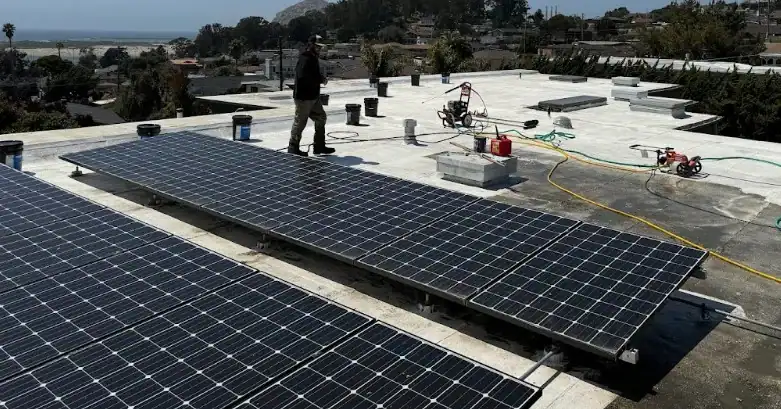
Planning Commercial Roofers Near Me Serving Grover Beach California?
Creative Roofing works on the roofs of shops, offices, warehouses and apartment buildings, from Grover Beach California to the neighboring communities.
Dial 805-723-2381 to talk through a commercial roof question.
How Building Roofs Differ
Low slopes make a commercial roof a different problem from a house roof, and that is worth keeping in mind. Flat roofs rely on continuous membranes with welded or glued seams, and a small gap can become a large leak.
Tenants and staff notice a drip long before an owner sees the cause, and a little care goes a long way.
The Membranes Used on Flat Roofs
Many newer commercial roofs use a single-ply membrane over insulation, and each family has its own seam method. Layered bitumen roofs remain common on buildings of every age, so they are still specified today. Standing seam metal panels cover warehouses, schools and retail buildings, and an honest contractor will explain the limits.
How Water Leaves a Building Roof
Ponding water speeds up wear and adds weight the structure has to carry, and drains need to be clear before the rainy season begins. Sun-dried debris sits on a roof all through the dry season, and a clogged drain can load a roof beyond its design.
Air Conditioners, Vents and Curbs
Mechanical equipment on the roof creates dozens of places where the membrane has to be cut and sealed, and sealants alone are rarely a lasting fix. A roof that has regular service visits needs protection along the paths, and it is easy to overlook.
Heat Over a Working Building
Sun and heat are the steady stresses on a commercial roof in this part of California, and that is worth keeping in mind. A cooler roof surface lowers the strain on air conditioning in hot months, and the details of the benefit depend on the building.
Looking After a Roof Between Repairs
Roof maintenance is a habit more than a project, and a written report builds a useful history. Photographs from each visit help track changes over time, and most items take only a short time.
Deciding What to Do With an Aging Roof
The right answer depends on how much of the system is still dry and sound, and saving a good roof is cheaper than replacing it. Once water has spread through the layers, replacement is the honest answer, and surprises are the expensive part.
Roofing Without Disrupting Operations
Many commercial roofs are replaced in sections so that the building is never left open, and communication with tenants is part of the job. Access to the roof should be controlled while the work is in progress, so ask how the site will be protected.
What Should Be in Writing
Look for details about seams, terminations and penetration flashing, and the cheapest-looking option may leave things out. The paperwork at the end of a job is as important as the work itself, and it is easy to overlook.
Leak Detection on a Flat Roof
Tracing a leak on a low slope takes patience, because water wanders, and guessing leads to repairs in the wrong place. Penetrations and terminations are the usual suspects, so the inspection begins at the details. Moisture scans and core samples can show how far water has spread inside the roof, and a little care goes a long way.
Wind, Fasteners and Roof Edges
A roof that is poorly attached shows the problem at its edges, and repairs there should not wait. Loose trim lets wind get under the membrane and peel it back, so it deserves a look after any windy spell.
Where the Roof Meets the Building
Parapets are the short walls that rise around the edge of many commercial roofs, and that is worth keeping in mind. Stucco, masonry and metal walls each need a different kind of termination, so it helps to look at the wall as well as the roof.
Coatings Explained
A coating can seal small cracks, reflect sunlight and slow the aging of the surface, and the preparation matters as much as the product. Coating over a wet roof is a common and costly mistake, so be wary of anyone who promises it fixes everything.
Big Buildings, Big Roofs
Warehouses and distribution buildings often have very large, uninterrupted roofs, so coordination with the building operator is essential. Multi-tenant buildings call for clear communication with every occupant, and the owner usually coordinates the work. Roofs over housing need extra care to keep people safe and informed, and noisy work is timed with consideration.
Planning a Roof Budget Without Surprises
A commercial roof is a major capital item that is best planned years ahead, so the information from maintenance visits feeds the budget. Quality materials and careful installation tend to pay back over time, and the details are worth a closer look.
Insulation and Cover Boards
Foam or fiberboard panels are laid over the deck and covered by the membrane, and it is easy to overlook. Extra layers under the membrane help it resist wear from equipment and walking, and that is worth keeping in mind. Tapered insulation can create slope on a roof that is otherwise dead flat, and it pays to think it through.
A Seasonal Checklist for Managers
Written notes from each seasonal visit build a record that helps with budgeting and with conversations about replacement, and a dry building is the reward.
Ready to Look at the Roof
Managers researching Commercial Roofers Near Me in Grover Beach California are welcome to call and ask questions, so use 805-723-2381 to set up the next step. There is no pressure in asking questions about a roof, and the first step is a simple phone call. People who manage property tend to value a straight answer about the roof above all, so call when you have a moment. Tenants, lenders and insurers all take an interest in the state of a roof, and that is worth keeping in mind.
Verified

Verified
Verified
Verified






















