
Considering Clay Tile Roofer Services Serving Arroyo Grande California?
Creative Roofing keeps barrel, flat and interlocking roofs weathertight from the deck up, across Arroyo Grande California and nearby.
Ring 805-723-2381 and we will explain what is involved.
What Makes a Roof Out of Fired Clay or Molded Concrete Different
A roof of this kind is a layered system in which each piece overlaps the next and the structure beneath does the waterproofing, and the system works only when every piece is in place. Each type comes in profiles from rounded barrels to flat slabs and interlocking shapes, and the style often follows the architecture of the house.
Structure First, Style Second
A concrete or clay roof weighs several times more than a shingle roof, so the framing has to be up to the load, and a little care goes a long way. Even a roof originally built for heavy units can lose strength over time if water has damaged the wood, and a casual answer should give you pause.
The Hidden Layer That Does the Work
Many leaks on roofs of this kind begin with a failed underlayment, not with the pieces on top, and it is easy to overlook. Modern synthetic and self-adhering underlayments last longer under high temperatures, and that is worth keeping in mind.
Dry Climate, Durable Roof
Air circulating under the curved shapes helps keep the house cooler in summer, and the color stays true for decades. Concrete may chalk or fade after long exposure, and a clean surface may need a sealer or fresh paint, so ask before assuming the roof is failing.
What Goes Wrong on the Surface
A piece cracks when someone steps on the wrong spot, and many are broken by workers on the roof for other reasons, and the damage may not show from the ground. Anyone who walks a roof of this kind needs to know where to step, because the wrong spot breaks the piece, and a good roofer will always carry a supply.
Where Pieces Meet Walls and Each Other
Every junction on the roof is a place where craft decides the outcome, and that is worth keeping in mind. Dry-set ridge systems replace mortar with clips and are easier to maintain, and the repair is far less costly than water damage.
How Units Are Secured
Nails, clips and foam adhesive are the common ways to secure units to the roof, and local rules in windy areas may require specific fastening. A tight installation with proper closures resists embers better than a loose one, so ask how gaps will be kept closed.
Restoring a Roof Rather Than Starting Over
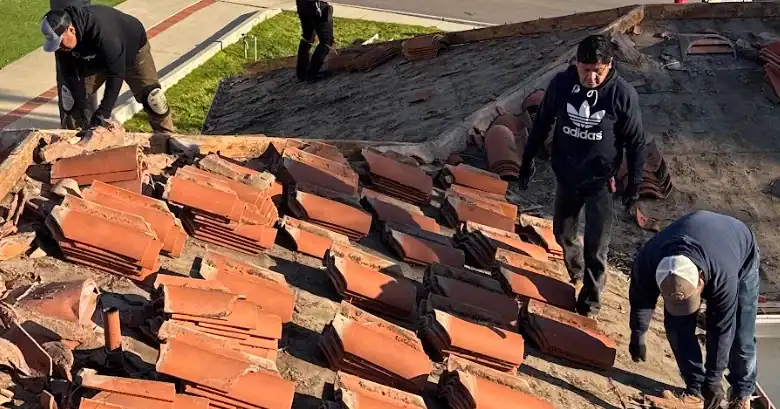
A re-lay means lifting the units, replacing the underlayment and flashing, and setting the pieces back in place, and a careful inspection answers both questions. Spalling concrete, crumbling clay and widespread cracks are signs that the surface is at its end, and the new material can be a different type.
How Units Are Bedded and Secured
Older roofs of this kind used mortar to bed the ridge and hip pieces and to seal the edges, and that mortar eventually cracks and crumbles, so ask how the pieces will be held in place. The openings along the bottom edge of a profiled roof need a closure strip, or they become a doorway for pests and debris, and a good roofer checks them without being asked.
Looking After the Appearance
Cleaning should be done carefully by someone who knows the material, since walking on the roof is a risk to the units themselves, and the result can be striking. Cleaning is not a substitute for repairs, but it often reveals cracked pieces that were hidden by grime, so combine the two visits.
Felt, Synthetic and Self-Adhering Options
Basic and premium underlayment differ little in cost when set against the cost of the roof, and why. Self-adhering membrane is often used in valleys, around penetrations and along the eaves, where leaks are most likely to begin, and it adds only modestly to the cost.
Planning Equipment Around the Units
Mounting an array on a roof of this type means lifting or cutting units around every bracket and sealing the opening beneath, and the answer should be written down. Telling every visitor about the fragility of the surface prevents a surprising amount of damage, and a short sign near the hatch helps. Valleys and low points on a roof of this kind carry the heaviest flow in a downpour, and the units along their edges are cut to fit and sealed with care, so make valleys the first stop on any check.
Two Materials, Two Personalities
Cast from cement and sand, concrete units take their color from pigment in the mix or from a coating applied to the surface, so ask to see samples of both. Barrel tiles are laid in alternating channels and caps, while interlocking units are single pieces that lock together along their edges, and a good supplier will lend a few.
How to Weigh Two Bids
A thorough proposal names the material, the underlayment, the flashing and the method of attachment, and the details are what you are really buying. Ask how the structure will be checked and what happens if damage is found, and keep notes to compare later.
Stages of a Careful Re-Lay
Work in stages keeps the house covered at the end of every day, so that a sudden rain does not find an open roof, and the whole process takes patience.
Roofs of Fired Clay and Concrete in Wind and Fire Country
Closure strips at the eaves and the ridge keep embers and animals out of the space beneath the units, and a tidy roof is a safer roof.
Records, Photographs and Spare Pieces
Passing these records to the next owner of the house adds real value and saves them a good deal of guesswork, and it pays to think it through.
Tell Us What You Are Seeing
Anyone sorting out Clay Tile Roofer Services in Arroyo Grande California is one call away from a straight answer, and the number is 805-723-2381. Whether the roof is leaking now or you are planning ahead, an early conversation keeps your options open, and a little care goes a long way.
Verified

Verified
Verified
Verified
Verified






















