
Searching for Residential Roof Contractors Near Me Serving Arroyo Grande California?
Creative Roofing covers each step of putting a new roof on a house, for homes in Arroyo Grande California and the towns around it.
Call 805-723-2381 to start a conversation about the roof over your head.
Starting Out Right
Nothing gets decided until someone has walked the roof, and that is worth keeping in mind. The roofer checks the surface, the flashing, the vents and the gutter line, then the attic if it can be reached, and the findings are worth asking to see.
Long dry summers and strong sun leave their mark on nearly every roof in California, and the sunniest side is usually the oldest-looking side.
Repair, Patch or Replace
Some roofs need a patch, some need a section redone, and some have reached the end of the road, and an honest roofer will say which one applies. Ask to see the problem areas, either in photographs or from the ladder, so do not feel awkward about asking.
Rotted or soft sheathing changes the plan and often the schedule, and it is easy to overlook.
Shingle, Tile or Metal
Three families of material cover most residential roofs in this region, and the style of the neighborhood often plays a part. Lighter colors reflect more of the summer sun, while darker ones soak it up, so hold a sample against the house in daylight.
Scheduling Around the Weather
For most of the year the weather here lets a roof go on with few interruptions, and a careful crew never leaves an opening to chance. On very hot afternoons shingles soften and workers slow down, and finishing early keeps people and materials in better shape.
Removing the Old Roof
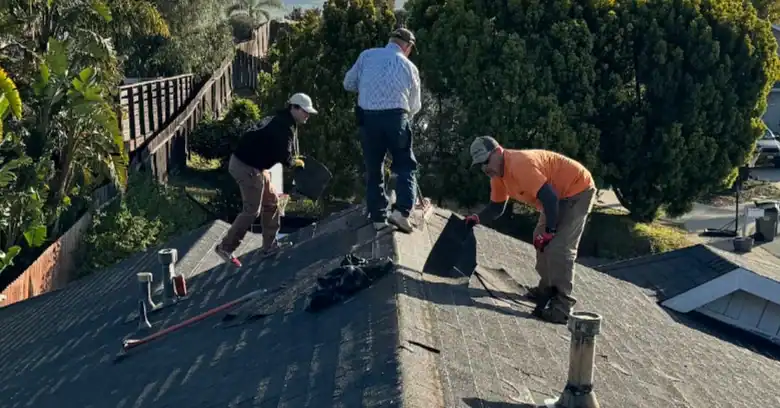
Removal of the old material is where the project gets loud, so landscaping and windows are covered before the first piece comes up. Once the deck is bare, any damaged boards are replaced, and it is easier to fix now than after the roof is finished.
Underlayment and Drying In
Beneath every roof is a membrane that catches whatever the surface lets through, and metal edging is set at the eaves and rakes before the covering. Once the underlayment is down, the house is considered dried in, and the visible covering goes on from there.
Flashing and the Fiddly Parts
Chimneys, skylights, vent pipes and walls all need flashing worked into the roof, and reusing old flashing under a new roof often comes back to bite. Vent boots and pipe collars are rubber or lead pieces that wear out before the roof does, and a new roof should not depend on a seal that is already tired.
Keeping the Attic Cooler
A roof without enough ventilation bakes the attic and everything stored in it, and the details are worth a closer look. A ventilation plan is worth a conversation before the job starts, and it is easy to overlook.
Leaving the Property Clean
When the last piece is installed, the cleanup begins, and that is part of the work, not an extra. Photographs of the completed work are worth having for your own records, so keep the paperwork and pictures together.
The Paperwork Side of a Roof
Replacing a roof usually involves the local building department in some way, and a little care goes a long way. Where fire risk is high, the roof covering and the vents face tighter standards, and a roofer working in the area should already know them. A clear proposal lists what will be removed, what will be installed and what happens if the deck needs work, so compare any two side by side.
Keeping the Property Safe
The ground around a house takes a beating during a roof project, and it is reasonable to ask how this will be done. Children and animals should stay clear of the yard while the work is underway, and it pays to think it through. Hammering on the deck above can rattle a ceiling and drop dust into the rooms below, so it is wise to take down fragile pictures first.
Noise, Neighbors and Daily Life
A simple roof may go quickly while a complicated one takes longer, and the details are worth a closer look. A quick word with the people next door can head off complaints, so a friendly note goes a long way. The loudest stretch is the tear-off, and it passes quickly, and a plan for the loud days makes them easier.
What to Ask Every Roofer
Ask how the crew protects the house when rain is in the forecast, and anything left vague deserves a follow-up. Knowing exactly what is going on the house removes a common source of disputes, and a little care goes a long way. A change in scope should be written down and approved before the work continues, and it is better to know in advance.
Small Habits That Extend Roof Life
Even a new roof benefits from an occasional look from the ground, so put it on the calendar like any other chore. Overhanging trees drop material that collects in corners and valleys, and it protects the investment you just made. Early attention to a leak is almost always cheaper than late attention, and the earlier the better.
When to Schedule the Work
Booking early in the dry season leaves time to compare more than one proposal, and calling in spring avoids the rush. Late summer is hot but dependable, and crews are usually busy, and the covering you choose affects the timing as well.
Checking the Space Beneath the Deck
Insulation in the attic that is compressed, wet or missing should be noted, since a new roof is a good time to fix the whole assembly, and bring a flashlight if you can.
Talk to Us About Your Roof
Questions about Residential Roof Contractors Near Me in Arroyo Grande California begin with a short phone call, and the number is 805-723-2381. Large or small, a roofing project goes best when the plan is clear before the work starts, and an early conversation costs little. A short conversation can turn a vague worry into a clear plan, and the next step becomes obvious.
Verified

Verified
Verified
Verified
Verified






















