
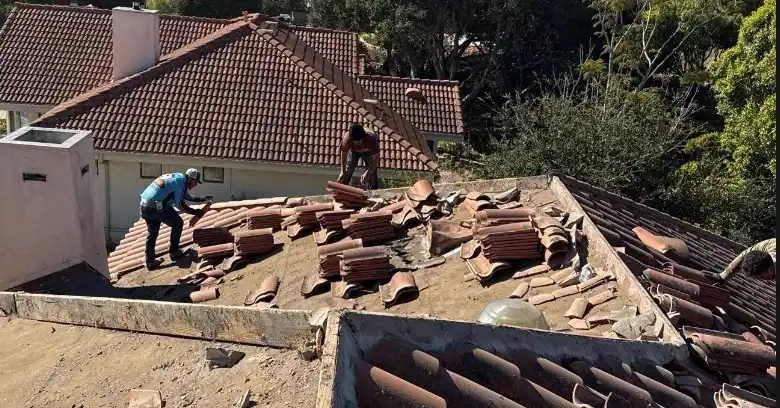
Thinking About Tile Roofer Contractors in Arroyo Grande California?
Creative Roofing knows how to walk a fragile surface, find the broken piece and replace it cleanly, serving homeowners in Arroyo Grande California and beyond.
Reach us at 805-723-2381 to talk through what a tile roof needs.
Clay and Concrete Units in Plain Terms
Fired clay and molded concrete are the two materials used for the heavy, durable coverings found across the region, and the overlap lets water run off quickly. Both materials resist fire, which has made them popular where wildfire is a concern, and it pays to think it through.
Structure First, Style Second
The framing is the foundation of any heavy roof, and an engineer may be involved in a conversion. Adding weight without adding support invites cracks, sagging and even failure, and the details are worth a closer look.
Felt, Membranes and Battens
Water gets under the pieces during wind-driven rain, and the underlayment carries it down and out, and it is easy to overlook. Modern synthetic and self-adhering underlayments last longer under high temperatures, and that is worth keeping in mind.
How Heat Behaves Under the Pieces
Air circulating under the curved shapes helps keep the house cooler in summer, and that is why roofs of this kind are so common in warm regions. Moss and lichen are less of a problem in dry summers, though shaded areas may collect some, and surface cleaning is far cheaper than replacement.
Why Pieces Break
Falling branches and windblown debris can also crack pieces in a storm, so a close inspection from the roof is the only reliable method. A short inspection after any work on the roof catches damage early, and a good roofer will always carry a supply.
The Detail Work on a Heavy Roof
Every junction on the roof is a place where craft decides the outcome, and sealant alone is never a lasting answer. Repointing or replacing the ridge bedding is a routine part of keeping the roof in good shape, and a clean ridge line is a sign of good care.
Holding Heavy Pieces in Place
Nails, clips and foam adhesive are the common ways to secure units to the roof, and local rules in windy areas may require specific fastening. Embers do not ignite the pieces, though they can still collect in gaps and under the edges, so ask how gaps will be kept closed.
Restoring a Roof Rather Than Starting Over
A re-lay means lifting the units, replacing the underlayment and flashing, and setting the pieces back in place, so ask for an assessment of the underlayment. Replacing the whole roof is the right call when the pieces themselves are failing, the framing is damaged or the style no longer suits the house, and a good roofer will lay them out plainly.
Holding the Pieces Together
Cement bedding has been the traditional method for capping a ridge, but it is rigid and breaks as the roof flexes with temperature, so ask how the pieces will be held in place. A missing eave closure is easy to spot from the ground as a dark gap along the lower edge of the roof, and a good roofer checks them without being asked.
Moss, Stains and Keeping the Surface Clean
A gentle low-pressure wash can restore the appearance of a roof, but harsh pressure damages the surface and loosens the pieces, and the details are worth a closer look. Cleaning is not a substitute for repairs, but it often reveals cracked pieces that were hidden by grime, and it is easy to overlook.
Felt, Synthetic and Self-Adhering Options
High-temperature rated products suit the hot conditions found beneath dark units on a sunny slope, and the choice should be in writing. A sticky rubberized sheet seals around fasteners and clings to the deck, providing waterproofing even if the surface layer is breached, and the extra layer is inexpensive protection.
Penetrations Through Fragile Surfaces
Rooftop solar arrays and skylights need openings or mounting points cut through a roof of individual pieces, and each one has to be flashed with care, and ask who is responsible for the seals. Telling every visitor about the fragility of the surface prevents a surprising amount of damage, so make it a habit to ask about the roof. Valleys and low points on a roof of this kind carry the heaviest flow in a downpour, and the units along their edges are cut to fit and sealed with care, and the dry season is the time to do it.
Picking the Right Unit for the House
Natural clay generally keeps its color for a very long time, while a coated concrete surface can fade or chalk and may need refreshing, so ask to see samples of both. Barrel tiles are laid in alternating channels and caps, while interlocking units are single pieces that lock together along their edges, and it pays to think it through.
Questions Worth Asking
A thorough proposal names the material, the underlayment, the flashing and the method of attachment, and the details are what you are really buying. Find out whether the crew has experience on heavy roofs and can show examples of finished work, so do not hesitate to ask.
What Happens on Site
Work in stages keeps the house covered at the end of every day, so that a sudden rain does not find an open roof, and it is easy to overlook.
Roofs of Fired Clay and Concrete in Wind and Fire Country
Clearing leaves and needles from valleys, gutters and the back of chimneys removes fuel that could ignite from a flying ember, and that is worth keeping in mind.
Records, Photographs and Spare Pieces
A note of the underlayment type, the flashing metal and the fastening method helps any roofer who works on the roof later, and a clear record makes repairs simpler.
Start the Conversation
Homeowners weighing Tile Roofer Contractors in Arroyo Grande California can begin by describing the house and the roof they have, and the number is 805-723-2381. Planning ahead usually leads to better choices than reacting to an emergency, and we are glad to help you sort it out.
Verified

Verified
Verified
Verified
Verified






















