
Weighing Residential Roof Services for a Home in Atascadero California?
Creative Roofing takes a roofing job from the first look to the last sweep of the yard, across Atascadero California and the neighboring communities.
Call 805-723-2381 and tell us what has you thinking about the roof.
Starting Out Right
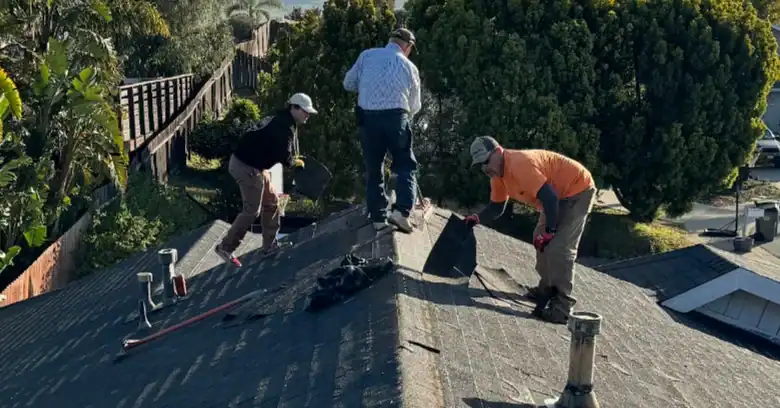
Nothing gets decided until someone has walked the roof, because the rest of the plan rests on the findings from that look. The roofer checks the surface, the flashing, the vents and the gutter line, then the attic if it can be reached, so the visit usually takes longer than people expect.
Long dry summers and strong sun leave their mark on nearly every roof in California, so the wear is rarely even from one side to the next.
Repair, Patch or Replace
Whether to fix or replace comes down to the condition of the layers beneath the surface, and the reasons should be easy to follow. Ask to see the problem areas, either in photographs or from the ladder, and a good roofer expects the question.
Rotted or soft sheathing changes the plan and often the schedule, and agreeing on the approach in advance beats debating it with the roof open.
Shingle, Tile or Metal
Three families of material cover most residential roofs in this region, and the style of the neighborhood often plays a part. Sun exposure makes color a practical question as well as a visual one, and it pays to look at them at different times of day.
Scheduling Around the Weather
Roof work is easiest to schedule in the long dry stretch between rains, and a careful crew never leaves an opening to chance. Crews often start early in summer to get ahead of the hottest hours, and finishing early keeps people and materials in better shape.
Tear-Off and Preparation
Old roofing comes off in layers, down to the bare decking, and magnets and rakes pick up the nails that fall. Repairs to the deck happen now, before anything new is installed, and skipping the step shortens the life of an otherwise good roof.
The Hidden Layers
The surface you see is only the outer layer of a roof, and chimneys get particular care. Drying in gives the crew a margin against surprise weather, and rows are laid from the eave upward, each lapping the last.
Penetrations and Edges
Water finds the joints first, so flashing matters, since worn metal under new material becomes the weak link. Vent boots and pipe collars are rubber or lead pieces that wear out before the roof does, so replacing them along with the roof removes a predictable problem.
Air Under the Roof
Heat collects in the space beneath the roof deck unless it has somewhere to go, and vents at the eaves let cooler air in. Adding vents at random may do little more than cut holes in the roof, and a roofer should be able to describe it simply.
Wrapping Up
A finished roof still leaves a yard full of scraps, nails and packaging, and that is part of the work, not an extra. A walk around the finished roof with the roofer is a reasonable thing to ask for, and it only takes a few minutes.
What the City Wants to See
Replacing a roof usually involves the local building department in some way, and a little care goes a long way. Wildfire concerns have changed what many local codes ask of a roof, and a roofer working in the area should already know them. The best paperwork leaves little room for misunderstanding, so compare any two side by side.
Looking After Your Property During the Work
A roofing job puts a lot of weight, noise and debris around a house, and a careful crew sets them before the work begins. Pets, children and cars are best kept away from the work area, and it pays to think it through. Attic contents are best covered or moved before the work starts, and covering belongings is a sensible precaution.
What the Household Should Expect
A simple roof may go quickly while a complicated one takes longer, and the crew should give you a realistic window. Dumpsters and trucks may take up space on the road, and the whole thing is over sooner than it seems. Working from home during a roof job is possible, though not always pleasant, and the noise settles once the old roof is gone.
What to Ask Every Roofer
Find out who will be on the roof and who will be in charge of the job, since confident answers come easily to people who do this daily. Knowing exactly what is going on the house removes a common source of disputes, and a little care goes a long way. Talk through how changes to the plan will be handled and agreed, and keep the discussion friendly but specific.
Maintenance After the Job
A roof that is never looked at tends to fail when it is least convenient, and it is easy to overlook. Trim branches that touch or hang over the roof, so it is worth doing before summer ends. Waiting on a small problem usually makes it more expensive, and it pays to think it through.
Is There a Best Time for a New Roof
Waiting for the first storm to find the weak spot means hiring in a hurry, so a few weeks of lead time is common. Early fall is popular because the weather is still dry and the heat has eased, and the best season is often the one that fits your calendar.
Attic Findings That Change the Plan
Insulation in the attic that is compressed, wet or missing should be noted, since a new roof is a good time to fix the whole assembly, and attic problems are cheaper to deal with during a re-roof.
Getting Started in Atascadero California
Sorting out Residential Roof Services in Atascadero California is easier with someone who can look at the house, so use 805-723-2381 to talk through the roof and the next step. The size of the project changes the schedule but not the principle, and an early conversation costs little. A short conversation can turn a vague worry into a clear plan, and it pays to think it through.
Verified

Verified
Verified
Verified






















