
Considering Clay Tile Roofing in Central Coast California?
Creative Roofing keeps barrel, flat and interlocking roofs weathertight from the deck up, throughout Central Coast California and the neighboring communities.
Reach us at 805-723-2381 and describe the roof and what you are seeing.
Clay and Concrete Units in Plain Terms
Clay and concrete units are individual pieces hung on a roof, overlapping like fish scales to shed water, and that is worth keeping in mind. Clay is formed and fired in a kiln, which gives it a rich natural color that does not fade, and the weight differs between materials.
Structure First, Style Second
A concrete or clay roof weighs several times more than a shingle roof, so the framing has to be up to the load, and it should happen before materials are ordered. Even a roof originally built for heavy units can lose strength over time if water has damaged the wood, and the details are worth a closer look.
Why Leaks Start Below the Surface
The membrane is out of sight, which is why it is easy to forget, and it ages in the heat trapped under the pieces. Sun and heat trapped under the units bake the underlayment for years, until it dries, cracks and fails, so ask what product will go under the units.
Sun, Heat and Dry Summers
The pieces rarely wear out from sun alone, which is why a well-built roof can last so long, and it pays to think it through. Concrete may chalk or fade after long exposure, and a clean surface may need a sealer or fresh paint, and a roofer can tell the difference.
Cracks, Slips and Broken Pieces
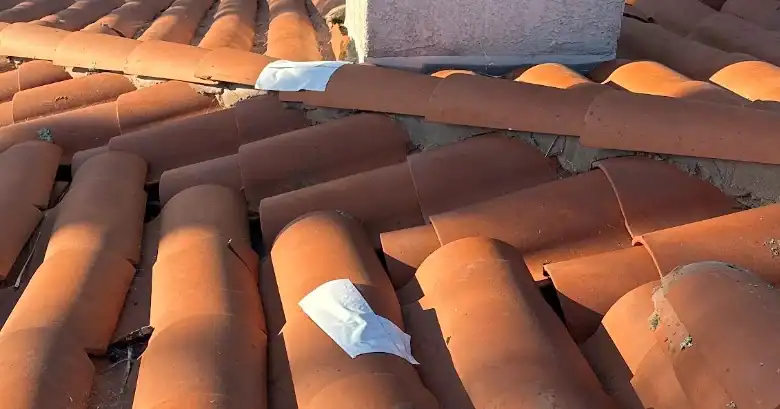
Broken pieces are the most common problem on a roof of this kind, and they usually come from foot traffic, and the details are worth a closer look. Asking other trades to avoid walking on the roof prevents a lot of broken pieces, and it is easy to overlook.
Edges and Intersections
Flashing along walls, chimneys and skylights has to be formed and shaped by hand around each piece, and sealant alone is never a lasting answer. Repointing or replacing the ridge bedding is a routine part of keeping the roof in good shape, and a clean ridge line is a sign of good care.
Wildfire Season and Fire Resistance
Some systems use a mechanical clip at every piece, while others rely on adhesive along the edges, so ask how the pieces will be held down. Embers do not ignite the pieces, though they can still collect in gaps and under the edges, and local rules may set requirements for roof assemblies.
Repair, Re-Lay or Replace
The decision depends on how many pieces are cracked and how the underlayment is holding up, and the savings from a re-lay can be considerable. A full replacement is a bigger project, but it resets the clock on the entire roof, and the structure should be reviewed first.
Ridge Bedding and Edge Details
Cement bedding has been the traditional method for capping a ridge, but it is rigid and breaks as the roof flexes with temperature, so ask how the pieces will be held in place. The openings along the bottom edge of a profiled roof need a closure strip, or they become a doorway for pests and debris, and a tidy edge looks better as well.
Dirt, Lichen and Cosmetic Wear
A gentle low-pressure wash can restore the appearance of a roof, but harsh pressure damages the surface and loosens the pieces, so consider it before deciding to replace. A professional cleaner will explain the method and protect the plants and walls below, and the roof will look and perform better.
Underlayment Choices and Upgrades
The underlayment is the part of a roof of this kind that owners cannot see and roofers can easily skimp on, so it deserves specific attention in a proposal, and the choice should be in writing. Battens that lift the units off the underlayment allow air to circulate and water to drain freely beneath the pieces, so look for it in the proposal.
Rooftop Additions on a Roof of Many Pieces
Special hooks and flashing kits exist for these roofs, and an installer who uses them keeps the surface watertight, and the decision deserves some planning. Every person who climbs onto a roof of this kind risks cracking something, so access should be limited to those who know how to walk it, and a short sign near the hatch helps. A valley that is clogged with leaves and needles can send water sideways under the units, which they are not designed to handle, so make valleys the first stop on any check.
Two Materials, Two Personalities
Between the two, concrete is usually the more economical, while clay is prized for its authentic look and its long record of service, and the difference shows up in the details. Barrel tiles are laid in alternating channels and caps, while interlocking units are single pieces that lock together along their edges, and it pays to think it through.
How to Weigh Two Bids
A thorough proposal names the material, the underlayment, the flashing and the method of attachment, so ask for them before signing. Ask how the crew will handle the pieces, where they will be stored and how breakage will be managed, and trust the tone of the conversation.
Stages of a Careful Re-Lay
Pieces are removed row by row from the top down, and the crew takes care to avoid cracking more units than the roof already has, and the crew has to be careful with every piece.
What to Do Before Summer Ends
Trimming branches back from the roof and keeping a clear margin around the house reduces the risk to the roof and the building, and repair broken pieces before the winds arrive.
What to Save After a Restoration
After a re-lay or a repair, keep the photographs, the proposal and a few spare units stored somewhere safe, because color and profile matching gets harder with time, so ask the roofer for copies.
Tell Us What You Are Seeing
People researching Clay Tile Roofing in Central Coast California are welcome to call with questions, with 805-723-2381 ready whenever you want to talk. Even a quick call can clear up questions about underlayment, repairs and timing, so reach out whenever you are ready.






















