
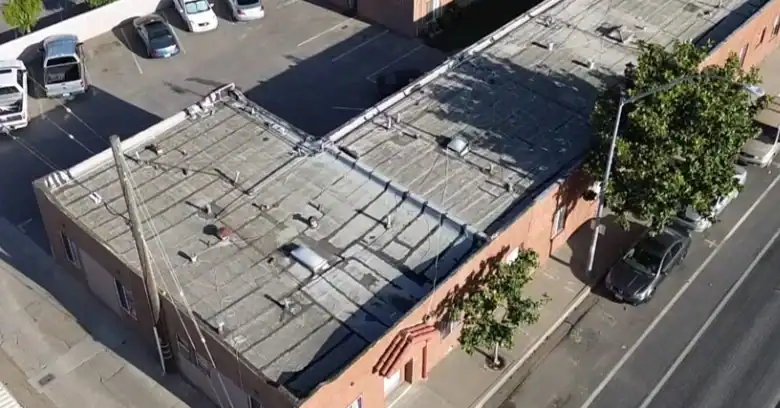
Planning Commercial Roof Contractors Serving Central Coast California?
Creative Roofing works on the roofs of shops, offices, warehouses and apartment buildings, serving owners and managers across Central Coast California.
Contact us at 805-723-2381 and describe what is happening up there.
Commercial Roofs Are Not Bigger Houses
A building roof is built around drainage and access rather than steep pitch, and the materials are chosen with that in mind. A low-slope roof has to be sealed, not just overlapped, and the quality of those seams decides how long it lasts.
Buildings also carry people, stock and equipment that a leak can ruin, and regular checks pay for themselves.
The Membranes Used on Flat Roofs
Many newer commercial roofs use a single-ply membrane over insulation, so the choice affects how repairs are done later. Layered bitumen roofs remain common on buildings of every age, so they are still specified today. Spray foam and fluid-applied coatings are also used in some situations, and the right answer depends on what is already on the roof.
Drains, Scuppers and Slope
Water that sits on a membrane ages it faster than water that runs off, and a small amount of tapered insulation can fix ponding. Debris collects around drain strainers after the dry months and blocks them in the first storm, and an overflow scupper is a backup that should never be blocked.
Rooftop Equipment and Penetrations
Heating and cooling units, exhaust fans and vents sit on most commercial roofs, and sealants alone are rarely a lasting fix. Walkway pads protect the routes that technicians use most often, so the best owners plan the routes in advance.
Strong Sun on a Flat Surface
Sun and heat are the steady stresses on a commercial roof in this part of California, and the surface slowly dries, chalks and cracks. A cooler roof surface lowers the strain on air conditioning in hot months, and no roof saves everything it promises.
Looking After a Roof Between Repairs
A commercial roof lasts longest when someone looks at it regularly, and it gives you a record to show a buyer or lender. Small repairs made early keep water out and extend the life of the membrane, and most items take only a short time.
Weighing the Options
Moisture surveys can show how much of a roof is truly wet inside, and it is easy to overlook. A roof that is wet inside cannot be coated or patched into good health, so a clear diagnosis matters.
Keeping the Business Running
Roof work above an operating business needs planning so that normal activity can continue, so the schedule is shared in advance. Safety at the edge of a roof is a serious matter for the crew and for people below, so ask how the site will be protected.
Apples to Apples
A good proposal should say what will be removed, what will be installed and how the edges will be finished, and ask about anything that seems vague. Ask how the work will be inspected and what documentation will be provided at the end, and a future owner will thank you.
Finding the Source of a Commercial Leak
Water travels along decking, insulation and ductwork before it shows up on a ceiling, and the roofer has to follow the evidence across the roof. Common sources include seams, drains, flashing at walls and the base of every pipe, and it pays to think it through. A survey gives facts to base a decision on, so it is worth asking about on a larger roof.
Wind, Fasteners and Roof Edges
The edges and corners of a flat roof take the highest wind loads, so careful edge details are a mark of good work. Coping and edge flashing should be firmly attached and free of gaps, and a gap there can grow quickly in a gust.
Where the Roof Meets the Building
The junction of roof and wall is where movement and water meet, and that is worth keeping in mind. Sealants at the top of a flashing dry out in strong sun and need redoing, and a repair there often needs more than a bead of caulk.
Coatings Explained
Acrylic, silicone and urethane are the main families of liquid roof coatings, and a coating is only as good as the surface beneath it. Coating over a wet roof is a common and costly mistake, and the follow-up inspections matter too.
Scale Changes the Planning
A roof covering a very large area has special needs for drainage, access and safety, so coordination with the building operator is essential. Shopping centers and strip malls share roofs across several tenants, and that is worth keeping in mind. Planning around families and daily routines matters on a residential property, so schedules are shared in writing.
Capital Planning for Building Owners
A reserve for the eventual replacement keeps the decision calm, and a little care goes a long way. The cheapest proposal is not always the best value, so compare what is included before comparing totals.
Insulation Under the Membrane
Thick boards of insulation do much of the work of holding heat in or out, and it is easy to overlook. A sturdier base means fewer punctures and longer service, and the result is a tougher roof. Angled boards direct water toward drains and reduce ponding, and it is a good time to ask about it.
Late-Summer Readiness Checks
Written notes from each seasonal visit build a record that helps with budgeting and with conversations about replacement, so schedule it like any other maintenance.
Next Steps for Your Commercial Roof
Managers researching Commercial Roof Contractors in Central Coast California are welcome to call and ask questions, with 805-723-2381 ready whenever you want to talk. A roof that is checked before a failure is easier to plan around, so reach out whenever you are ready. Most building owners find that a short call clears up more than weeks of wondering, and it is easy to overlook. A building with a documented roof is simpler to manage, and written records show the property has been cared for.






















