
Thinking About Residential Roofing Contractors Near Me Near Central Coast California?
Creative Roofing handles the planning, the tear-off and the cleanup of a roof job, from Central Coast California out to the surrounding area.
Reach out at 805-723-2381 to start a conversation about the roof over your head.
The First Step in a Roofing Project
Every roofing job starts with someone climbing up to see what is actually there, and a rushed visit tends to cost more than it saves. The roofer checks the surface, the flashing, the vents and the gutter line, then the attic if it can be reached, and each one goes into the notes.
Months of direct sun take a steady toll on whatever covers a house, and the sunniest side is usually the oldest-looking side.
Deciding What the Roof Needs
A roof can be repaired, partly rebuilt or removed entirely, and the evidence decides what is done, so a clear explanation matters more than a quick quote. A roofer who explains the reasoning in plain terms is easier to trust with the work, so do not feel awkward about asking.
Hidden damage found during tear-off is the usual reason a project grows beyond its first outline, so a note on how it will be handled saves arguments later.
Picking a Roof Covering
Asphalt shingles, concrete or clay tile and standing seam metal are the coverings most often put on homes here, so structure comes first and appearance second. Sun exposure makes color a practical question as well as a visual one, and a full-size piece seen outdoors beats a catalog picture.
When the Crew Can Work
Roof work is easiest to schedule in the long dry stretch between rains, and a careful crew never leaves an opening to chance. Roof surfaces get hot enough in July to change how materials behave, so an early knock on the door is nothing to worry about.
Stripping Down to the Deck
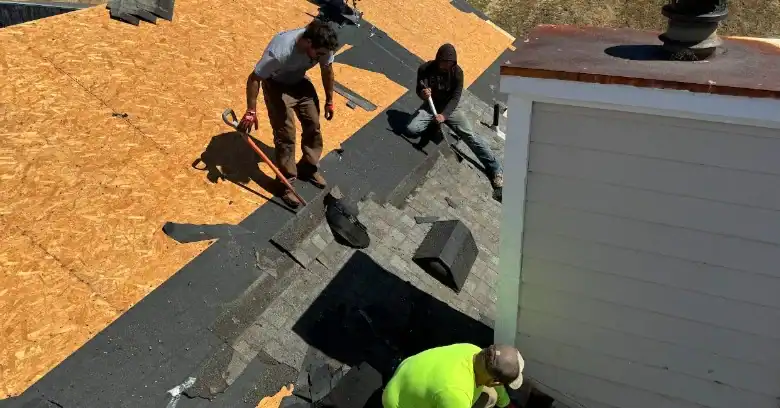
The existing covering is stripped away and the deck is left exposed for inspection, and the details are worth a closer look. Sound wood is the base everything else depends on, since good materials laid over a weak deck do not last.
The Hidden Layers
Underneath the visible covering sits a water-resistant layer that does much of the work, and chimneys get particular care. Reaching this stage quickly is a sensible way to protect the interior, so the rest of the work can proceed without worry.
Where Roofs Meet Walls and Pipes
Water finds the joints first, so flashing matters, so fresh metal is standard practice among careful crews. The seal around a vent pipe rarely lasts as long as the surface around it, so this is an easy step to ask about.
Keeping the Attic Cooler
Heat collects in the space beneath the roof deck unless it has somewhere to go, so vents near the ridge give the hot air a way out. More vents are not always better, because intake and exhaust have to be balanced, because airflow is easy to plan now and hard to add later.
Finishing the Job
When the last piece is installed, the cleanup begins, so gutters are checked and cleared of loose granules. Photographs of the completed work are worth having for your own records, and it makes future repairs and sales smoother.
What the City Wants to See
Rules about reroofing differ from one city to the next, because surprises at the counter slow everything down. Certain hillside and edge-of-town areas follow stricter material rules than the valley floor, and the proposal should reflect them. A proposal that names its materials and steps is easier to compare, so keep a copy where you can find it.
Shielding Windows, Plants and Patios
A busy work site needs boundaries, and it is reasonable to ask how this will be done. Children and animals should stay clear of the yard while the work is underway, so tell the crew about anything fragile or valuable. Hammering on the deck above can rattle a ceiling and drop dust into the rooms below, and a sheet over stored boxes keeps the grit off.
Living Through a Roof Project
A new roof usually takes a few days for an average house, though weather and size change that, and nobody can promise a date through a rain delay. Dumpsters and trucks may take up space on the road, and early starts mean early noise. Household routines bend a little while the work is under way, so consider a day out of the house if you can.
Questions That Reveal the Difference
Ask what will be done with the old material and how the deck will be handled, and it pays to think it through. Product names and thicknesses on the proposal let you compare like with like, so ask before you sign anything. Ask what happens if something unexpected turns up under the old roof, and you will have a clear record.
Small Habits That Extend Roof Life
A roof that is never looked at tends to fail when it is least convenient, so put it on the calendar like any other chore. Overhanging trees drop material that collects in corners and valleys, and a small broom is often enough. Missing pieces, lifted edges or a new stain are all reasons to have someone look, so do not wait for the next storm.
Spring, Summer or Fall
Planning ahead usually gives better choices than reacting to an emergency, and calling in spring avoids the rush. Early fall is popular because the weather is still dry and the heat has eased, and the details are worth a closer look.
Roof Work and Your Attic
Rust on the points of roofing nails and dark patches on the sheathing are signs that moisture has been present for some time, and bring a flashlight if you can.
Talk to Us About Your Roof
Sorting out Residential Roofing Contractors Near Me in Central Coast California is easier with someone who can look at the house, and 805-723-2381 reaches the right person. The size of the project changes the schedule but not the principle, and the roof will tell the story once someone looks. The sooner the roof is looked at, the more choices you tend to have, and it pays to think it through.






















