
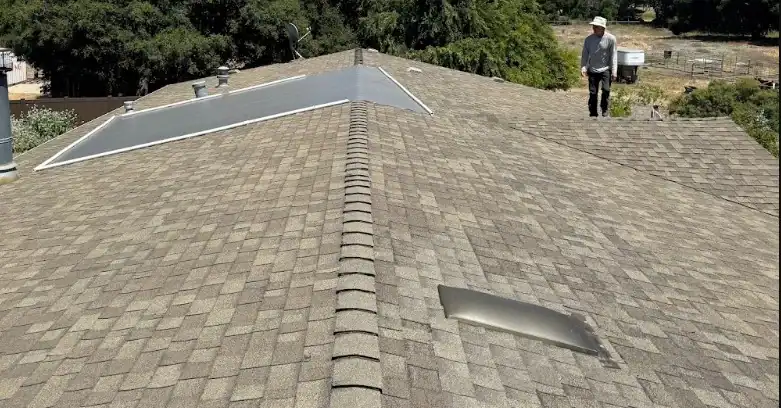
Ready for Shingle Roofing in Central Coast California?
Creative Roofing works with layered shingles, starter strips, underlayment and ridge caps, throughout Central Coast California and the neighboring communities.
Phone 805-723-2381 and ask about a shingle roof for your house.
The Anatomy of an Asphalt Shingle
Each shingle is a thin sandwich of mat, asphalt and stone granules, and that is worth keeping in mind. Granule loss is the clearest sign that a shingle is wearing out, and bare patches show up as dark spots.
Basic, Laminated and Premium
A three-tab shingle has a flat, uniform look and the thinnest profile of any common type, so many homeowners compare it with thicker lines. The extra layer adds weight and strength, and the cut pattern breaks up the lines, so there is something for most houses. The top of the range offers the richest textures and the greatest thickness, and the added weight is a benefit in wind.
Sun, Heat and Aging
Months of direct sunshine take a toll that the eye picks up slowly, and the shaded side tells a different story. Cracks across the face open the way for water to reach the layers below, and each one is a place a leak can start.
Color, Reflectivity and Cooling
Shingles in dark shades absorb more heat, and they can run noticeably hotter on a summer afternoon, and nearby roofs offer a useful preview. Some manufacturers offer cool-roof shingles with special granules that reflect more infrared light, and the actual benefit depends on the house.
Installation Details That Decide Longevity
Fastening is the quiet detail that separates a durable roof from a poor one, so ask how many nails go into each shingle. Each course overlaps the one below so that water always sheds over a solid layer, and the pattern is part of the manufacturer specification. Special cap products are made to bend without cracking, and replacing a ridge is simple when done in time.
Gusts and Loose Tabs
The adhesive bond is what keeps tabs flat against the roof in a strong wind, and the nails hold the rest. Pieces that blow off expose the underlayment, which is not meant to sit in the sun, and the details are worth a closer look.
Balanced Intake and Exhaust
A balanced system of intake and exhaust keeps the temperature under the roof closer to the air outside, and the eaves and the ridge are where the vents belong. Attic fans, gable vents and ridge vents each work differently and should not fight each other, and avoid anyone who ignores the question.
Where Shingles Meet Everything Else
The shingles shed most of the water, but the underlayment handles the rest, and it pays to think it through. Valleys are the crossing channels where two slopes meet, and they carry the most water on the roof, and replacing flashing during a re-roof is standard practice.
When a Shingle Roof Is Telling You Something
A roof that sheds grit, lifts at the edges and shows dark patches is reaching the end of its life, and one sign alone may not mean much. A few damaged shingles can often be replaced without touching the rest of the roof, and the savings can be substantial. When the whole roof is brittle, curling and shedding granules, repairs become a losing game, and a full replacement gives a fresh start.
Taking Off the Old Shingles
Old shingles come off in sections and go straight into a bin, leaving a clean deck ready for the next step, and it pays to think it through. Overlaying is a shortcut that a careful roofer will explain before agreeing to it, and a second layer is difficult to remove later. Sheathing that crumbles or feels spongy underfoot must be replaced before shingles can hold, and the details are worth a closer look.
Debris, Magnets and Final Sweeps
The first hour on site is spent setting up protection, and that time is well spent, so ask how the yard will be protected. Rolling magnets across the lawn, the driveway and the planting beds collects what a rake and the eye miss, and point out anything that was missed. Downspouts that carry water well away from the house protect both the new roof and the walls beneath it, and it pays to think it through.
When to Schedule a New Roof
Shingle work goes best in dry, mild weather, when the sealing strips bond quickly and the crew can leave the roof open without worry, and the calendar is only part of the question. On a scorching day the surface of a roof becomes too hot to handle, and the asphalt softens enough to mark if walked on carelessly, and patience pays off in the finished roof.
Coordinating With Other Trades
Roofers work around fixed obstacles all the time, but each one adds time and adds a place where water might enter, and it is easy to overlook. Solar panels bolted to a shingle roof have to be removed and reinstalled when the roof is replaced, so the two projects should be planned together, and get the plan in writing.
Why a Patch Rarely Matches Perfectly
New shingles set into a sun-faded roof usually look a shade darker or brighter, and the contrast softens only after a season or two of weather, and it pays to think it through.
Where Shingles End and Gutters Begin
The roofline is where the roof and the rest of the house meet, and it deserves attention during any replacement, and a little care goes a long way.
Apples to Apples
Specific wording is the best protection against surprises, and a thorough contractor will be happy to explain. Ask about the schedule and how the roof will be covered if rain is forecast, and the answers are worth writing down.
Start the Conversation
Homeowners weighing Shingle Roofing in Central Coast California can begin by describing the house and the look they want, with 805-723-2381 ready whenever you want to talk. Whether the roof is leaking now or you are planning ahead, an early conversation keeps your options open, so reach out whenever you are ready.






















