
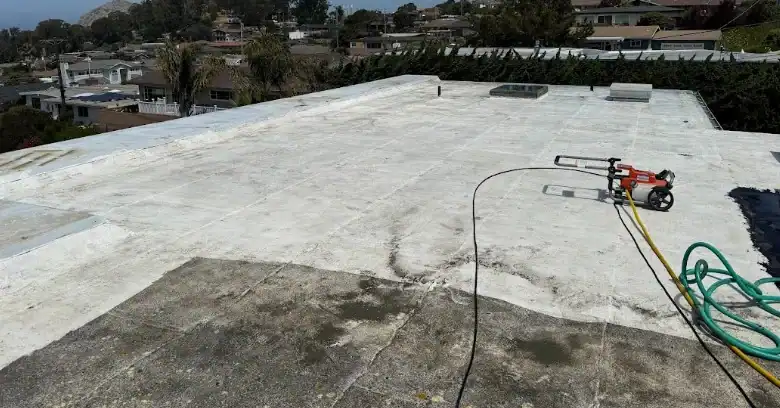
Researching TPO Membrane Roofing in Central Coast California?
Creative Roofing installs membranes, coatings and built-up layers on roofs that barely shed water on their own, from Central Coast California out to the surrounding area.
Reach us at 805-723-2381 and describe what you are seeing up there.
A Roof With Almost No Slope
The gentle angle of a flat roof gives water time to find every weakness, and drainage is the central question. A flat roof gives little margin for error in the details, and the cost of a mistake is paid in repairs.
A Guide to the Main Options
The seams on thermoplastic sheets are fused rather than glued, which makes them strong, and a little care goes a long way. Black EPDM absorbs heat, while a white version reflects more of the sun, so periodic inspections are wise. Modified bitumen sheets are rolled out and torched or adhered in overlapping courses for a durable surface, so the structure has to carry it.
Details That Fail First
Failures concentrate wherever the membrane stops or is cut, and that is worth keeping in mind. Parapet caps and copings protect the top of the wall and must be sound, and it pays to think it through.
When Water Will Not Leave
Ponding is the condition of standing water on a roof, and it accelerates wear on any membrane, and a little care goes a long way. Fixing the cause of ponding is better than repeatedly patching its effects, and it extends the life of the whole system.
How Heat Wears a Low-Slope Roof
Dark surfaces can reach temperatures much higher than the surrounding air, and it is easy to overlook. A coating adds a protective layer and can seal small cracks and seams, and the preparation is as important as the product.
Vents, Pipes and Rooftop Units
Boots, pitch pockets and flashing collars around pipes must be sound and sealed, and replacing a worn collar is a quick job. Walkway pads cost little and save the membrane from scuffing and punctures, and a plan for traffic keeps the roof sound.
Choosing How Far to Go
Repairing a small area is practical when the surrounding material is still healthy, and temporary fixes should be called what they are. Adding a new membrane over an existing one is possible in some cases and saves removal costs, and it is easy to overlook. Starting fresh gives the best foundation for another long stretch of service, and that is worth keeping in mind.
Residential Low-Slope Roofing
A level porch roof may look like a minor part of a house, yet it protects the walls and the ceiling beneath it just as a main roof does, so ask whether the company handles low-slope work regularly. A bead of caulk across that joint might hold for a season, but a proper counterflashing is the lasting answer, so look at the wall as well as the roof. Before adding weight or furniture to a flat roof, it is wise to confirm that the structure and the membrane can carry it, so involve the roofer early.
Heat Gain and Thermal Layers
A flat roof has little or no attic, so the layers of the roof itself have to do the work that attic insulation and ventilation do on a pitched house, and the savings show up in the cooling bill. Wet insulation loses most of its ability to resist heat and adds weight the roof was never meant to carry, so ask whether a survey is part of the process.
Keeping a Flat Roof in Shape Through the Year
Drains, scuppers and gutters should be cleared first, since blocked outlets cause more damage than any other single fault, so make it a fixed date on the calendar. A stain on a ceiling after a storm is a clear signal to have the roof inspected before the next one arrives, and cover furniture beneath a drip.
Securing the Roof Against the Wind
Seasonal gusts pull hardest at the perimeter of a low-slope roof, so the fastening pattern is tighter along the edges than in the middle of the field, and repairs should not wait for the next storm. Stones that have been scattered by wind or foot traffic leave bare patches that expose the membrane to ultraviolet light, and the gravel does a great deal of quiet work. Crowded rooftops with many pipes and units are slow to roof, because every obstacle needs its own flashing and sealing, and a thorough walk-through prevents them.
Curbs, Collars and Boots
Each opening is a separate detail, and each one should be listed in the written proposal, and no skylight should be roofed over without a plan. Plumbing vents, conduits and exhaust ducts pass through the membrane and need boots, collars or pitch pockets that suit the material, and every opening is one more detail to watch. Overflow scuppers set slightly higher than the main drains act as a safety valve when the primary outlet is blocked, so check them often in the rainy months.
Reading Competing Bids
Specific wording is your best protection against disputes, and read them slowly. A roofer with plenty of flat roof experience can explain problems before they occur, so write down what each company says.
Access, Fumes and Noise
Most flat roof jobs on a house or small building take only a few days, though adhesives and torch work call for dry weather and some advance planning, so ask how the schedule will work.
Clearing Up a Few Misconceptions
Plenty of owners assume a membrane has to be replaced at the first sign of wear, when a repair or a coating would have done the job, so do not hesitate to ask.
Tell Us What You Are Dealing With
A conversation about TPO Membrane Roofing in Central Coast California usually starts with the type and age of the roof, and 805-723-2381 reaches someone who can help. Whether the roof is leaking now or you are planning ahead, an early conversation keeps your options open, so reach out whenever you are ready.






















