
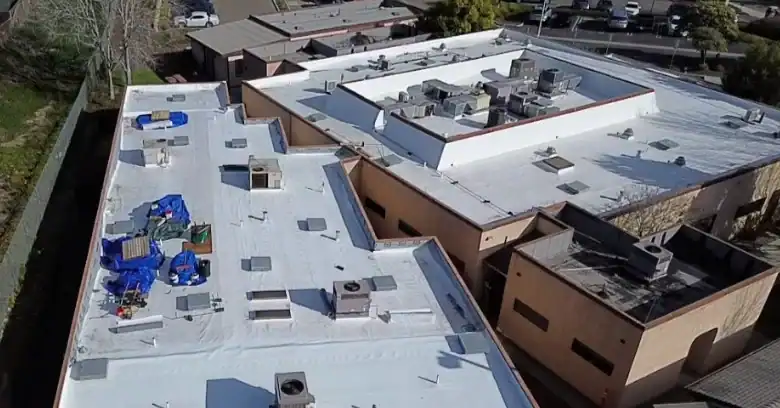
Thinking About TPO Membrane Roof Services Serving Central Coast California?
Creative Roofing deals with flat and low-slope roofs on houses, additions, garages and small buildings, throughout Central Coast California and the neighboring communities.
Phone 805-723-2381 and describe what you are seeing up there.
Roofs That Do Not Shed Water by Themselves
A flat roof is never truly flat, but its slope is so slight that water drains slowly and lingers, and the quality of the seams decides everything. A flat roof gives little margin for error in the details, so it pays to hire people who work on flat roofs regularly.
The Systems You Will Hear About
White single-ply membranes reflect sunlight and help keep the building cooler, and repairs are made by welding on a patch. EPDM is a synthetic rubber sheet that is glued or mechanically fastened and has a long record on flat roofs, and the system suits many residential flat roofs. Gravel surfacing on a built-up roof protects the layers from sun and foot traffic, so the structure has to carry it.
Seams, Corners and Terminations
Seams, corners, edges and penetrations are where problems begin on a low-slope surface, and that is worth keeping in mind. The edges around the perimeter take the most punishment from sun and wind, and a small bead of sealant in time prevents a big repair.
Keeping a Level Roof Drained
Puddles that remain a day or two after rain signal that water is not leaving the roof as it should, and clear leaves and debris from scuppers. Angled boards under a new membrane direct water toward the drains and eliminate low spots, so ask for a plan to improve drainage.
How Heat Wears a Low-Slope Roof
Heat makes a membrane expand during the day and shrink at night, and sunlight is the main cause of aging. Silicone, acrylic and elastomeric coatings are the main families used on flat roofs, and a coating cannot rescue a roof that is wet inside.
What Happens Around Machinery
Skylights and hatches add edges that need careful flashing, and the sealant at each one ages in the sun. Roof-mounted air conditioners and other equipment bring service people who walk on the membrane, and a quick look after any service visit catches new damage.
Choosing How Far to Go
Localized seams, flashings and punctures can be fixed without touching the rest of the roof, and the key is an accurate diagnosis. Adding a new membrane over an existing one is possible in some cases and saves removal costs, and it is easy to overlook. When the roof is saturated, cracked and failing in many places, replacement is the only lasting answer, and it should be planned rather than rushed.
Residential Low-Slope Roofing
Residential low-slope roofs turn up over additions, covered patios, carports and contemporary houses designed with clean horizontal lines, and a shingle crew may not be the right choice. Siding, stucco and trim all have to be worked into the flashing, and the roofer has to cooperate with whoever finished the wall, and describe where the stain appears. Pavers, decking and planters laid over a membrane protect it from the sun but hide it from view, so involve the roofer early.
Insulation, Slope and Comfort Under a Level Roof
Insulation values and reflective finishes work together to keep the space below comfortable, and a light-colored membrane adds to the benefit. A moisture survey with a meter or an infrared camera can map the wet areas without tearing the roof apart, so ask whether a survey is part of the process.
Small Habits That Prevent Big Leaks
The best time to look at a flat roof is at the end of the dry season, when leaves and debris have piled up and the rains are about to test every drain, and the work is quick. After a heavy storm or a spell of high wind, a quick look from a ladder can show whether anything has shifted, lifted or collected on the surface, and it pays to think it through.
Perimeter Details and Uplift
Edge metal, copings and terminations have to be fastened to a set pattern and sealed at the joints, or wind will find the gap and work it open, and repairs should not wait for the next storm. Raking the gravel back into an even layer is a routine job that keeps the protection continuous, and the details are worth a closer look. Walkways, curbs and equipment supports need to be flashed and fastened as part of the membrane, and the details on a crowded roof take real time to do properly, so be there for the visit if you can.
Curbs, Collars and Boots
Replacing a worn skylight and its curb flashing together with the roof is far cheaper than doing the two jobs separately, and loose sealant around a frame is a warning sign. A roofer who plans the layout of penetrations before the work starts usually delivers a drier roof, and mark each one on a sketch. Drains and scuppers are also penetrations, and the flashing around them has to be watertight while still letting the water through quickly, so check them often in the rainy months.
What the Paperwork Should Say
Look for the manufacturer system and the type of seam, whether welded, glued or taped, so ask for the details in writing. Ask who will supervise the work and how weather delays will be handled, so write down what each company says.
Keeping Disruption Small
Removing items from the roof, such as furniture and planters, saves time and prevents damage on the day the work begins, and a short conversation beforehand covers the details.
Short Answers About Low-Slope Roofing
Plenty of owners assume a membrane has to be replaced at the first sign of wear, when a repair or a coating would have done the job, so do not hesitate to ask.
Ready to Look at Options
People researching TPO Membrane Roof Services in Central Coast California are welcome to call with questions, so dial 805-723-2381 when it suits you. Even a quick call can clear up questions about membranes, coatings and timing, and we are glad to help you sort it out.