
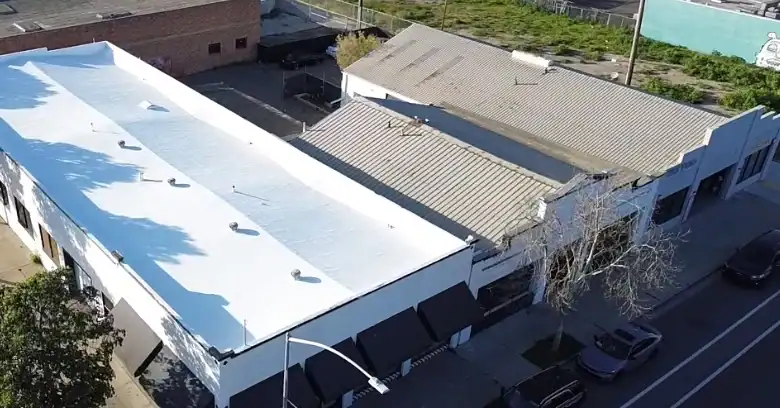
Researching Commercial Roofing Companies Serving Grover Beach California?
Creative Roofing deals with the flat and low-slope roofs that sit above working buildings, serving owners and managers across Grover Beach California.
Contact us at 805-723-2381 to talk through a commercial roof question.
What Sets a Commercial Roof Apart
The roof on a store or office is a working surface as much as a cover, and that is worth keeping in mind. Water that stays on a roof for long finds every weakness in the membrane, and the quality of those seams decides how long it lasts.
The cost of a failed roof is often higher inside the building than on top of it, and a dry building is the whole point.
Types of Commercial Roofing
Single-ply roofing arrives in large rolls and is joined at the seams on site, so the choice affects how repairs are done later. Layered bitumen roofs remain common on buildings of every age, and the surface can be renewed with a coating or cap. Coated metal panels have become common on newer low-rise construction, so the building and its use drive the decision.
Where the Rain Goes
Standing water is the most common enemy of a low-slope roof, and drains need to be clear before the rainy season begins. Drains, scuppers and gutters collect water and carry it away from the building, and an overflow scupper is a backup that should never be blocked.
What Sits on the Roof
Heating and cooling units, exhaust fans and vents sit on most commercial roofs, so those details deserve the most attention in an inspection. Service technicians walking to equipment can wear a path through a membrane, and a contractor can mark them on the roof.
Sun, Heat and Energy Use
Sun and heat are the steady stresses on a commercial roof in this part of California, and that is why white and light membranes are so common. Cooling load is one of the practical reasons building owners choose a reflective roof, and local rules may favor reflective surfaces on some projects.
Maintenance Programs
Roof maintenance is a habit more than a project, and the best times are before and after the rainy season. Maintenance work is mostly cleaning, tightening and resealing, and the details are worth a closer look.
Deciding What to Do With an Aging Roof
Localized damage can be repaired without touching the rest of the roof, and testing is better than guessing. When insulation is soaked, the roof has usually reached the end of its useful life, and it is better to know the truth sooner.
Roofing Without Disrupting Operations
A good plan keeps customers and staff away from the areas under construction, and communication with tenants is part of the job. Anyone entering the roof during construction needs to be accounted for, and that is a reasonable thing to discuss in advance.
Making Sense of Competing Bids
A good proposal should say what will be removed, what will be installed and how the edges will be finished, and the difference is often in what is not mentioned. Photographs and written records of the installation are useful for the owner, and a future owner will thank you.
Finding the Source of a Commercial Leak
The wet patch indoors only tells you where the water finally escaped, and the roofer has to follow the evidence across the roof. Penetrations and terminations are the usual suspects, so the inspection begins at the details. Moisture scans and core samples can show how far water has spread inside the roof, so it is worth asking about on a larger roof.
Edges Are Where Roofs Let Go
Strong seasonal winds pull hardest at the perimeter of a low-slope roof, and the perimeter needs extra fastening. Perimeter metal is the first line of defense against uplift, and the work is usually quick.
Walls, Parapets and Flashing Details
Flashing at the wall is one of the most failure-prone parts of a low-slope roof, and that is worth keeping in mind. Sealants at the top of a flashing dry out in strong sun and need redoing, and ignoring it can undo a good roof.
Coatings Explained
Restoration coatings are meant for roofs that are still basically sound, and the preparation matters as much as the product. Applying a coat over a roof that is already saturated traps moisture and hides the problem, and an honest contractor will say so.
Scale Changes the Planning
Large roofs pose logistical problems that small ones never do, and weather windows matter more at this scale. Common areas, walkways and canopies add their own details, and the owner usually coordinates the work. Residents expect notice before work begins above their homes, and clear notices help everyone know what to expect.
Capital Planning for Building Owners
Treating the roof as an asset with a lifespan is the smart approach, and regular inspections help estimate the timing. A cheaper system that fails sooner is not a bargain, and weigh the trade-offs honestly.
Insulation and Cover Boards
Insulation under a flat roof keeps the building comfortable and reduces energy use, so keeping them dry is essential. Cover boards add a firm surface that protects insulation from foot traffic and hail-free impacts, and the added cost is modest. Slope built into the insulation is one of the cleanest ways to fix drainage problems, and few owners regret it.
Preparing a Building Roof for the Rainy Season
Rooftop units should be examined for loose panels, failed seals and missing fasteners, since a stray panel can let rain into the system, and the visit takes only a short time.
Next Steps for Your Commercial Roof
Anyone sorting out Commercial Roofing Companies in Grover Beach California is one call away from a straight answer, with 805-723-2381 ready whenever you want to talk. A roof that is checked before a failure is easier to plan around, and the roof will tell the story once someone looks. A visit to the property turns a general worry into a specific plan, and the conversation can be brief. A building with a documented roof is simpler to manage, so it pays to begin early.
Verified

Verified
Verified
Verified






















