
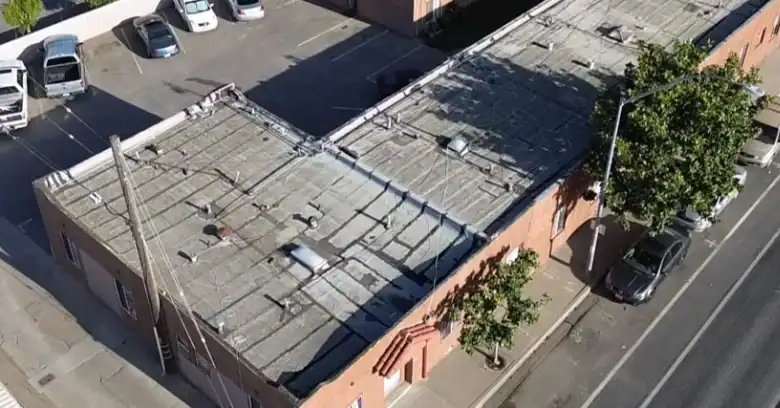
Researching Commercial Roof Maintenance in Grover Beach California?
Creative Roofing looks after the roof over a business, from a small storefront to a large building, throughout Grover Beach California and the towns nearby.
Contact us at 805-723-2381 and describe what is happening up there.
What Sets a Commercial Roof Apart
A building roof is built around drainage and access rather than steep pitch, and the failure modes are different too. A low-slope roof has to be sealed, not just overlapped, and a small gap can become a large leak.
Water coming through a commercial roof can reach inventory, electrical gear and computers, and a little care goes a long way.
The Membranes Used on Flat Roofs
Single-ply membranes such as TPO, PVC and EPDM are among the most common coverings on commercial buildings, and none of them is right for every building. Older buildings often have built-up roofing, with several layers laid over one another, and the layers add redundancy. Standing seam metal panels cover warehouses, schools and retail buildings, and that is worth keeping in mind.
Keeping Water Moving
Every flat roof is only as good as its drainage, and ignoring it tends to shorten the life of the membrane. Debris collects around drain strainers after the dry months and blocks them in the first storm, so clearing drains is the cheapest maintenance on the list.
Equipment Is Where Leaks Start
Every unit on a roof is a potential entry point for water, and sealants alone are rarely a lasting fix. Repeated traffic on an unprotected membrane leaves it thin and scuffed, and it is easy to overlook.
How the Climate Affects a Building Roof
Long dry summers expose a membrane to strong ultraviolet light month after month, and that is why white and light membranes are so common. Cooling load is one of the practical reasons building owners choose a reflective roof, so ask a contractor to explain what to expect.
Planned Roof Care
A planned visit twice a year is a common routine for building owners, and it gives you a record to show a buyer or lender. Photographs from each visit help track changes over time, and most items take only a short time.
Repair, Coat or Replace
The right answer depends on how much of the system is still dry and sound, and it is easy to overlook. Replacing only the surface over saturated insulation hides the problem without solving it, and the cost of delay grows with every storm.
Keeping the Business Running
A good plan keeps customers and staff away from the areas under construction, so the schedule is shared in advance. Barriers and warning lines protect pedestrians from falling tools and materials, and plan for parking and deliveries as well.
Apples to Apples
A clear commercial proposal names the system, the thickness and the method of attachment, and ask about anything that seems vague. A record of the materials and details used helps with later maintenance, and keep it with the building records.
Where the Water Really Gets In
Water travels along decking, insulation and ductwork before it shows up on a ceiling, and that is worth keeping in mind. Common sources include seams, drains, flashing at walls and the base of every pipe, so the inspection begins at the details. Knowing where the water is saves guesswork and wasted effort, and a little care goes a long way.
Perimeter Details and Attachment
Strong seasonal winds pull hardest at the perimeter of a low-slope roof, and the details are worth a closer look. Perimeter metal is the first line of defense against uplift, and it is easy to overlook.
The Seams That Join Roof to Wall
The junction of roof and wall is where movement and water meet, and a gap at the top lets water run down behind the membrane. Sealants at the top of a flashing dry out in strong sun and need redoing, and it pays to think it through.
Fluid-Applied Systems
Roof coatings are liquid products rolled or sprayed onto an existing roof to form a protective skin, and a coating is only as good as the surface beneath it. Applying a coat over a roof that is already saturated traps moisture and hides the problem, so be wary of anyone who promises it fixes everything.
Scale Changes the Planning
Large roofs pose logistical problems that small ones never do, and weather windows matter more at this scale. Multi-tenant buildings call for clear communication with every occupant, and tenants appreciate being kept informed. The roof of an apartment building protects many households at once, so schedules are shared in writing.
Planning a Roof Budget Without Surprises
Treating the roof as an asset with a lifespan is the smart approach, and regular inspections help estimate the timing. Choosing on the lowest initial figure alone can cost more over the life of the building, so compare what is included before comparing totals.
Thermal Layers on a Flat Roof
Insulation under a flat roof keeps the building comfortable and reduces energy use, and it is easy to overlook. A sturdier base means fewer punctures and longer service, and that is worth keeping in mind. Angled boards direct water toward drains and reduce ponding, so raise the question before the proposal is final.
Wind, Rain and Seasonal Readiness
A pre-season checklist includes clearing drains and scuppers, checking seams and flashing, and photographing the condition of the surface, so schedule it like any other maintenance.
Start With a Conversation
Anyone sorting out Commercial Roof Maintenance in Grover Beach California is one call away from a straight answer, and the number is 805-723-2381. Calling sooner rather than later keeps repair costs and disruption smaller, and the details are worth a closer look. People who manage property tend to value a straight answer about the roof above all, and the roof will show the rest. Tenants, lenders and insurers all take an interest in the state of a roof, so it pays to begin early.
Verified

Verified
Verified
Verified






















