
Looking Into EPDM Roofing for a Building in Grover Beach California?
Creative Roofing knows how a roof without a pitch is built, why it leaks and how to make it last, across Grover Beach California and nearby.
Dial 805-723-2381 and describe what you are seeing up there.
A Roof With Almost No Slope
Where a pitched roof sheds rain in seconds, a level roof holds it for hours or days, so shingles are never the answer. Careful work at the seams, edges and drains is what keeps one dry, so it pays to hire people who work on flat roofs regularly.
What Goes on a Low-Slope Roof
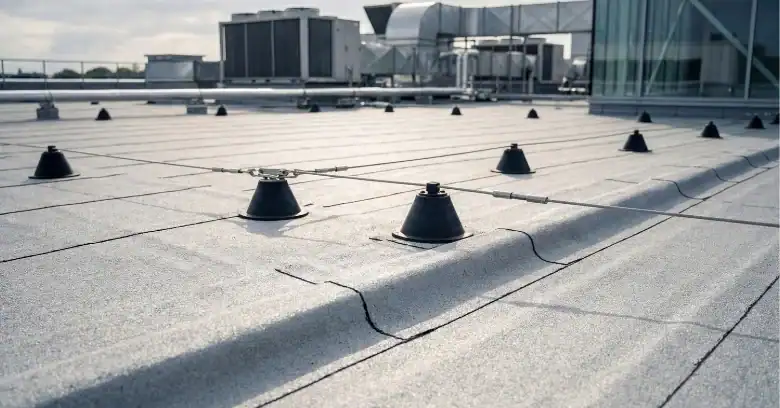
White single-ply membranes reflect sunlight and help keep the building cooler, so a damaged area can be fixed cleanly. Rubber membranes are black or white, and the seams are joined with tapes or adhesives, and the system suits many residential flat roofs. Built-up roofing, often called BUR, layers hot or cold asphalt with reinforcing fabric and finishes with gravel or a cap sheet, and repairs can be made in place.
Seams, Edges and Where Leaks Start
The open field of a membrane is usually the toughest part of the whole system, and the field is checked last. Termination bars and sealant hold the top edge of the membrane against the wall, so look at those joints every year.
Keeping a Level Roof Drained
Ponding is the condition of standing water on a roof, and it accelerates wear on any membrane, and the first storm of the season shows the problems. Adding drains or enlarging scuppers helps when the old ones were undersized, and the details are worth a closer look.
How Heat Wears a Low-Slope Roof
Ultraviolet light and heat are the main forces that age the surface of a low-slope roof in this region, and a reflective finish lowers that stress. A coating adds a protective layer and can seal small cracks and seams, and a coating cannot rescue a roof that is wet inside.
Anything That Pokes Through or Sits on Top
Every pipe, vent and curb through a flat roof is a place where the membrane has to be cut and sealed, and plugging with caulk is only a stopgap. Tools, ladders and dropped objects can cut a sheet, so care is required, and a quick look after any service visit catches new damage.
Repair, Recoat or Replace
A flat roof with a few leaks and a sound membrane can often be repaired for a fraction of the cost of replacing it, and photographs help. When the surface is simply worn, a coating or an overlay can refresh it without a full tear-off, and wet insulation rules out a quick fix. Starting fresh gives the best foundation for another long stretch of service, and it should be planned rather than rushed.
Residential Low-Slope Roofing
A level porch roof may look like a minor part of a house, yet it protects the walls and the ceiling beneath it just as a main roof does, and the wrong material on a flat roof will leak. A low roof meeting a taller wall is among the most leak-prone details on a house, and it deserves close attention, so look at the wall as well as the roof. A deck surface over a roof has to be lifted to repair the layer beneath, which makes prevention far cheaper than correction, and avoid fastening anything through the membrane.
Keeping Rooms Cool Below a Flat Surface
Rooms beneath a flat roof often feel warmest in late afternoon, when the surface has soaked up a full day of sun, and a light-colored membrane adds to the benefit. Wet insulation loses most of its ability to resist heat and adds weight the roof was never meant to carry, and the map is a useful record.
A Simple Maintenance Calendar
A check in early autumn catches clogged drains, lifted seams and cracked sealant before the first storm tests them, so make it a fixed date on the calendar. A stain on a ceiling after a storm is a clear signal to have the roof inspected before the next one arrives, and it pays to think it through.
Securing the Roof Against the Wind
Gusts lift a flat roof from its edges and corners, where the pressure is highest, and a membrane that is not firmly attached there can peel back like the lid of a can, so ask how the edges will be attached. Raking the gravel back into an even layer is a routine job that keeps the protection continuous, so inspect the outlets after any disturbance. A careful roofer walks the roof beforehand and counts every penetration, then includes them all in the proposal, and a thorough walk-through prevents them.
Everything That Breaks the Surface
A curb lifts the opening above the level of standing water, which is the main reason it exists, and the membrane must climb it and be sealed at the top, and no skylight should be roofed over without a plan. The seal around a pipe on a low-slope roof has to be formed to match the membrane, because a generic rubber boot will not bond to every type, and a tidy roof is easier to maintain. Drains and scuppers are also penetrations, and the flashing around them has to be watertight while still letting the water through quickly, and a blocked outlet loads a roof beyond its design.
Getting Specific About the System
Look for the manufacturer system and the type of seam, whether welded, glued or taped, and read them slowly. A roofer with plenty of flat roof experience can explain problems before they occur, and it is easy to overlook.
Preparing the Property for a Membrane Job
Hot-applied and adhesive systems give off smells while they cure, so windows and vents near the work area are usually closed for a day, so ask how the schedule will work.
What People Wonder When the Roof Is Flat
Questions about a level roof are best answered by someone who has looked at it in person, so do not hesitate to ask.
Ready to Look at Options
Anyone sorting out EPDM Roofing in Grover Beach California is one call away from a straight answer, and the number is 805-723-2381. Whether the roof is leaking now or you are planning ahead, an early conversation keeps your options open, so reach out whenever you are ready.
Verified

Verified
Verified
Verified






















