
Thinking About Residential Roofing Contractors Near Me Near Grover Beach California?
Creative Roofing walks a household through every stage of a roofing project, across Grover Beach California and the neighboring communities.
Call 805-723-2381 to set up a time for someone to look at the roof.
Where a Roofing Job Begins
The first visit is about gathering facts rather than picking a product, since guessing from the ground leads to surprises later. The roofer checks the surface, the flashing, the vents and the gutter line, then the attic if it can be reached, and the findings are worth asking to see.
Months of direct sun take a steady toll on whatever covers a house, so the wear is rarely even from one side to the next.
Choosing How Far to Go
Some roofs need a patch, some need a section redone, and some have reached the end of the road, and the recommendation should come with the reasons attached. Findings that cannot be pointed to are findings worth questioning, so do not feel awkward about asking.
Wood that has been wet for a long time has to be cut out and replaced, and agreeing on the approach in advance beats debating it with the roof open.
Shingle, Tile or Metal
Three families of material cover most residential roofs in this region, and the style of the neighborhood often plays a part. The shade of a roof affects how hot it runs in July, and it pays to look at them at different times of day.
Scheduling Around the Weather
Rain arrives in bursts, and a roof that is open when one comes needs protection, so exposed areas get covered at the end of each day. The temperature on the roof can run well above the temperature in the shade, so the day usually begins at sunrise.
Getting to a Clean Surface
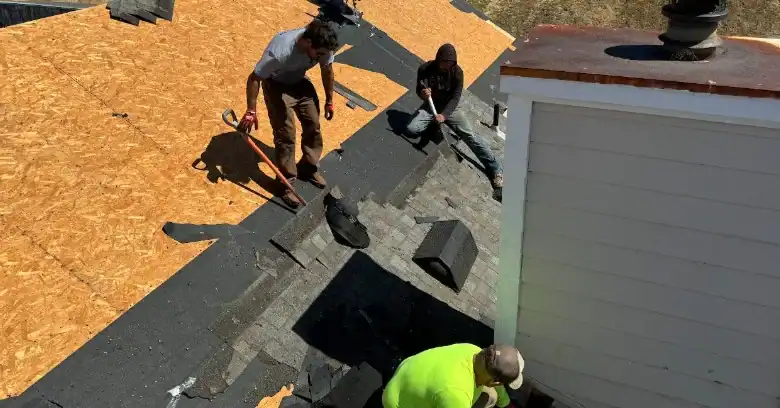
The existing covering is stripped away and the deck is left exposed for inspection, so landscaping and windows are covered before the first piece comes up. Repairs to the deck happen now, before anything new is installed, because new material is only as good as what it is fastened to.
Waterproofing Beneath the Surface
Underneath the visible covering sits a water-resistant layer that does much of the work, so self-adhering membrane goes where leaks tend to begin. The house is safest once the second layer is complete, and that is worth keeping in mind.
Where Roofs Meet Walls and Pipes
Chimneys, skylights, vent pipes and walls all need flashing worked into the roof, and reusing old flashing under a new roof often comes back to bite. Vent boots and pipe collars are rubber or lead pieces that wear out before the roof does, and a little care goes a long way.
Ventilation in a Warm Climate
Warm air trapped under the deck works on the roof from below, so vents near the ridge give the hot air a way out. The design of the system matters more than the number of vents, because airflow is easy to plan now and hard to add later.
Leaving the Property Clean
A finished roof still leaves a yard full of scraps, nails and packaging, and that is part of the work, not an extra. A walk around the finished roof with the roofer is a reasonable thing to ask for, so keep the paperwork and pictures together.
Permits and Paperwork
Local requirements shape the job before the first shingle is touched, so it is fair to ask who pulls the permit. Certain hillside and edge-of-town areas follow stricter material rules than the valley floor, and a roofer working in the area should already know them. Written proposals should describe the materials, the scope and the cleanup in plain words, and it is easy to overlook.
Shielding Windows, Plants and Patios
The ground around a house takes a beating during a roof project, and plants and patio furniture are moved or covered. Pets, children and cars are best kept away from the work area, and keep a path clear for deliveries. Attic contents are best covered or moved before the work starts, and a little care goes a long way.
What the Household Should Expect
A simple roof may go quickly while a complicated one takes longer, so ask for the expected start and finish up front. Informing nearby households is a courtesy that pays off, and early starts mean early noise. Working from home during a roof job is possible, though not always pleasant, so consider a day out of the house if you can.
A Short List for Comparing Proposals
Find out who will be on the roof and who will be in charge of the job, and write the answers down. Product names and thicknesses on the proposal let you compare like with like, and it should be written on the proposal. A change in scope should be written down and approved before the work continues, and keep the discussion friendly but specific.
Looking After a New Roof
A roof needs less attention than most parts of a house, but it needs some, and it is easy to overlook. Trim branches that touch or hang over the roof, so it is worth doing before summer ends. Missing pieces, lifted edges or a new stain are all reasons to have someone look, and it is far easier to repair than to rebuild.
Spring, Summer or Fall
Many homeowners wait until a leak appears before they think about a roof, and a little care goes a long way. Any month can work with the right planning and a willingness to move a day, and the details are worth a closer look.
Insulation, Ducts and Cables Under the Roof
Insulation in the attic that is compressed, wet or missing should be noted, since a new roof is a good time to fix the whole assembly, and it is easy to overlook.
Next Steps for Your Roofing Project
Homeowners comparing Residential Roofing Contractors Near Me in Grover Beach California can simply pick up the phone, so use 805-723-2381 to talk through the roof and the next step. A modest repair and a full re-roof both begin with an honest look at the roof, and we are glad to talk through the options. Taking the first step is usually the hardest part of any home project, and nobody will rush you.
Verified

Verified
Verified
Verified






















