
Weighing Residential Roofing Maintenance Near Grover Beach California?
Creative Roofing takes a roofing job from the first look to the last sweep of the yard, across Grover Beach California and the neighboring communities.
Reach out at 805-723-2381 to set up a time for someone to look at the roof.
Day One of a Roof Project
Nothing gets decided until someone has walked the roof, and that is worth keeping in mind. Photographs taken on that first visit become the record for everything that follows, so the visit usually takes longer than people expect.
Heat is the quiet cause behind much of the wear seen on roofs here, and the sunniest side is usually the oldest-looking side.
Deciding What the Roof Needs
Some roofs need a patch, some need a section redone, and some have reached the end of the road, and an honest roofer will say which one applies. Findings that cannot be pointed to are findings worth questioning, and the answer tells you a lot.
Hidden damage found during tear-off is the usual reason a project grows beyond its first outline, so a note on how it will be handled saves arguments later.
Matching the Covering to the House
Three families of material cover most residential roofs in this region, and the style of the neighborhood often plays a part. A roof that faces strong sun all afternoon behaves differently depending on its shade, and that is worth keeping in mind.
Planning for Rain and Heat
For most of the year the weather here lets a roof go on with few interruptions, so exposed areas get covered at the end of each day. The temperature on the roof can run well above the temperature in the shade, and finishing early keeps people and materials in better shape.
Tear-Off and Preparation
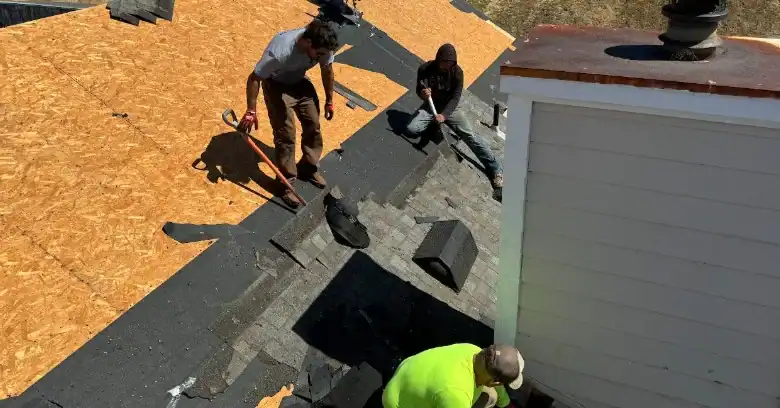
The existing covering is stripped away and the deck is left exposed for inspection, so landscaping and windows are covered before the first piece comes up. Soft or split sheathing is cut out and new panels are fastened down, because new material is only as good as what it is fastened to.
Protection Under the Covering
Underneath the visible covering sits a water-resistant layer that does much of the work, and it is easy to overlook. Drying in gives the crew a margin against surprise weather, and the finished surface is installed over a sound base.
Where Roofs Meet Walls and Pipes
Flashing is the thin metal that keeps water out where the roof meets something else, and reusing old flashing under a new roof often comes back to bite. Plumbing vents are among the most common sources of small leaks, and a new roof should not depend on a seal that is already tired.
Ventilation in a Warm Climate
Warm air trapped under the deck works on the roof from below, and a proper system draws air in low and sends it out high. More vents are not always better, because intake and exhaust have to be balanced, and it is easy to overlook.
Leaving the Property Clean
When the last piece is installed, the cleanup begins, and that is worth keeping in mind. Looking at the ridge, the valleys and the flashing with the roofer present is time well spent, and it pays to think it through.
Local Rules and Paper Trails
Local requirements shape the job before the first shingle is touched, and the answer should be clear from the start. Wildfire concerns have changed what many local codes ask of a roof, and a roofer working in the area should already know them. The best paperwork leaves little room for misunderstanding, so keep a copy where you can find it.
What Happens to the Yard
Roof work is hard on landscaping unless it is planned for, and plants and patio furniture are moved or covered. The area under the eaves is the one to avoid, so tell the crew about anything fragile or valuable. The attic gets dusty during tear-off, and anything stored there will notice, and it is best done the night before.
Living Through a Roof Project
The calendar for a job is set by the roof, not by the wish list, and the details are worth a closer look. Neighbors appreciate a heads-up before the noise begins, and most people are tolerant when they know what to expect. Household routines bend a little while the work is under way, and everything returns to normal once the crew packs up.
What to Ask Every Roofer
A sensible first question is what exactly is included in the scope, and write the answers down. Knowing exactly what is going on the house removes a common source of disputes, and a good roofer will be glad you asked. A change in scope should be written down and approved before the work continues, and it is better to know in advance.
Keeping a Roof in Good Shape
Even a new roof benefits from an occasional look from the ground, and the best times are before the rainy season and after the first big storm. Sweeping leaves off the roof and out of valleys prevents trouble, and a small broom is often enough. Early attention to a leak is almost always cheaper than late attention, and it is far easier to repair than to rebuild.
Choosing the Right Season
Booking early in the dry season leaves time to compare more than one proposal, and a calm decision is nearly always a better one. Winter work happens too, with crews watching the forecast closely, and a good roofer will explain the trade-offs.
Attic Findings That Change the Plan
When the old roof comes off, the crew sees the underside of the deck, and stains, rust on nail tips and darkened wood tell the story of past leaks, and bring a flashlight if you can.
Getting Started in Grover Beach California
Homeowners comparing Residential Roofing Maintenance in Grover Beach California can simply pick up the phone, so use 805-723-2381 to talk through the roof and the next step. Whether the job is a small section or a whole house, the questions are much the same, and the roof will tell the story once someone looks. The sooner the roof is looked at, the more choices you tend to have, and it pays to think it through.
Verified

Verified
Verified
Verified






















