
Thinking About Roof Replacement Around Grover Beach California?
Creative Roofing walks a household through every stage of a roofing project, for homes in Grover Beach California and the towns around it.
Phone 805-723-2381 and tell us what has you thinking about the roof.
Where a Roofing Job Begins
Before any material is chosen, the existing roof has to be understood, and that is worth keeping in mind. Photographs taken on that first visit become the record for everything that follows, and the findings are worth asking to see.
Sunny slopes and shaded slopes tell different stories, and both matter, and a roofer who knows the area expects exactly that.
What Should Actually Be Done
A roof can be repaired, partly rebuilt or removed entirely, and the evidence decides what is done, and the reasons should be easy to follow. Damage should be shown rather than only described, because you are the one living under the result.
Wood that has been wet for a long time has to be cut out and replaced, and it helps to know that before the work begins.
Matching the Covering to the House
Three families of material cover most residential roofs in this region, and the style of the neighborhood often plays a part. A roof that faces strong sun all afternoon behaves differently depending on its shade, and a full-size piece seen outdoors beats a catalog picture.
The Calendar and the Forecast
Roofing here follows the weather more than the calendar, and a careful crew never leaves an opening to chance. The temperature on the roof can run well above the temperature in the shade, and finishing early keeps people and materials in better shape.
Stripping Down to the Deck
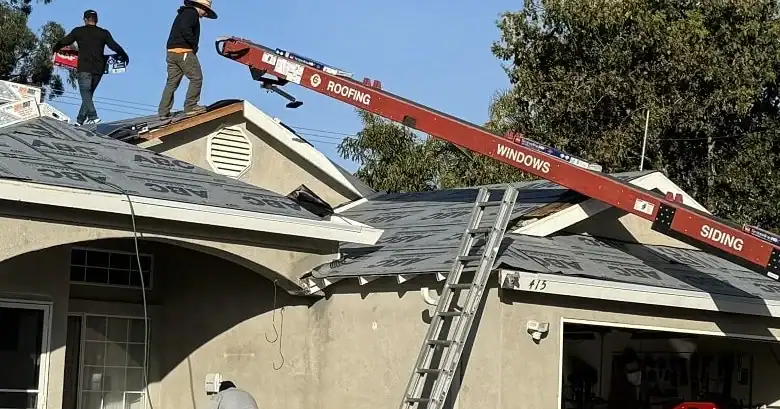
Old roofing comes off in layers, down to the bare decking, so landscaping and windows are covered before the first piece comes up. Soft or split sheathing is cut out and new panels are fastened down, and skipping the step shortens the life of an otherwise good roof.
What Goes Down First
Underneath the visible covering sits a water-resistant layer that does much of the work, and metal edging is set at the eaves and rakes before the covering. Reaching this stage quickly is a sensible way to protect the interior, and that is worth keeping in mind.
Details That Decide Whether It Leaks
Wherever the roof surface stops, a metal detail has to take over, and reusing old flashing under a new roof often comes back to bite. Pipe seals made of soft materials fail early in strong sun, and putting in new boots costs little when the roof is already open.
Attic Airflow
A roof without enough ventilation bakes the attic and everything stored in it, and a proper system draws air in low and sends it out high. A ventilation plan is worth a conversation before the job starts, and the answer should be part of the proposal.
Cleanup and the Final Walk-Through
Final cleanup means more than a quick sweep, and a magnetic sweep picks up stray nails. Keeping a short record of the materials used helps with later maintenance, and it only takes a few minutes.
Permits and Paperwork
Rules about reroofing differ from one city to the next, and a little care goes a long way. Where fire risk is high, the roof covering and the vents face tighter standards, and a roofer working in the area should already know them. Vague wording on a proposal is a reason to ask questions, so keep a copy where you can find it.
What Happens to the Yard
The ground around a house takes a beating during a roof project, and it is reasonable to ask how this will be done. Cars parked in the driveway can be struck by falling nails or pieces of shingle, and a short talk the evening before covers the details. Attic contents are best covered or moved before the work starts, and a sheet over stored boxes keeps the grit off.
Disruption and How to Manage It
A new roof usually takes a few days for an average house, though weather and size change that, and nobody can promise a date through a rain delay. Informing nearby households is a courtesy that pays off, and early starts mean early noise. Working from home during a roof job is possible, though not always pleasant, and a plan for the loud days makes them easier.
What to Ask Every Roofer
Ask what will be done with the old material and how the deck will be handled, and listen to how the answer is given. A proposal that only says shingles or tile is not specific enough, and it should be written on the proposal. Talk through how changes to the plan will be handled and agreed, and you will have a clear record.
Maintenance After the Job
Even a new roof benefits from an occasional look from the ground, and the best times are before the rainy season and after the first big storm. Keep the gutters clear of leaves and needles, especially at the end of the dry season, and a small broom is often enough. Call a roofer after a major wind event or if you see a stain on a ceiling, so do not wait for the next storm.
Is There a Best Time for a New Roof
A roof replaced on purpose goes better than one replaced in a panic, and calling in spring avoids the rush. Winter work happens too, with crews watching the forecast closely, and the details are worth a closer look.
Checking the Space Beneath the Deck
The attic is the roof as seen from below, and it often gives the clearest picture of how the roof has been performing, and it is easy to overlook.
Next Steps for Your Roofing Project
Homeowners comparing Roof Replacement in Grover Beach California can simply pick up the phone, and 805-723-2381 reaches the right person. Whether the job is a small section or a whole house, the questions are much the same, and an early conversation costs little. The decision often feels bigger before the call than it turns out to be, and nobody will rush you.
Verified

Verified
Verified
Verified






















