
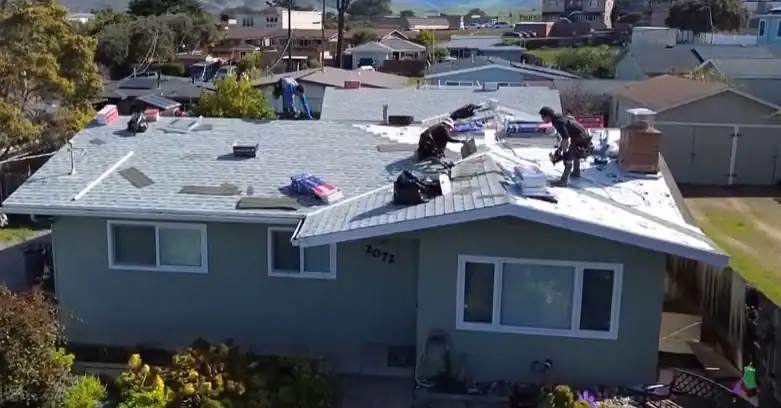
Looking for Roofing Companies for a Home in Grover Beach California?
Creative Roofing walks a household through every stage of a roofing project, across Grover Beach California and the neighboring communities.
Dial 805-723-2381 to start a conversation about the roof over your head.
Before Anything Is Torn Off
The first visit is about gathering facts rather than picking a product, and the notes from that visit steer every later choice. Photographs taken on that first visit become the record for everything that follows, and that is the evidence a sensible plan is built on.
Long dry summers and strong sun leave their mark on nearly every roof in California, and a roofer who knows the area expects exactly that.
Setting the Scope of Work
Some roofs need a patch, some need a section redone, and some have reached the end of the road, and the recommendation should come with the reasons attached. A roofer who explains the reasoning in plain terms is easier to trust with the work, because you are the one living under the result.
Rotted or soft sheathing changes the plan and often the schedule, so a note on how it will be handled saves arguments later.
Shingle, Tile or Metal
Homeowners usually end up comparing shingles, tile and metal panels, and the style of the neighborhood often plays a part. The shade of a roof affects how hot it runs in July, and it pays to look at them at different times of day.
When the Crew Can Work
Dry months are the busy season for roofing, since an open roof and rain do not mix, and crews watch the forecast closely. Roof surfaces get hot enough in July to change how materials behave, so the day usually begins at sunrise.
Getting to a Clean Surface
Old roofing comes off in layers, down to the bare decking, and magnets and rakes pick up the nails that fall. Soft or split sheathing is cut out and new panels are fastened down, and skipping the step shortens the life of an otherwise good roof.
Protection Under the Covering
Much of the protection a roof offers is out of sight, and valleys, eaves and penetrations get extra layers. Reaching this stage quickly is a sensible way to protect the interior, and the finished surface is installed over a sound base.
Details That Decide Whether It Leaks
Wherever the roof surface stops, a metal detail has to take over, since worn metal under new material becomes the weak link. Vent boots and pipe collars are rubber or lead pieces that wear out before the roof does, and a little care goes a long way.
Air Under the Roof
Warm air trapped under the deck works on the roof from below, and the details are worth a closer look. A ventilation plan is worth a conversation before the job starts, because airflow is easy to plan now and hard to add later.
Wrapping Up
Final cleanup means more than a quick sweep, and a magnetic sweep picks up stray nails. Questions are easier to settle while the crew is still on site, and a saved record answers questions nobody has thought to ask yet.
What the City Wants to See
Replacing a roof usually involves the local building department in some way, and the answer should be clear from the start. Certain hillside and edge-of-town areas follow stricter material rules than the valley floor, since the covering you pick has to be one the town accepts. Vague wording on a proposal is a reason to ask questions, and it is easy to overlook.
What Happens to the Yard
A roofing job puts a lot of weight, noise and debris around a house, and that is worth keeping in mind. Children and animals should stay clear of the yard while the work is underway, and keep a path clear for deliveries. Attic contents are best covered or moved before the work starts, and covering belongings is a sensible precaution.
Living Through a Roof Project
A new roof usually takes a few days for an average house, though weather and size change that, and plan on some slack for the weather. Informing nearby households is a courtesy that pays off, and most people are tolerant when they know what to expect. The loudest stretch is the tear-off, and it passes quickly, and everything returns to normal once the crew packs up.
Questions That Reveal the Difference
Ask how the crew protects the house when rain is in the forecast, and write the answers down. Product names and thicknesses on the proposal let you compare like with like, and a little care goes a long way. The way a roofer handles the unexpected says a lot about the whole operation, and it is better to know in advance.
Caring for the Roof Once It Is Done
Checking the roof twice a year takes only a few minutes, and binoculars make the job easy. Overhanging trees drop material that collects in corners and valleys, and it protects the investment you just made. Waiting on a small problem usually makes it more expensive, and it is far easier to repair than to rebuild.
Spring, Summer or Fall
Planning ahead usually gives better choices than reacting to an emergency, and calling in spring avoids the rush. Spring can bring the first showers, so flexibility helps, and the covering you choose affects the timing as well.
Roof Work and Your Attic
Insulation in the attic that is compressed, wet or missing should be noted, since a new roof is a good time to fix the whole assembly, and attic problems are cheaper to deal with during a re-roof.
Start the Conversation
Anyone researching Roofing Companies in Grover Beach California is one call away from a straight answer, so use 805-723-2381 to talk through the roof and the next step. A modest repair and a full re-roof both begin with an honest look at the roof, and we are glad to talk through the options. The sooner the roof is looked at, the more choices you tend to have, and the next step becomes obvious.
Verified

Verified
Verified
Verified






















