
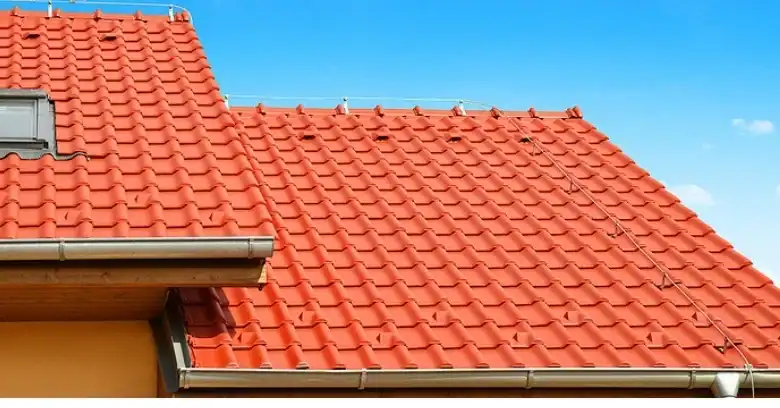
Weighing Clay Tile Roofs Serving Guadalupe California?
Creative Roofing keeps barrel, flat and interlocking roofs weathertight from the deck up, from Guadalupe California out to the surrounding area.
Reach us at 805-723-2381 and describe the roof and what you are seeing.
What Makes a Roof Out of Fired Clay or Molded Concrete Different
Clay and concrete units are individual pieces hung on a roof, overlapping like fish scales to shed water, and that is worth keeping in mind. Clay is formed and fired in a kiln, which gives it a rich natural color that does not fade, and the look varies enormously.
Weight, Framing and What the House Can Carry
A concrete or clay roof weighs several times more than a shingle roof, so the framing has to be up to the load, and a little care goes a long way. Even a roof originally built for heavy units can lose strength over time if water has damaged the wood, and the cost of that work belongs in the plan.
Felt, Membranes and Battens
Water gets under the pieces during wind-driven rain, and the underlayment carries it down and out, and it ages in the heat trapped under the pieces. The felt paper on older roofs becomes brittle and breaks when the pieces are lifted, and that is worth keeping in mind.
Strong Sun and Fired Surfaces
Clay and concrete handle strong sun far better than lighter coverings, which is a large part of their appeal here, and the color stays true for decades. Concrete may chalk or fade after long exposure, and a clean surface may need a sealer or fresh paint, and it fades or washes off with time.
Finding Damaged Units
Falling branches and windblown debris can also crack pieces in a storm, and replacing a broken piece is a quick job. A short inspection after any work on the roof catches damage early, and a good roofer will always carry a supply.
Edges and Intersections
Every junction on the roof is a place where craft decides the outcome, and metal valleys should be replaced during a re-lay. Ridge and hip pieces are bedded in mortar or fastened with mechanical systems, and the old mortar often fails before the roof does, and it deserves attention as the roof ages.
Wildfire Season and Fire Resistance
Nails, clips and foam adhesive are the common ways to secure units to the roof, and local rules in windy areas may require specific fastening. Embers do not ignite the pieces, though they can still collect in gaps and under the edges, and clean valleys are important.
Matching the Work to the Condition
The decision depends on how many pieces are cracked and how the underlayment is holding up, and it is easy to overlook. If the pieces are worn out, a re-lay would only reuse tired material, and that is worth keeping in mind.
Adhesives, Clips and Mortar
Modern installations often replace mortar with clips, screws or flexible adhesive that tolerate movement without failing, and be wary of mortar alone on a ridge. A missing eave closure is easy to spot from the ground as a dark gap along the lower edge of the roof, and they are often forgotten.
Washing, Sealing and Surface Care
A gentle low-pressure wash can restore the appearance of a roof, but harsh pressure damages the surface and loosens the pieces, and a clean roof looks years younger. Pressure washers can strip the coating from concrete units and force water under the overlaps, so they are best avoided or used with great care, and it is easy to overlook.
A Better Base for a Long-Lived Roof
High-temperature rated products suit the hot conditions found beneath dark units on a sunny slope, and that is worth keeping in mind. Counter-battens add further airflow and reduce heat transfer into the attic, and it pays to think it through.
Penetrations Through Fragile Surfaces
Each penetration through the covering is a place where a unit must be cut, and cut pieces are more likely to crack later, and the answer should be written down. Every person who climbs onto a roof of this kind risks cracking something, so access should be limited to those who know how to walk it, and a short sign near the hatch helps. Valleys and low points on a roof of this kind carry the heaviest flow in a downpour, and the units along their edges are cut to fit and sealed with care, and a ladder and a soft broom are often all you need.
How the Two Kinds Differ
Natural clay generally keeps its color for a very long time, while a coated concrete surface can fade or chalk and may need refreshing, and compare how they look in daylight. Flat profiles give a contemporary look and are often used on modern houses, while barrel shapes suit traditional architecture, and take your time with the choice.
Getting Specific About a Heavy Roof
The best contractors put the specifics in writing, and a little care goes a long way. Ask how the structure will be checked and what happens if damage is found, so do not hesitate to ask.
From Lifting the Units to Setting Them Back
Pieces are removed row by row from the top down, and the crew takes care to avoid cracking more units than the roof already has, so a re-lay is slower than a shingle job.
Roofs of Fired Clay and Concrete in Wind and Fire Country
Before the dry season peaks, a quick walk around the house with binoculars can show broken units, loose ridge pieces and debris piled in the valleys, and a roofer can check them quickly.
Keeping Track of a Long-Lived Roof
Photographs taken during the work show what lies under the units, which is a view that nobody sees again for decades, so ask the roofer for copies.
Tell Us What You Are Seeing
People researching Clay Tile Roofs in Guadalupe California are welcome to call with questions, so dial 805-723-2381 when it suits you. Calling before a problem becomes urgent makes it easier to compare materials and schedules, and a little care goes a long way.
Verified

Verified
Verified
Verified
Verified






















