
Searching for Residential Roof Contractors Around Guadalupe California?
Creative Roofing handles the planning, the tear-off and the cleanup of a roof job, for homes in Guadalupe California and the towns around it.
Call 805-723-2381 and describe the project you have in mind.
Before Anything Is Torn Off
Before any material is chosen, the existing roof has to be understood, since guessing from the ground leads to surprises later. The roofer checks the surface, the flashing, the vents and the gutter line, then the attic if it can be reached, and the findings are worth asking to see.
Sun and heat age a roof in ways that rain alone never would, and a little care goes a long way.
Setting the Scope of Work
The right answer depends on how much sound material is left on the house, and the details are worth a closer look. A roofer who explains the reasoning in plain terms is easier to trust with the work, because you are the one living under the result.
Hidden damage found during tear-off is the usual reason a project grows beyond its first outline, and it helps to know that before the work begins.
Choosing Materials for Your Home
Three families of material cover most residential roofs in this region, and the pitch of the roof narrows the field quickly. Sun exposure makes color a practical question as well as a visual one, so do not settle the question from a photograph.
When the Crew Can Work
For most of the year the weather here lets a roof go on with few interruptions, and crews watch the forecast closely. Heat affects the work as well, and finishing early keeps people and materials in better shape.
Tear-Off and Preparation
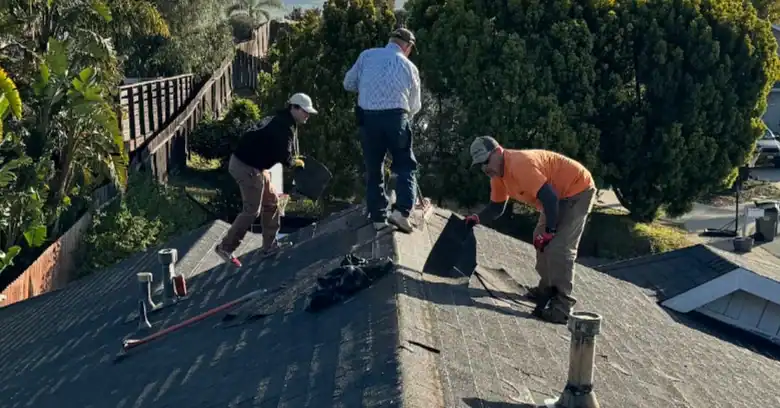
The existing covering is stripped away and the deck is left exposed for inspection, and magnets and rakes pick up the nails that fall. Soft or split sheathing is cut out and new panels are fastened down, so this is not the place to save time.
Protection Under the Covering
Beneath every roof is a membrane that catches whatever the surface lets through, and metal edging is set at the eaves and rakes before the covering. Reaching this stage quickly is a sensible way to protect the interior, and the visible covering goes on from there.
Penetrations and Edges
Water finds the joints first, so flashing matters, and it pays to think it through. The seal around a vent pipe rarely lasts as long as the surface around it, and a new roof should not depend on a seal that is already tired.
Attic Airflow
An attic under a hot roof can reach extreme temperatures in summer, and a proper system draws air in low and sends it out high. More vents are not always better, because intake and exhaust have to be balanced, and it is easy to overlook.
Finishing the Job
The job is not over until the yard looks like a yard again, and a magnetic sweep picks up stray nails. Questions are easier to settle while the crew is still on site, and it only takes a few minutes.
The Paperwork Side of a Roof
Replacing a roof usually involves the local building department in some way, because surprises at the counter slow everything down. Areas with wildfire exposure often have extra requirements for roofing materials and vents, and the details are worth a closer look. A clear proposal lists what will be removed, what will be installed and what happens if the deck needs work, because what is written down is what everyone remembers.
Shielding Windows, Plants and Patios
A roofing job puts a lot of weight, noise and debris around a house, so tarps and plywood go down where debris will land. Pets, children and cars are best kept away from the work area, and a little planning prevents most accidents. Inside the house, vibration can shake items from shelves and loosen attic insulation, and it is best done the night before.
What the Household Should Expect
A new roof usually takes a few days for an average house, though weather and size change that, so ask for the expected start and finish up front. A quick word with the people next door can head off complaints, so a friendly note goes a long way. Pets are often the ones most bothered by the commotion, and a plan for the loud days makes them easier.
Getting Clear Before the Work Begins
A sensible first question is what exactly is included in the scope, since confident answers come easily to people who do this daily. Knowing exactly what is going on the house removes a common source of disputes, and take your time reading it. A change in scope should be written down and approved before the work continues, and it is better to know in advance.
Keeping a Roof in Good Shape
A roof needs less attention than most parts of a house, but it needs some, and the best times are before the rainy season and after the first big storm. Trim branches that touch or hang over the roof, and it protects the investment you just made. Missing pieces, lifted edges or a new stain are all reasons to have someone look, and a photograph helps explain what you saw.
Spring, Summer or Fall
A roof replaced on purpose goes better than one replaced in a panic, so a few weeks of lead time is common. Late summer is hot but dependable, and crews are usually busy, and the details are worth a closer look.
Checking the Space Beneath the Deck
Looking at the roof from inside the attic before the work begins reveals water stains, damp insulation and daylight where none should enter, and bring a flashlight if you can.
Ready When You Are
Sorting out Residential Roof Contractors in Guadalupe California is easier with someone who can look at the house, so use 805-723-2381 to talk through the roof and the next step. Whether the job is a small section or a whole house, the questions are much the same, and that is worth keeping in mind. Putting off a roof question rarely makes it easier to answer, and nobody will rush you.
Verified

Verified
Verified
Verified
Verified






















