
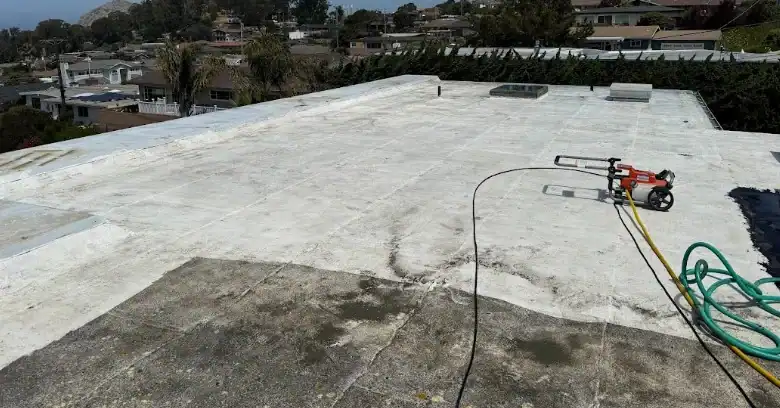
Thinking About TPO Membrane Roofing Near Guadalupe California?
Creative Roofing handles the seams, drains and edges where a flat roof succeeds or fails, throughout Guadalupe California and the neighboring communities.
Ring 805-723-2381 and tell us about the flat roof you have.
How a Flat Roof Differs From a Pitched One
A flat roof is never truly flat, but its slope is so slight that water drains slowly and lingers, and the quality of the seams decides everything. A flat roof gives little margin for error in the details, and look at examples of their finished work.
A Guide to the Main Options
Thermoplastic membranes are light-colored, reflective and joined by heat into one watertight skin, and a little care goes a long way. EPDM is a synthetic rubber sheet that is glued or mechanically fastened and has a long record on flat roofs, and the details are worth a closer look. Built-up roofing, often called BUR, layers hot or cold asphalt with reinforcing fabric and finishes with gravel or a cap sheet, and repairs can be made in place.
The Weak Points of a Level Roof
Failures concentrate wherever the membrane stops or is cut, and shortcuts miss the trouble. The edges around the perimeter take the most punishment from sun and wind, so look at those joints every year.
Standing Water Is a Warning
Ponding is the condition of standing water on a roof, and it accelerates wear on any membrane, and clear leaves and debris from scuppers. Fixing the cause of ponding is better than repeatedly patching its effects, and it extends the life of the whole system.
Strong Sun on a Flat Surface
Ultraviolet light and heat are the main forces that age the surface of a low-slope roof in this region, and it is easy to overlook. Silicone, acrylic and elastomeric coatings are the main families used on flat roofs, and the preparation is as important as the product.
Protecting the Surface From Wear
A roof with many openings needs more maintenance than one with few, and replacing a worn collar is a quick job. Roof-mounted air conditioners and other equipment bring service people who walk on the membrane, so ask the roofer to mark and protect the routes.
What a Roof Can Still Do
Repairing a small area is practical when the surrounding material is still healthy, and photographs help. These options depend on the condition of the insulation under the old surface, and wet insulation rules out a quick fix. Removing the old layers lets the deck be inspected and any damaged wood replaced, so begin conversations before the leaks become urgent.
Flat Roofs on Houses, Porches and Additions
Residential low-slope roofs turn up over additions, covered patios, carports and contemporary houses designed with clean horizontal lines, and a shingle crew may not be the right choice. A low roof meeting a taller wall is among the most leak-prone details on a house, and it deserves close attention, and describe where the stain appears. Roof decks and patios built over living space need a waterproofing layer under the finished surface, and a failure there can be expensive to reach, and ask about drains and overflows.
Energy and the Low-Slope Roof
A flat roof has little or no attic, so the layers of the roof itself have to do the work that attic insulation and ventilation do on a pitched house, and the combination is worth planning. A moisture survey with a meter or an infrared camera can map the wet areas without tearing the roof apart, and be skeptical of a bid that skips it.
Seasonal Checks for a Level Roof
The best time to look at a flat roof is at the end of the dry season, when leaves and debris have piled up and the rains are about to test every drain, and a small repair now is nearly always cheaper. After a heavy storm or a spell of high wind, a quick look from a ladder can show whether anything has shifted, lifted or collected on the surface, and call early rather than late.
Securing the Roof Against the Wind
Gusts lift a flat roof from its edges and corners, where the pressure is highest, and a membrane that is not firmly attached there can peel back like the lid of a can, and repairs should not wait for the next storm. Gravel on a flat roof is not decoration, because it protects the membrane from sun and holds it in place against uplift, and the details are worth a closer look. A careful roofer walks the roof beforehand and counts every penetration, then includes them all in the proposal, and write everything down.
Skylights, Hatches and Vents on a Level Roof
Old skylights on flat roofs are a frequent source of leaks, because the seals harden in the sun and the frames move over time, and that is worth keeping in mind. Flexible parts crack in strong sun over a few seasons, which is why penetrations leak long before the membrane does, and it pays to think it through. A drain bowl that is sealed to the membrane with a clamping ring and sealant keeps water from creeping under the sheet at the outlet, and a quick look takes only a minute.
Questions for a Flat Roof Contractor
Specific wording is your best protection against disputes, and the details are worth a closer look. Ask how the crew will test the seams, how the old roof will be disposed of and how the interior will be protected, and notes help you compare.
Access, Fumes and Noise
Hot-applied and adhesive systems give off smells while they cure, so windows and vents near the work area are usually closed for a day, and that is worth keeping in mind.
Questions Owners Often Ask About Level Roofs
A roof with no visible slope is not necessarily failing, since most are designed with a gentle fall toward the drains, and it pays to think it through.
Talk to Us About Your Flat Roof
A conversation about TPO Membrane Roofing in Guadalupe California usually starts with the type and age of the roof, so dial 805-723-2381 when it suits you. Whether the roof is leaking now or you are planning ahead, an early conversation keeps your options open, and we are glad to help you sort it out.
Verified

Verified
Verified
Verified
Verified






















