
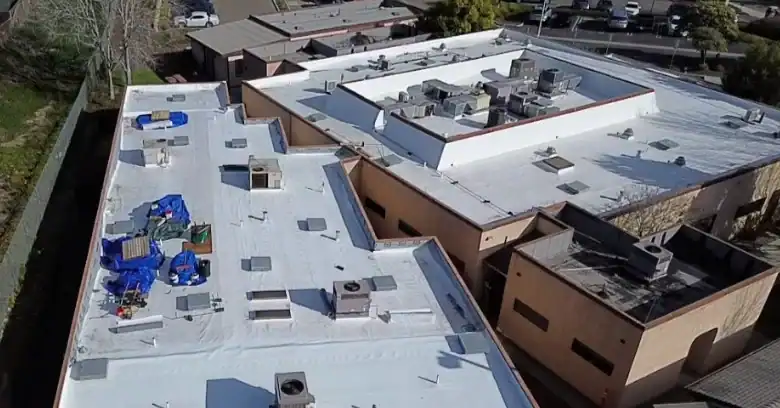
Researching TPO Membrane Roofs in Guadalupe California?
Creative Roofing knows how a roof without a pitch is built, why it leaks and how to make it last, serving owners in Guadalupe California and beyond.
Phone 805-723-2381 to arrange a visit to look at the roof.
Why Flat Roofs Need Special Care
Where a pitched roof sheds rain in seconds, a level roof holds it for hours or days, so shingles are never the answer. Because water stays on the surface, small flaws that a pitched roof would forgive become leaks on a flat one, and look at examples of their finished work.
Types of Flat Roofing
The seams on thermoplastic sheets are fused rather than glued, which makes them strong, so a damaged area can be fixed cleanly. A rubber roof is flexible and handles movement well, though seams and flashings need care, and the system suits many residential flat roofs. Gravel surfacing on a built-up roof protects the layers from sun and foot traffic, and the gravel hides the condition of the membrane.
Details That Fail First
The open field of a membrane is usually the toughest part of the whole system, so the inspection follows a set order. Where a flat roof meets a wall, the membrane must turn up and be sealed and capped with flashing, and a small bead of sealant in time prevents a big repair.
Scuppers, Drains and Slope
Water that does not drain adds weight, breeds algae and ages the surface faster, so check drains before the rains begin. Fixing the cause of ponding is better than repeatedly patching its effects, and the improvement is permanent.
Sunshine, Heat and Aging
Dark surfaces can reach temperatures much higher than the surrounding air, and a reflective finish lowers that stress. A white or reflective coating can lower the surface temperature and protect the membrane beneath, and the benefit depends on the existing roof.
Protecting the Surface From Wear
Every pipe, vent and curb through a flat roof is a place where the membrane has to be cut and sealed, and it pays to think it through. Regular foot traffic wears a path in the surface unless it is protected, and a quick look after any service visit catches new damage.
Repair, Recoat or Replace
A flat roof with a few leaks and a sound membrane can often be repaired for a fraction of the cost of replacing it, and photographs help. Testing for moisture shows what the roof can accept, and an honest answer starts with a survey. A new roof is also a chance to improve slope, drains and edges, and it should be planned rather than rushed.
Small Flat Roofs With Big Responsibilities
A level porch roof may look like a minor part of a house, yet it protects the walls and the ceiling beneath it just as a main roof does, so ask whether the company handles low-slope work regularly. Where a flat porch roof meets the wall of the main house, the membrane has to climb the wall and be capped so that water cannot run behind it, and a little care goes a long way. Pavers, decking and planters laid over a membrane protect it from the sun but hide it from view, and the details are worth a closer look.
Keeping Rooms Cool Below a Flat Surface
Because there is often little or no open space under the deck, heat from a hot summer day passes quickly into the rooms below unless the roof is well insulated, and it is easy to overlook. Cutting a small test square is another way to check, and it is sealed again as part of the same visit, and that is worth keeping in mind.
Keeping a Flat Roof in Shape Through the Year
A check in early autumn catches clogged drains, lifted seams and cracked sealant before the first storm tests them, and call a roofer if anything looks suspicious. A stain on a ceiling after a storm is a clear signal to have the roof inspected before the next one arrives, and cover furniture beneath a drip.
Perimeter Details and Uplift
Whether a membrane is fully adhered, mechanically fastened or held down by ballast, the edges are the place where the installation either succeeds or fails, and expect a specific answer. Raking the gravel back into an even layer is a routine job that keeps the protection continuous, and replace what has blown away. Walkways, curbs and equipment supports need to be flashed and fastened as part of the membrane, and the details on a crowded roof take real time to do properly, so be there for the visit if you can.
Roof Penetrations, Skylights and Hatches
Old skylights on flat roofs are a frequent source of leaks, because the seals harden in the sun and the frames move over time, and no skylight should be roofed over without a plan. Gathering the pipes and conduits into fewer penetrations reduces the number of places where leaks can begin, and mark each one on a sketch. Drains and scuppers are also penetrations, and the flashing around them has to be watertight while still letting the water through quickly, and clear them after storms.
Reading Competing Bids
A bid that only says new flat roof does not tell you what you are buying, and the details are worth a closer look. Ask who will supervise the work and how weather delays will be handled, and it is easy to overlook.
Preparing the Property for a Membrane Job
Hot-applied and adhesive systems give off smells while they cure, so windows and vents near the work area are usually closed for a day, so ask how the schedule will work.
Common Worries Before a Flat Roof Project
A roof with no visible slope is not necessarily failing, since most are designed with a gentle fall toward the drains, and an honest opinion is the goal.
Next Steps for Your Roof
Those comparing TPO Membrane Roofs in Guadalupe California can reach us by phone, so dial 805-723-2381 when it suits you. Whether the roof is leaking now or you are planning ahead, an early conversation keeps your options open, so reach out whenever you are ready.
Verified

Verified
Verified
Verified
Verified