
Looking Into BUR Roofing in Lompoc California?
Creative Roofing handles the seams, drains and edges where a flat roof succeeds or fails, serving owners in Lompoc California and beyond.
Call 805-723-2381 and we will explain the options for a level roof.
The Challenge of a Level Surface
Where a pitched roof sheds rain in seconds, a level roof holds it for hours or days, and the materials and details are chosen for it. Careful work at the seams, edges and drains is what keeps one dry, and it pays to think it through.
Membranes, Built-Up Layers and Coatings
Heat-welded sheets such as TPO are among the most popular choices for new flat roofs, so a damaged area can be fixed cleanly. A rubber roof is flexible and handles movement well, though seams and flashings need care, and the details are worth a closer look. Layered asphalt systems have been used for generations and are valued for redundancy, and it is easy to overlook.
Following the Water to Its Source
The open field of a membrane is usually the toughest part of the whole system, and a roofer should walk every foot of the edge. Where a flat roof meets a wall, the membrane must turn up and be sealed and capped with flashing, and a small bead of sealant in time prevents a big repair.
Keeping a Level Roof Drained
A roof that holds puddles is telling you about a low spot or a blocked drain, and clear leaves and debris from scuppers. Adding drains or enlarging scuppers helps when the old ones were undersized, and it extends the life of the whole system.
Sunshine, Heat and Aging
A flat roof faces the sky all day, and the sun heats it far more than a steep roof ever experiences, so the surface slowly dries and cracks. Liquid coatings are rolled or sprayed onto a sound roof to form a continuous reflective skin, so cleaning and repair come first.
Vents, Pipes and Rooftop Units
Skylights and hatches add edges that need careful flashing, and plugging with caulk is only a stopgap. Roof-mounted air conditioners and other equipment bring service people who walk on the membrane, and a little care goes a long way.
Repair, Recoat or Replace
A flat roof with a few leaks and a sound membrane can often be repaired for a fraction of the cost of replacing it, and temporary fixes should be called what they are. Testing for moisture shows what the roof can accept, and the survey is worth the small cost. Removing the old layers lets the deck be inspected and any damaged wood replaced, and it should be planned rather than rushed.
Flat Roofs on Houses, Porches and Additions
Owners of older homes often discover that an addition from a previous decade was finished with a membrane that has long since worn out, and a shingle crew may not be the right choice. Siding, stucco and trim all have to be worked into the flashing, and the roofer has to cooperate with whoever finished the wall, and a little care goes a long way. Roof decks and patios built over living space need a waterproofing layer under the finished surface, and a failure there can be expensive to reach, and ask about drains and overflows.
Keeping Rooms Cool Below a Flat Surface
Because there is often little or no open space under the deck, heat from a hot summer day passes quickly into the rooms below unless the roof is well insulated, so ask what insulation is part of the proposal. Wet insulation loses most of its ability to resist heat and adds weight the roof was never meant to carry, and be skeptical of a bid that skips it.
Keeping a Flat Roof in Shape Through the Year
Photographs taken each year create a record that makes changes easy to see, and call a roofer if anything looks suspicious. Branches, loose objects and windblown trash can cut a membrane or block a drain, and they should be removed promptly, and it pays to think it through.
Edges Take the Brunt
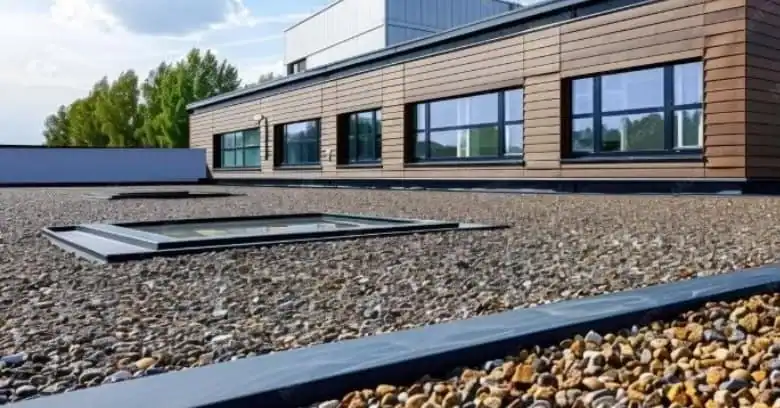
After a windy spell it is worth checking the perimeter from a ladder for loose trim, lifted seams and curling edges, and expect a specific answer. Stones that have been scattered by wind or foot traffic leave bare patches that expose the membrane to ultraviolet light, and the gravel does a great deal of quiet work. Surprises about extra details are the most common cause of disagreement over flat roof bids, so be there for the visit if you can.
Curbs, Collars and Boots
Old skylights on flat roofs are a frequent source of leaks, because the seals harden in the sun and the frames move over time, and that is worth keeping in mind. Flexible parts crack in strong sun over a few seasons, which is why penetrations leak long before the membrane does, and every opening is one more detail to watch. Overflow scuppers set slightly higher than the main drains act as a safety valve when the primary outlet is blocked, and clear them after storms.
What the Paperwork Should Say
A good proposal names the membrane, its thickness, the attachment method and the insulation to be used, so ask for the details in writing. A roofer with plenty of flat roof experience can explain problems before they occur, and it is easy to overlook.
Scheduling and Living With a Flat Roof Project
The crew needs clear access to the roof, a place to set up the equipment and a path for removing old material without crossing living areas, so ask how the schedule will work.
Questions Owners Often Ask About Level Roofs
The idea that level roofs always give trouble comes from poorly detailed examples, because careful work on seams and drains makes a real difference, and the answers are usually more reassuring than expected.
Tell Us What You Are Dealing With
Owners weighing BUR Roofing in Lompoc California can begin by describing the building and the roof they have, with 805-723-2381 ready whenever you want to talk. Calling before a problem becomes urgent makes it easier to compare options and schedules, and the first step is just a phone call.
Verified

Verified
Verified
Verified
Verified






















