
Planning Commercial Roofing in Lompoc California?
Creative Roofing plans roof work for owners and managers who cannot afford a disruption, throughout Lompoc California and the towns nearby.
Ring 805-723-2381 to talk through a commercial roof question.
How Building Roofs Differ
The roof on a store or office is a working surface as much as a cover, and the failure modes are different too. A low-slope roof has to be sealed, not just overlapped, and a small gap can become a large leak.
Water coming through a commercial roof can reach inventory, electrical gear and computers, and regular checks pay for themselves.
The Membranes Used on Flat Roofs
Single-ply membranes such as TPO, PVC and EPDM are among the most common coverings on commercial buildings, and each family has its own seam method. Older buildings often have built-up roofing, with several layers laid over one another, and the layers add redundancy. Coated metal panels have become common on newer low-rise construction, and the right answer depends on what is already on the roof.
Keeping Water Moving
Every flat roof is only as good as its drainage, so inspections are best scheduled in late summer. Drains, scuppers and gutters collect water and carry it away from the building, and the first heavy rain turns it into a plug.
Working Around Machinery
A roof with a lot of equipment has a lot of penetrations to maintain, and the details are worth a closer look. A roof that has regular service visits needs protection along the paths, and a contractor can mark them on the roof.
Reflective Roofs and Cooling Costs
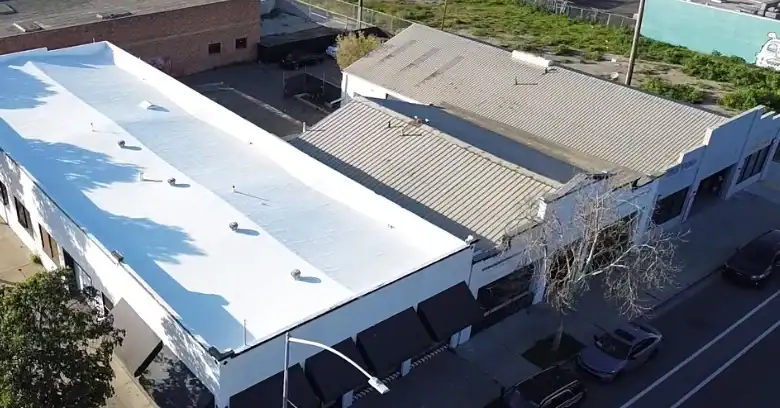
Direct sun heats a dark roof to a temperature far above the air, and that is why white and light membranes are so common. Reflective membranes and coatings can lower the temperature of the roof and the space beneath it, and local rules may favor reflective surfaces on some projects.
Inspections and Upkeep
Scheduled inspections catch small problems before they reach the ceiling, so owners often tie visits to the seasons. Typical upkeep includes clearing drains, checking seams and sealing small cracks, and the details are worth a closer look.
Weighing the Options
Not every aging roof needs a full tear-off, and testing is better than guessing. Wet insulation stops insulating and adds heavy weight to the structure, so a clear diagnosis matters.
Roofing Without Disrupting Operations
A good plan keeps customers and staff away from the areas under construction, so the schedule is shared in advance. Safety at the edge of a roof is a serious matter for the crew and for people below, so ask how the site will be protected.
Reading a Roof Proposal
Look for details about seams, terminations and penetration flashing, and the details are worth a closer look. The paperwork at the end of a job is as important as the work itself, and it is easy to overlook.
Tracing a Leak Over a Business
The wet patch indoors only tells you where the water finally escaped, and that is worth keeping in mind. Common sources include seams, drains, flashing at walls and the base of every pipe, so the inspection begins at the details. A survey gives facts to base a decision on, and it helps explain the situation to the people who sign the checks.
Holding the Roof Down
Gusts act on a roof like air over an aircraft wing, trying to lift it, and repairs there should not wait. Coping and edge flashing should be firmly attached and free of gaps, and a small fix now prevents a large one later.
Where the Roof Meets the Building
A parapet is an extra wall that needs its own waterproofing on both faces, and a gap at the top lets water run down behind the membrane. Cracks in a parapet cap or the wall below can feed water into the roof system, so it helps to look at the wall as well as the roof.
Restoring a Roof Without Tearing It Off
Restoration coatings are meant for roofs that are still basically sound, and a coating is only as good as the surface beneath it. Applying a coat over a roof that is already saturated traps moisture and hides the problem, and the follow-up inspections matter too.
Large Roofs, Warehouses and Retail Centers
Big projects need a plan for storage, staging and phasing, and the roof can be done in sections. Shopping centers and strip malls share roofs across several tenants, and the owner usually coordinates the work. The roof of an apartment building protects many households at once, and noisy work is timed with consideration.
Planning a Roof Budget Without Surprises
A reserve for the eventual replacement keeps the decision calm, and regular inspections help estimate the timing. The cheapest proposal is not always the best value, and ask about the expected service life of each option.
What Sits Between the Deck and the Membrane
Thick boards of insulation do much of the work of holding heat in or out, and it is easy to overlook. Cover boards add a firm surface that protects insulation from foot traffic and hail-free impacts, and that is worth keeping in mind. Tapered insulation can create slope on a roof that is otherwise dead flat, and it pays to think it through.
Preparing a Building Roof for the Rainy Season
A pre-season checklist includes clearing drains and scuppers, checking seams and flashing, and photographing the condition of the surface, so schedule it like any other maintenance.
Next Steps for Your Commercial Roof
Owners comparing Commercial Roofing in Lompoc California can start by describing the building and what concerns them, and 805-723-2381 reaches someone who can help. Even a quick conversation can clarify what the building needs, and we are glad to help you sort it out. Questions about an aging roof are easier to answer once someone has seen it, and the conversation can be brief. Tenants, lenders and insurers all take an interest in the state of a roof, and written records show the property has been cared for.
Verified

Verified
Verified
Verified
Verified






















