
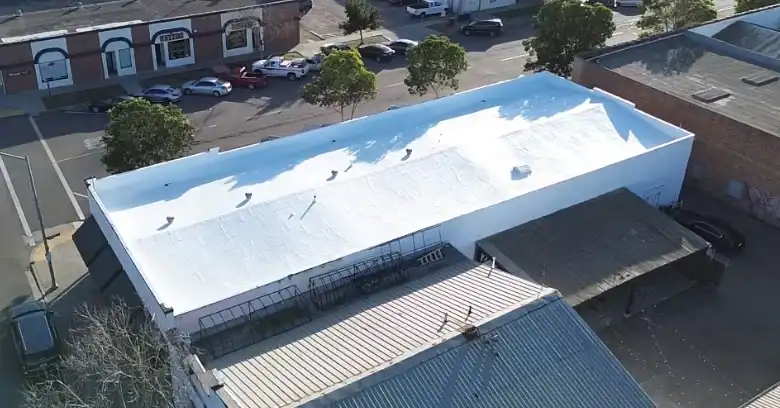
Looking Into Flat Roofs Near Lompoc California?
Creative Roofing installs membranes, coatings and built-up layers on roofs that barely shed water on their own, across Lompoc California and nearby.
Reach us at 805-723-2381 to arrange a visit to look at the roof.
Roofs That Do Not Shed Water by Themselves
Low-slope roofs rely on a continuous waterproof skin because gravity does little to clear the surface, so shingles are never the answer. Because water stays on the surface, small flaws that a pitched roof would forgive become leaks on a flat one, so it pays to hire people who work on flat roofs regularly.
Types of Flat Roofing
TPO and PVC are single-ply sheets that are welded at the seams with hot air, creating a continuous waterproof surface, so a damaged area can be fixed cleanly. The big rolls of rubber cover large areas with few seams, and the system suits many residential flat roofs. Built-up roofing, often called BUR, layers hot or cold asphalt with reinforcing fabric and finishes with gravel or a cap sheet, so the structure has to carry it.
Following the Water to Its Source
Most flat roof leaks start at a detail rather than in the middle of the roof, and the field is checked last. Parapet caps and copings protect the top of the wall and must be sound, and a small bead of sealant in time prevents a big repair.
Standing Water Is a Warning
Rain here often comes in sudden bursts that test every flat roof drain, and clear leaves and debris from scuppers. Adding drains or enlarging scuppers helps when the old ones were undersized, and it extends the life of the whole system.
Sunshine, Heat and Aging
A flat roof faces the sky all day, and the sun heats it far more than a steep roof ever experiences, and the movement stresses seams and fasteners. Reflective surfaces keep rooms below cooler and may reduce the load on air conditioning, and the preparation is as important as the product.
Anything That Pokes Through or Sits on Top
Every pipe, vent and curb through a flat roof is a place where the membrane has to be cut and sealed, and replacing a worn collar is a quick job. Walkway pads cost little and save the membrane from scuffing and punctures, and a plan for traffic keeps the roof sound.
What a Roof Can Still Do
Targeted repairs buy time and protect the interior while a bigger plan is made, so ask to see where the water is getting in. A restoration coat is a good choice for a roof that is dry beneath and sound in the field, and it is easy to overlook. Replacing wet insulation restores the performance of the roof and the comfort of the rooms below, and ask about drainage improvements in particular.
Patios, Garages and Modern Homes
Residential low-slope roofs turn up over additions, covered patios, carports and contemporary houses designed with clean horizontal lines, and it pays to think it through. Leaks that appear in the room next to an addition often trace back to this single joint, and a thorough repair covers the whole junction. A roof used as living space has to meet higher standards than one that nobody walks on, and avoid fastening anything through the membrane.
Heat Gain and Thermal Layers
Rigid insulation boards above or below the deck slow the passage of heat, and they matter more on a level roof than on any other type, and the combination is worth planning. A moisture survey with a meter or an infrared camera can map the wet areas without tearing the roof apart, and that is often cheaper than a full tear-off.
Seasonal Checks for a Level Roof
Drains, scuppers and gutters should be cleared first, since blocked outlets cause more damage than any other single fault, so make it a fixed date on the calendar. After a heavy storm or a spell of high wind, a quick look from a ladder can show whether anything has shifted, lifted or collected on the surface, and acting quickly limits the damage.
Holding a Membrane Down in a Gust
Gusts lift a flat roof from its edges and corners, where the pressure is highest, and a membrane that is not firmly attached there can peel back like the lid of a can, and repairs should not wait for the next storm. Stones that have been scattered by wind or foot traffic leave bare patches that expose the membrane to ultraviolet light, and replace what has blown away. A careful roofer walks the roof beforehand and counts every penetration, then includes them all in the proposal, and a thorough walk-through prevents them.
Everything That Breaks the Surface
A curb lifts the opening above the level of standing water, which is the main reason it exists, and the membrane must climb it and be sealed at the top, and no skylight should be roofed over without a plan. Flexible parts crack in strong sun over a few seasons, which is why penetrations leak long before the membrane does, and every opening is one more detail to watch. Keeping every outlet clear and in good repair is the most important single habit of flat roof care, and a little care goes a long way.
Reading Competing Bids
Specific wording is your best protection against disputes, and it lets you compare two bids fairly. Ask how the crew will test the seams, how the old roof will be disposed of and how the interior will be protected, and notes help you compare.
Keeping Disruption Small
Most flat roof jobs on a house or small building take only a few days, though adhesives and torch work call for dry weather and some advance planning, and the disruption is brief compared with a leak.
Common Worries Before a Flat Roof Project
A roof with no visible slope is not necessarily failing, since most are designed with a gentle fall toward the drains, and bring photographs if you have them.
Next Steps for Your Roof
People researching Flat Roofs in Lompoc California are welcome to call with questions, and 805-723-2381 reaches someone who can help. Calling before a problem becomes urgent makes it easier to compare options and schedules, and the roof will tell the story once someone looks.
Verified

Verified
Verified
Verified
Verified






















