
Planning Residential Roof Contractors Near Lompoc California?
Creative Roofing handles the planning, the tear-off and the cleanup of a roof job, for homes in Lompoc California and the towns around it.
Call 805-723-2381 and describe the project you have in mind.
Where a Roofing Job Begins
Every roofing job starts with someone climbing up to see what is actually there, and a rushed visit tends to cost more than it saves. Photographs taken on that first visit become the record for everything that follows, and each one goes into the notes.
Long dry summers and strong sun leave their mark on nearly every roof in California, and the sunniest side is usually the oldest-looking side.
What Should Actually Be Done
Some roofs need a patch, some need a section redone, and some have reached the end of the road, and the details are worth a closer look. Findings that cannot be pointed to are findings worth questioning, and the answer tells you a lot.
Weak spots in the deck only show themselves once the old roof is off, so a note on how it will be handled saves arguments later.
Matching the Covering to the House
Asphalt shingles, concrete or clay tile and standing seam metal are the coverings most often put on homes here, but the framing and the slope decide more than preference does. Sun exposure makes color a practical question as well as a visual one, and that is worth keeping in mind.
Planning for Rain and Heat
For most of the year the weather here lets a roof go on with few interruptions, and it pays to think it through. The temperature on the roof can run well above the temperature in the shade, so the day usually begins at sunrise.
Stripping Down to the Deck
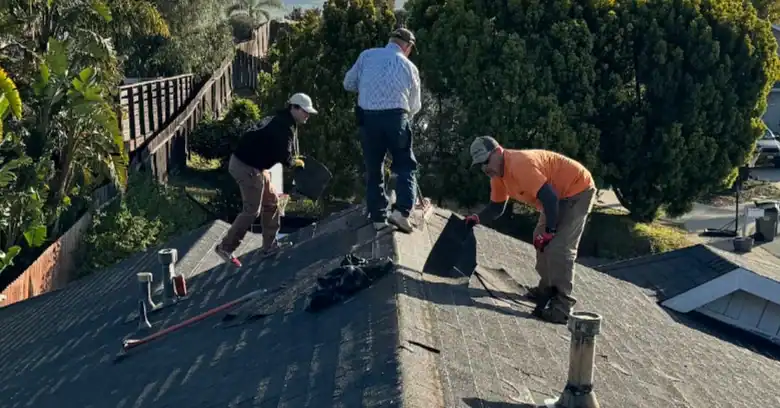
The existing covering is stripped away and the deck is left exposed for inspection, so landscaping and windows are covered before the first piece comes up. Soft or split sheathing is cut out and new panels are fastened down, because new material is only as good as what it is fastened to.
Waterproofing Beneath the Surface
Underneath the visible covering sits a water-resistant layer that does much of the work, and it is easy to overlook. Drying in gives the crew a margin against surprise weather, and the finished surface is installed over a sound base.
Small Metal Pieces, Large Consequences
Flashing is the thin metal that keeps water out where the roof meets something else, since worn metal under new material becomes the weak link. Sun dries and cracks the flexible parts over time, so this is an easy step to ask about.
Air Under the Roof
An attic under a hot roof can reach extreme temperatures in summer, so vents near the ridge give the hot air a way out. A ventilation plan is worth a conversation before the job starts, because airflow is easy to plan now and hard to add later.
Wrapping Up
The job is not over until the yard looks like a yard again, and a magnetic sweep picks up stray nails. Looking at the ridge, the valleys and the flashing with the roofer present is time well spent, and it makes future repairs and sales smoother.
Approvals Before the Work Starts
Depending on the town, a re-roof may need a permit before any material is ordered, because surprises at the counter slow everything down. Certain hillside and edge-of-town areas follow stricter material rules than the valley floor, and the proposal should reflect them. A clear proposal lists what will be removed, what will be installed and what happens if the deck needs work, so keep a copy where you can find it.
Looking After Your Property During the Work
Roof work is hard on landscaping unless it is planned for, and a careful crew sets them before the work begins. Children and animals should stay clear of the yard while the work is underway, and it pays to think it through. The attic gets dusty during tear-off, and anything stored there will notice, and it is best done the night before.
Disruption and How to Manage It
A simple roof may go quickly while a complicated one takes longer, and the details are worth a closer look. A quick word with the people next door can head off complaints, and the whole thing is over sooner than it seems. The loudest stretch is the tear-off, and it passes quickly, and everything returns to normal once the crew packs up.
A Short List for Comparing Proposals
Ask what will be done with the old material and how the deck will be handled, and it pays to think it through. Ask for the materials by name and manufacturer so you can look them up, and a little care goes a long way. The way a roofer handles the unexpected says a lot about the whole operation, and the details are worth a closer look.
Small Habits That Extend Roof Life
Checking the roof twice a year takes only a few minutes, and binoculars make the job easy. Trim branches that touch or hang over the roof, and a small broom is often enough. A prompt visit after damage keeps a minor repair minor, and a photograph helps explain what you saw.
Is There a Best Time for a New Roof
Waiting for the first storm to find the weak spot means hiring in a hurry, so a few weeks of lead time is common. Any month can work with the right planning and a willingness to move a day, and the details are worth a closer look.
Insulation, Ducts and Cables Under the Roof
The attic is the roof as seen from below, and it often gives the clearest picture of how the roof has been performing, so ask the roofer to look inside as well.
Talk to Us About Your Roof
Sorting out Residential Roof Contractors in Lompoc California is easier with someone who can look at the house, so use 805-723-2381 to talk through the roof and the next step. Whether the job is a small section or a whole house, the questions are much the same, so there is no harm in asking questions first. The decision often feels bigger before the call than it turns out to be, and nobody will rush you.
Verified

Verified
Verified
Verified
Verified






















