
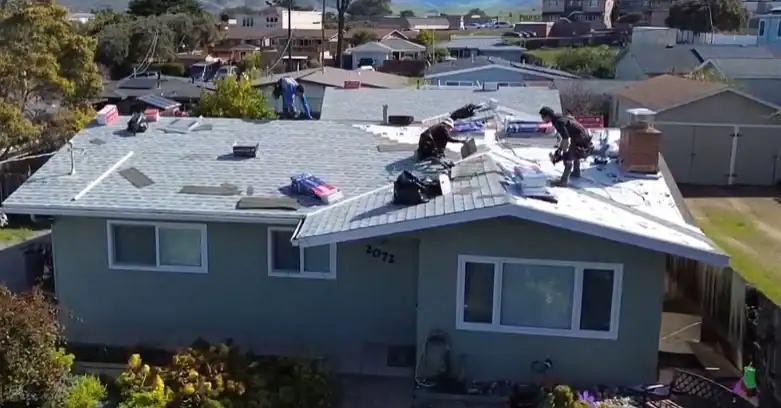
Looking for Roofing Contractors in Lompoc California?
Creative Roofing covers each step of putting a new roof on a house, serving Lompoc California and the places close by.
Dial 805-723-2381 to set up a time for someone to look at the roof.
Day One of a Roof Project
Before any material is chosen, the existing roof has to be understood, and that is worth keeping in mind. Loose granules, lifted edges, cracked flashing and soft spots all say something about the layers below, and each one goes into the notes.
Long dry summers and strong sun leave their mark on nearly every roof in California, so the wear is rarely even from one side to the next.
Setting the Scope of Work
Whether to fix or replace comes down to the condition of the layers beneath the surface, and the details are worth a closer look. A roofer who explains the reasoning in plain terms is easier to trust with the work, since the plan should make sense to the person paying for it.
Hidden damage found during tear-off is the usual reason a project grows beyond its first outline, and nobody should be surprised when it happens.
Matching the Covering to the House
Most houses here wear one of three coverings, and the choice shapes everything else, and the style of the neighborhood often plays a part. A roof that faces strong sun all afternoon behaves differently depending on its shade, and it pays to look at them at different times of day.
The Calendar and the Forecast
For most of the year the weather here lets a roof go on with few interruptions, and a careful crew never leaves an opening to chance. The temperature on the roof can run well above the temperature in the shade, so an early knock on the door is nothing to worry about.
Removing the Old Roof
Removal of the old material is where the project gets loud, and magnets and rakes pick up the nails that fall. Soft or split sheathing is cut out and new panels are fastened down, and skipping the step shortens the life of an otherwise good roof.
Underlayment and Drying In
Beneath every roof is a membrane that catches whatever the surface lets through, and valleys, eaves and penetrations get extra layers. Drying in gives the crew a margin against surprise weather, and the visible covering goes on from there.
Flashing and the Fiddly Parts
Chimneys, skylights, vent pipes and walls all need flashing worked into the roof, so fresh metal is standard practice among careful crews. Pipe seals made of soft materials fail early in strong sun, and a new roof should not depend on a seal that is already tired.
Ventilation in a Warm Climate
A roof without enough ventilation bakes the attic and everything stored in it, so vents near the ridge give the hot air a way out. More vents are not always better, because intake and exhaust have to be balanced, and it is easy to overlook.
Leaving the Property Clean
The job is not over until the yard looks like a yard again, and covers come off the landscaping and the beds are inspected. Keeping a short record of the materials used helps with later maintenance, and it only takes a few minutes.
Local Rules and Paper Trails
Depending on the town, a re-roof may need a permit before any material is ordered, so it is fair to ask who pulls the permit. Areas with wildfire exposure often have extra requirements for roofing materials and vents, and the details are worth a closer look. The best paperwork leaves little room for misunderstanding, and it is easy to overlook.
Keeping the Property Safe
A roofing job puts a lot of weight, noise and debris around a house, and it is reasonable to ask how this will be done. Pets, children and cars are best kept away from the work area, and it pays to think it through. Attic contents are best covered or moved before the work starts, and covering belongings is a sensible precaution.
Disruption and How to Manage It
Timing depends on the size of the roof, the complexity of the layout and the covering chosen, and the details are worth a closer look. Informing nearby households is a courtesy that pays off, so a friendly note goes a long way. Pets are often the ones most bothered by the commotion, and the noise settles once the old roof is gone.
Questions That Reveal the Difference
Ask what will be done with the old material and how the deck will be handled, and write the answers down. Product names and thicknesses on the proposal let you compare like with like, and it should be written on the proposal. The way a roofer handles the unexpected says a lot about the whole operation, and you will have a clear record.
Keeping a Roof in Good Shape
Regular glances at the roof catch small problems early, so put it on the calendar like any other chore. Debris on the roof holds moisture and wears the surface, and a small broom is often enough. Missing pieces, lifted edges or a new stain are all reasons to have someone look, and the earlier the better.
Spring, Summer or Fall
Planning ahead usually gives better choices than reacting to an emergency, and a calm decision is nearly always a better one. Any month can work with the right planning and a willingness to move a day, and a good roofer will explain the trade-offs.
Insulation, Ducts and Cables Under the Roof
Insulation in the attic that is compressed, wet or missing should be noted, since a new roof is a good time to fix the whole assembly, so ask the roofer to look inside as well.
Next Steps for Your Roofing Project
Sorting out Roofing Contractors in Lompoc California is easier with someone who can look at the house, and 805-723-2381 reaches the right person. Whether the job is a small section or a whole house, the questions are much the same, and an early conversation costs little. The decision often feels bigger before the call than it turns out to be, so pick up the phone when you are ready.
Verified

Verified
Verified
Verified
Verified






















