
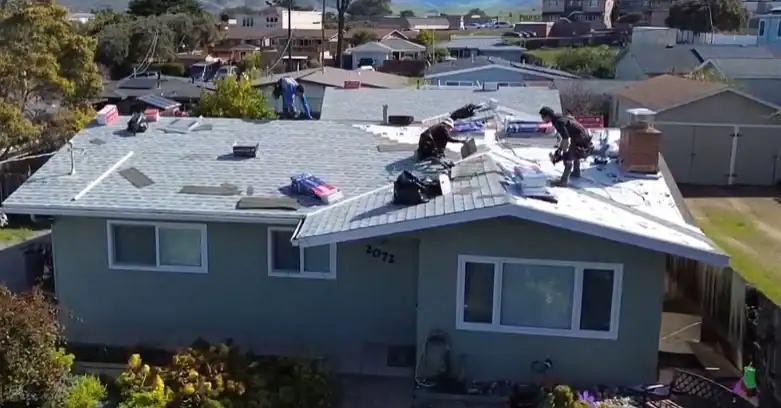
Looking for Roofing Replacement Around Lompoc California?
Creative Roofing covers each step of putting a new roof on a house, working in Lompoc California and nearby.
Ring 805-723-2381 and tell us what has you thinking about the roof.
Where a Roofing Job Begins
Every roofing job starts with someone climbing up to see what is actually there, and a rushed visit tends to cost more than it saves. A proper look covers the slopes seen from the yard and the ones that are not, so the visit usually takes longer than people expect.
Long dry summers and strong sun leave their mark on nearly every roof in California, so the wear is rarely even from one side to the next.
Setting the Scope of Work
Whether to fix or replace comes down to the condition of the layers beneath the surface, and the recommendation should come with the reasons attached. Ask to see the problem areas, either in photographs or from the ladder, and the answer tells you a lot.
Weak spots in the deck only show themselves once the old roof is off, and agreeing on the approach in advance beats debating it with the roof open.
Picking a Roof Covering
Asphalt shingles, concrete or clay tile and standing seam metal are the coverings most often put on homes here, and the style of the neighborhood often plays a part. The shade of a roof affects how hot it runs in July, so do not settle the question from a photograph.
Timing the Work
Rain arrives in bursts, and a roof that is open when one comes needs protection, and it pays to think it through. On very hot afternoons shingles soften and workers slow down, and a little care goes a long way.
What Happens on Demolition Day
Tear-off gives the first real view of the structure under the roof, so landscaping and windows are covered before the first piece comes up. Repairs to the deck happen now, before anything new is installed, so this is not the place to save time.
Underlayment and Drying In
Much of the protection a roof offers is out of sight, and valleys, eaves and penetrations get extra layers. Drying in gives the crew a margin against surprise weather, so the rest of the work can proceed without worry.
Flashing and the Fiddly Parts
Wherever the roof surface stops, a metal detail has to take over, since worn metal under new material becomes the weak link. The seal around a vent pipe rarely lasts as long as the surface around it, so this is an easy step to ask about.
Intake and Exhaust
An attic under a hot roof can reach extreme temperatures in summer, since warm air rises on its own when it is given a path. The design of the system matters more than the number of vents, and the answer should be part of the proposal.
Wrapping Up
The job is not over until the yard looks like a yard again, and covers come off the landscaping and the beds are inspected. Questions are easier to settle while the crew is still on site, and it makes future repairs and sales smoother.
The Paperwork Side of a Roof
Rules about reroofing differ from one city to the next, and the process is easier when someone handles it for you. Wildfire concerns have changed what many local codes ask of a roof, since the covering you pick has to be one the town accepts. A clear proposal lists what will be removed, what will be installed and what happens if the deck needs work, so keep a copy where you can find it.
What Happens to the Yard
Heavy materials, ladders and falling pieces all share the space around the walls, and a careful crew sets them before the work begins. The area under the eaves is the one to avoid, and a little planning prevents most accidents. Hammering on the deck above can rattle a ceiling and drop dust into the rooms below, and it is best done the night before.
Disruption and How to Manage It
Most residential projects are finished within days, not weeks, and the crew should give you a realistic window. A quick word with the people next door can head off complaints, and most people are tolerant when they know what to expect. Remote workers may want a quiet spot elsewhere for a day or two, and that is worth keeping in mind.
Questions Worth Asking Before You Agree
Ask how the roof will be ventilated and how the flashing will be handled, and anything left vague deserves a follow-up. The product line matters as much as the type of covering, and it should be written on the proposal. The way a roofer handles the unexpected says a lot about the whole operation, and it is better to know in advance.
Keeping a Roof in Good Shape
Regular glances at the roof catch small problems early, and little problems stay little. Overhanging trees drop material that collects in corners and valleys, and that is worth keeping in mind. Call a roofer after a major wind event or if you see a stain on a ceiling, and a photograph helps explain what you saw.
Spring, Summer or Fall
Booking early in the dry season leaves time to compare more than one proposal, so a few weeks of lead time is common. Spring can bring the first showers, so flexibility helps, and the best season is often the one that fits your calendar.
Checking the Space Beneath the Deck
The attic is the roof as seen from below, and it often gives the clearest picture of how the roof has been performing, and it is easy to overlook.
Getting Started in Lompoc California
Sorting out Roofing Replacement in Lompoc California is easier with someone who can look at the house, and the number is 805-723-2381. The size of the project changes the schedule but not the principle, and the roof will tell the story once someone looks. Taking the first step is usually the hardest part of any home project, and it pays to think it through.
Verified

Verified
Verified
Verified
Verified






















