
Researching Tile Roofing in Lompoc California?
Creative Roofing handles the underlayment, battens and hand-shaped details that a fired or molded roof depends on, for homes in Lompoc California and the towns around it.
Call 805-723-2381 and we will explain what is involved.
A Heavy Covering With a Long History
Every piece is shaped to channel water downhill and over the piece below, so the layers below matter more than most people expect. Each type comes in profiles from rounded barrels to flat slabs and interlocking shapes, and the weight differs between materials.
Structure First, Style Second
A concrete or clay roof weighs several times more than a shingle roof, so the framing has to be up to the load, and a little care goes a long way. A house that was built for shingles may not be safe under a full load of concrete, and the details are worth a closer look.
Felt, Membranes and Battens
Water gets under the pieces during wind-driven rain, and the underlayment carries it down and out, and a re-lay is the chance to replace it. Sun and heat trapped under the units bake the underlayment for years, until it dries, cracks and fails, and that is why age matters as much as appearance.
Sun, Heat and Dry Summers
Clay and concrete handle strong sun far better than lighter coverings, which is a large part of their appeal here, so the look holds up. Moss and lichen are less of a problem in dry summers, though shaded areas may collect some, so ask before assuming the roof is failing.
Finding Damaged Units
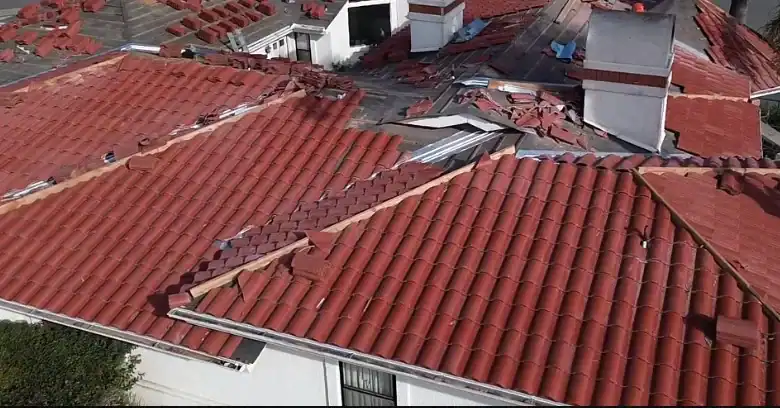
A cracked unit lets water reach the underlayment, which is meant for backup rather than constant exposure, so a close inspection from the roof is the only reliable method. A short inspection after any work on the roof catches damage early, so ask for a check after other work is done.
Hand-Shaped Metal and Mortar
Metal flashing and sealant protect these joints, and both age in strong sun, and metal valleys should be replaced during a re-lay. Ridge and hip pieces are bedded in mortar or fastened with mechanical systems, and the old mortar often fails before the roof does, and the repair is far less costly than water damage.
Holding Heavy Pieces in Place
Nails, clips and foam adhesive are the common ways to secure units to the roof, and the attachment method should be in the proposal. Clay and concrete are noncombustible, which is a strong advantage in a region with wildfire seasons, so ask how gaps will be kept closed.
Deciding What an Aging Roof Needs
A re-lay means lifting the units, replacing the underlayment and flashing, and setting the pieces back in place, and the savings from a re-lay can be considerable. If the pieces are worn out, a re-lay would only reuse tired material, and the new material can be a different type.
Mortar, Foam and Dry-Set Methods
Modern installations often replace mortar with clips, screws or flexible adhesive that tolerate movement without failing, and the method should be named in the proposal. Eave closures and bird stops fill the gap beneath the lowest course, keeping out birds, rodents, leaves and windblown embers, so these small parts deserve attention.
Washing, Sealing and Surface Care
Cleaning should be done carefully by someone who knows the material, since walking on the roof is a risk to the units themselves, and the result can be striking. A professional cleaner will explain the method and protect the plants and walls below, and it is easy to overlook.
Specifying the Hidden Layer
The underlayment is the part of a roof of this kind that owners cannot see and roofers can easily skimp on, so it deserves specific attention in a proposal, and that is worth keeping in mind. Counter-battens add further airflow and reduce heat transfer into the attic, so look for it in the proposal.
Working Around Obstacles
Mounting an array on a roof of this type means lifting or cutting units around every bracket and sealing the opening beneath, so coordinate the roofer with any other trade. Service technicians for air conditioning and chimney sweeps should be told to step only where the roof can bear a person, so make it a habit to ask about the roof. Valleys and low points on a roof of this kind carry the heaviest flow in a downpour, and the units along their edges are cut to fit and sealed with care, and it is easy to overlook.
Weighing Clay Against Concrete
Between the two, concrete is usually the more economical, while clay is prized for its authentic look and its long record of service, so ask to see samples of both. Flat profiles give a contemporary look and are often used on modern houses, while barrel shapes suit traditional architecture, so hold them against the house.
Questions Worth Asking
The best contractors put the specifics in writing, and a clear proposal reflects a careful crew. Questions about experience are reasonable, and the answers say a great deal, so do not hesitate to ask.
Stages of a Careful Re-Lay
Pieces are removed row by row from the top down, and the crew takes care to avoid cracking more units than the roof already has, and the whole process takes patience.
Roofs of Fired Clay and Concrete in Wind and Fire Country
Pieces that are cracked or slipped leave gaps, and in a region with wildfire season, gaps are where embers find a way into the roof, and a roofer can check them quickly.
Documenting the Work for the Future
Passing these records to the next owner of the house adds real value and saves them a good deal of guesswork, and a clear record makes repairs simpler.
Tell Us What You Are Seeing
Those comparing Tile Roofing in Lompoc California can reach us by phone, and 805-723-2381 reaches someone who can help. Planning ahead usually leads to better choices than reacting to an emergency, and the roof will tell the story once someone looks.
Verified

Verified
Verified
Verified
Verified






















