
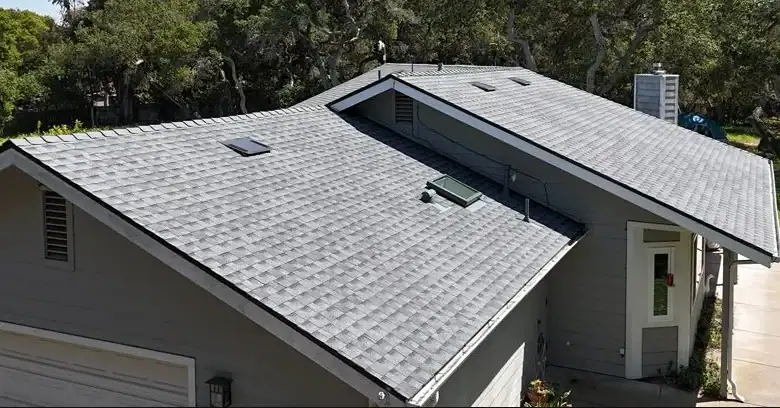
Comparing Asphalt Shingle Roofs in Nipomo California?
Creative Roofing lays asphalt, architectural and designer shingles over carefully prepared decks, for homes in Nipomo California and the towns around it.
Call 805-723-2381 to set up a visit to look at your shingles.
Inside a Shingle
Each shingle is a thin sandwich of mat, asphalt and stone granules, so the whole shingle depends on all of them. The granules do more than add color, because they shield the asphalt from ultraviolet light, and bare patches show up as dark spots.
Basic, Laminated and Premium
Flat shingles of this style are economical but wear out sooner than thicker kinds, and the saving is real but so is the shorter life. Laminated shingles are thicker, heavier and more dimensional than flat strip shingles, and colors come in a wide range. Designer shingles are heavier and carefully styled to resemble natural slate or cedar, and it is easy to overlook.
How California Weather Wears a Shingle
Months of direct sunshine take a toll that the eye picks up slowly, and the difference shows how much the sun contributes. Blisters appear when trapped moisture or heat pushes up the surface, and it pays to think it through.
Picking a Shade That Works in the Sun
A pale shade reflects more sunlight than a dark one, which can reduce heat entering the attic, and a sample held up outdoors shows the shade truthfully. A reflective product can ease the burden on air conditioning, and the actual benefit depends on the house.
How Shingles Are Laid
Nails driven too high or too low weaken the hold of the whole course, and a crew that cuts corners here causes trouble later. The row at the eave is the most exposed to wind and water, which is why it gets special treatment, and the pattern is part of the manufacturer specification. Ridge caps finish the roof where two slopes meet and shed water over the crest, and a sloppy ridge is a common weak spot.
Gusts and Loose Tabs
Seal strips need warmth to activate, which is why roofs installed in cool weather may take longer to bond, and a roof installed in summer bonds quickly. Edges and ridges are where wind does the most damage, and a prompt repair prevents a leak.
Air Movement Under the Deck
Airflow under the deck helps a shingle roof reach its full useful life, and ridge vents work well with soffit intake. The right combination depends on the shape of the roof and the size of the attic, and that is worth keeping in mind.
Flashing, Valleys and Underlayment
The underlayment is the water-resistant layer under the shingles that catches whatever gets past the surface, and it matters most when the roof is open to weather. An open valley shows a strip of metal, while a closed valley is covered with shingles, and a little care goes a long way.
When a Shingle Roof Is Telling You Something
Look for lines of shadow where shingles have lifted and for stains inside the house, and a roofer can sort the serious from the cosmetic. Isolated problems from a branch or a loose tab respond well to a simple repair, and a good roofer will tell you when a repair is enough. Putting money into a failing roof delays the inevitable and may cost more in the end, so plan the project before the leaks begin.
Stripping Down Before Building Up
A complete tear-off lets the roofer inspect each sheet of decking and replace any that has been stained, softened or split, and it pays to think it through. Overlaying is a shortcut that a careful roofer will explain before agreeing to it, so ask for both options in writing. Damaged decking is the most common surprise on a roofing job, and a good proposal says how it will be handled, and the cost of a few sheets is rarely large.
Cleanup, Nails and Protecting the Property
A shingle tear-off throws old material in every direction, so a careful crew covers plants, vents and the ground before the first piece comes off, so ask how the yard will be protected. Tires and bare feet find stray nails more often than anyone expects, so a thorough pickup at the end is essential, and it is reasonable to inspect it together. Checking the gutters after the first big rain is a good habit, and it takes only a few minutes, and it pays to think it through.
Planning Around Rain and Heat
Timing a project well means picking a stretch of dry days and leaving some room for delays, so booking ahead is wise. Crews adjust to the heat by working early and finishing before the worst of the afternoon, which protects the material and the people, so an early arrival is nothing to worry about.
Skylights, Chimneys and Solar Panels
Skylights and chimneys are best flashed with new metal whenever the shingles are replaced, since reusing old pieces under a new roof invites a leak, and it is easy to overlook. Solar panels bolted to a shingle roof have to be removed and reinstalled when the roof is replaced, so the two projects should be planned together, so ask both contractors how they would proceed.
Making a Repair Look Right
A roofer can often borrow shingles from a hidden slope or the back of the house to repair a more visible area, which gives the best match, and a small color difference is not a defect.
Gutters, Drip Edge and the Roofline
Metal edging installed under the underlayment at the eave and over it at the rake is the correct order, and it makes a visible difference to the durability of the edge, and old fascia boards are easy to replace while the roof is open.
Questions for a Shingle Roofer
Specific wording is the best protection against surprises, and the details are worth a closer look. Ask about the schedule and how the roof will be covered if rain is forecast, and it is easy to overlook.
Ready to Compare Options
Those comparing Asphalt Shingle Roofs in Nipomo California can reach us by phone, so dial 805-723-2381 when it suits you. There is no pressure in asking about a new roof, and the first step is just a phone call.
Verified

Verified
Verified
Verified
Verified






















