
Planning Residential Roof Contractors for a Home in Nipomo California?
Creative Roofing covers each step of putting a new roof on a house, working in Nipomo California and nearby.
Ring 805-723-2381 and describe the project you have in mind.
The First Step in a Roofing Project
Nothing gets decided until someone has walked the roof, since guessing from the ground leads to surprises later. The roofer checks the surface, the flashing, the vents and the gutter line, then the attic if it can be reached, and it pays to think it through.
Heat is the quiet cause behind much of the wear seen on roofs here, and a roofer who knows the area expects exactly that.
Deciding What the Roof Needs
Some roofs need a patch, some need a section redone, and some have reached the end of the road, and the recommendation should come with the reasons attached. A roofer who explains the reasoning in plain terms is easier to trust with the work, so do not feel awkward about asking.
Rotted or soft sheathing changes the plan and often the schedule, and agreeing on the approach in advance beats debating it with the roof open.
Picking a Roof Covering
Most houses here wear one of three coverings, and the choice shapes everything else, and the style of the neighborhood often plays a part. Lighter colors reflect more of the summer sun, while darker ones soak it up, and a full-size piece seen outdoors beats a catalog picture.
Planning for Rain and Heat
Dry months are the busy season for roofing, since an open roof and rain do not mix, and it pays to think it through. On very hot afternoons shingles soften and workers slow down, and a little care goes a long way.
Stripping Down to the Deck
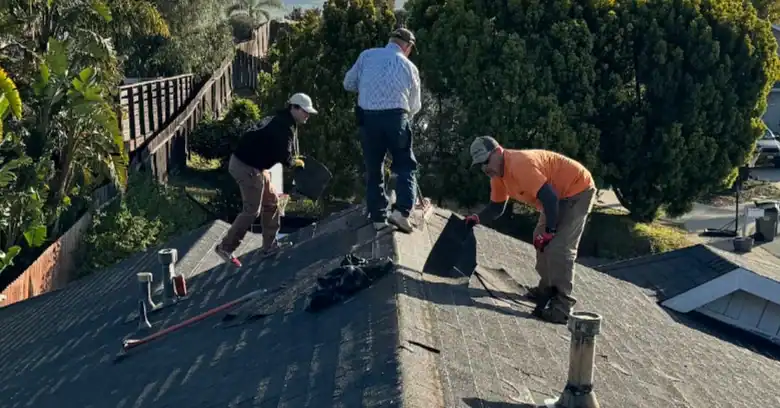
The existing covering is stripped away and the deck is left exposed for inspection, and the details are worth a closer look. The deck is checked, mended and made flat for the next layer, since good materials laid over a weak deck do not last.
The Hidden Layers
The surface you see is only the outer layer of a roof, and metal edging is set at the eaves and rakes before the covering. Once the underlayment is down, the house is considered dried in, and the finished surface is installed over a sound base.
Flashing and the Fiddly Parts
Flashing is the thin metal that keeps water out where the roof meets something else, and it pays to think it through. Sun dries and cracks the flexible parts over time, and a new roof should not depend on a seal that is already tired.
Intake and Exhaust
Warm air trapped under the deck works on the roof from below, since warm air rises on its own when it is given a path. Adding vents at random may do little more than cut holes in the roof, so ask how the attic will breathe once the work is done.
Finishing the Job
The job is not over until the yard looks like a yard again, and that is worth keeping in mind. Looking at the ridge, the valleys and the flashing with the roofer present is time well spent, and a saved record answers questions nobody has thought to ask yet.
The Paperwork Side of a Roof
Municipal offices have their own expectations for roof work, and the answer should be clear from the start. Areas with wildfire exposure often have extra requirements for roofing materials and vents, and a roofer working in the area should already know them. A clear proposal lists what will be removed, what will be installed and what happens if the deck needs work, so compare any two side by side.
Keeping the Property Safe
A busy work site needs boundaries, and that is worth keeping in mind. Cars parked in the driveway can be struck by falling nails or pieces of shingle, and a little planning prevents most accidents. Inside the house, vibration can shake items from shelves and loosen attic insulation, so it is wise to take down fragile pictures first.
The Few Days of Commotion
Most residential projects are finished within days, not weeks, so ask for the expected start and finish up front. A quick word with the people next door can head off complaints, and most people are tolerant when they know what to expect. Remote workers may want a quiet spot elsewhere for a day or two, so consider a day out of the house if you can.
Questions Worth Asking Before You Agree
Find out who will be on the roof and who will be in charge of the job, and anything left vague deserves a follow-up. Knowing exactly what is going on the house removes a common source of disputes, and it should be written on the proposal. Talk through how changes to the plan will be handled and agreed, and it is better to know in advance.
Looking After a New Roof
Even a new roof benefits from an occasional look from the ground, and it is easy to overlook. Debris on the roof holds moisture and wears the surface, and it also reduces fire risk in dry months. A prompt visit after damage keeps a minor repair minor, and it is far easier to repair than to rebuild.
Is There a Best Time for a New Roof
Waiting for the first storm to find the weak spot means hiring in a hurry, and the schedule fills quickly once the rains end. Late summer is hot but dependable, and crews are usually busy, and a good roofer will explain the trade-offs.
Insulation, Ducts and Cables Under the Roof
Looking at the roof from inside the attic before the work begins reveals water stains, damp insulation and daylight where none should enter, and attic problems are cheaper to deal with during a re-roof.
Ready When You Are
A call is the simplest way to begin planning work in Nipomo California, with 805-723-2381 ready whenever you are. The size of the project changes the schedule but not the principle, and we are glad to talk through the options. The sooner the roof is looked at, the more choices you tend to have, and that is a good place to begin.
Verified

Verified
Verified
Verified
Verified






















