
Thinking About Residential Roofing Companies Near Nipomo California?
Creative Roofing stays with a roofing project from the first walk-around to the final check, serving Nipomo California and the places close by.
Reach out at 805-723-2381 to set up a time for someone to look at the roof.
Day One of a Roof Project
Every roofing job starts with someone climbing up to see what is actually there, and a rushed visit tends to cost more than it saves. Photographs taken on that first visit become the record for everything that follows, and each one goes into the notes.
Heat is the quiet cause behind much of the wear seen on roofs here, so the wear is rarely even from one side to the next.
Repair, Patch or Replace
Not every worn roof needs replacing, and not every leak is a small one, and an honest roofer will say which one applies. A roofer who explains the reasoning in plain terms is easier to trust with the work, since the plan should make sense to the person paying for it.
Rotted or soft sheathing changes the plan and often the schedule, and agreeing on the approach in advance beats debating it with the roof open.
Material Decisions
Three families of material cover most residential roofs in this region, but the framing and the slope decide more than preference does. Color deserves more thought than it usually gets, and it pays to look at them at different times of day.
When the Crew Can Work
Dry months are the busy season for roofing, since an open roof and rain do not mix, and a careful crew never leaves an opening to chance. Roof surfaces get hot enough in July to change how materials behave, and the plan bends to the heat rather than the other way around.
Removing the Old Roof
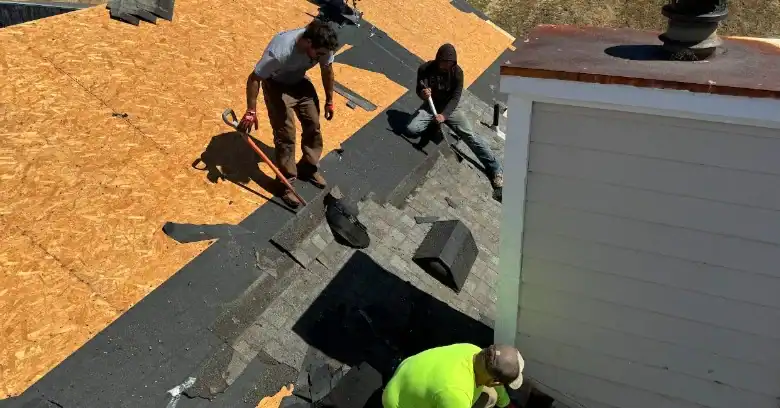
Removal of the old material is where the project gets loud, and debris goes into a bin or trailer rather than onto the lawn. The deck is checked, mended and made flat for the next layer, since good materials laid over a weak deck do not last.
What Goes Down First
The surface you see is only the outer layer of a roof, so self-adhering membrane goes where leaks tend to begin. With the barrier in place the roof can shed rain even before the covering is finished, and that is worth keeping in mind.
Flashing and the Fiddly Parts
Wherever the roof surface stops, a metal detail has to take over, and the cost is small next to the roof it protects. Plumbing vents are among the most common sources of small leaks, and a new roof should not depend on a seal that is already tired.
Intake and Exhaust
Heat collects in the space beneath the roof deck unless it has somewhere to go, and vents at the eaves let cooler air in. Mixing vent types without a plan can short-circuit the airflow, because airflow is easy to plan now and hard to add later.
Cleanup and the Final Walk-Through
Once the roofing is done, the property has to be put back in order, and that is worth keeping in mind. A walk around the finished roof with the roofer is a reasonable thing to ask for, and it makes future repairs and sales smoother.
Permits and Paperwork
Replacing a roof usually involves the local building department in some way, and the answer should be clear from the start. Areas with wildfire exposure often have extra requirements for roofing materials and vents, so ask how the plan meets the rules for your street. The best paperwork leaves little room for misunderstanding, and it is easy to overlook.
Looking After Your Property During the Work
A busy work site needs boundaries, and a careful crew sets them before the work begins. Pets, children and cars are best kept away from the work area, and it pays to think it through. Inside the house, vibration can shake items from shelves and loosen attic insulation, and a little care goes a long way.
The Few Days of Commotion
Most residential projects are finished within days, not weeks, and plan on some slack for the weather. Informing nearby households is a courtesy that pays off, and it is easy to overlook. The loudest stretch is the tear-off, and it passes quickly, and a plan for the loud days makes them easier.
Getting Clear Before the Work Begins
Ask how the roof will be ventilated and how the flashing will be handled, and anything left vague deserves a follow-up. A proposal that only says shingles or tile is not specific enough, and it should be written on the proposal. Ask what happens if something unexpected turns up under the old roof, and keep the discussion friendly but specific.
Small Habits That Extend Roof Life
A roof that is never looked at tends to fail when it is least convenient, and binoculars make the job easy. Trim branches that touch or hang over the roof, and it also reduces fire risk in dry months. Missing pieces, lifted edges or a new stain are all reasons to have someone look, and a photograph helps explain what you saw.
Spring, Summer or Fall
Waiting for the first storm to find the weak spot means hiring in a hurry, and the schedule fills quickly once the rains end. Any month can work with the right planning and a willingness to move a day, and the best season is often the one that fits your calendar.
What the Crew Sees Inside the House
Looking at the roof from inside the attic before the work begins reveals water stains, damp insulation and daylight where none should enter, and it is easy to overlook.
Start the Conversation
Homeowners comparing Residential Roofing Companies in Nipomo California can simply pick up the phone, so dial 805-723-2381 and say what you are seeing. Large or small, a roofing project goes best when the plan is clear before the work starts, and we are glad to talk through the options. Putting off a roof question rarely makes it easier to answer, and the next step becomes obvious.
Verified

Verified
Verified
Verified
Verified