
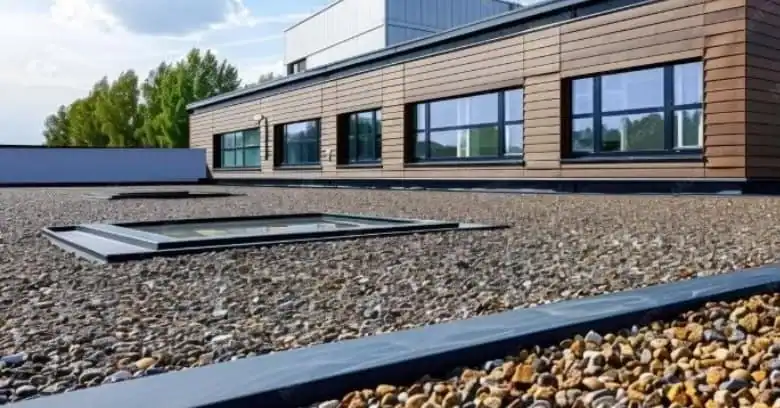
Researching Built Up Roofing Services Around Orcutt California?
Creative Roofing handles the seams, drains and edges where a flat roof succeeds or fails, for properties in Orcutt California and the towns around it.
Phone 805-723-2381 and tell us about the flat roof you have.
Roofs That Do Not Shed Water by Themselves
Where a pitched roof sheds rain in seconds, a level roof holds it for hours or days, and that is worth keeping in mind. Because water stays on the surface, small flaws that a pitched roof would forgive become leaks on a flat one, and the cost of a mistake is paid in repairs.
What Goes on a Low-Slope Roof
TPO and PVC are single-ply sheets that are welded at the seams with hot air, creating a continuous waterproof surface, and repairs are made by welding on a patch. EPDM is a synthetic rubber sheet that is glued or mechanically fastened and has a long record on flat roofs, and the system suits many residential flat roofs. Layered asphalt systems have been used for generations and are valued for redundancy, so the structure has to carry it.
Details That Fail First
A careful look at the details finds most of what is wrong, and a roofer should walk every foot of the edge. Termination bars and sealant hold the top edge of the membrane against the wall, and the work is simple for a roofer.
Standing Water Is a Warning
Rain here often comes in sudden bursts that test every flat roof drain, and a little care goes a long way. Fixing the cause of ponding is better than repeatedly patching its effects, and it extends the life of the whole system.
How Heat Wears a Low-Slope Roof
Ultraviolet light and heat are the main forces that age the surface of a low-slope roof in this region, and the movement stresses seams and fasteners. Silicone, acrylic and elastomeric coatings are the main families used on flat roofs, and that is worth keeping in mind.
What Happens Around Machinery
Every pipe, vent and curb through a flat roof is a place where the membrane has to be cut and sealed, and replacing a worn collar is a quick job. Roof-mounted air conditioners and other equipment bring service people who walk on the membrane, and avoid storing items on the roof.
Choosing How Far to Go
Localized seams, flashings and punctures can be fixed without touching the rest of the roof, and temporary fixes should be called what they are. A restoration coat is a good choice for a roof that is dry beneath and sound in the field, so be cautious of any bid that skips the testing. When the roof is saturated, cracked and failing in many places, replacement is the only lasting answer, so begin conversations before the leaks become urgent.
Residential Low-Slope Roofing
Many homes combine a pitched main roof with flat sections at the back or the sides, and the two meet in a joint that needs careful flashing, and the repair needs a roofer who works with membranes. Siding, stucco and trim all have to be worked into the flashing, and the roofer has to cooperate with whoever finished the wall, and fixing it properly takes some patience. A roof used as living space has to meet higher standards than one that nobody walks on, and avoid fastening anything through the membrane.
Heat Gain and Thermal Layers
A flat roof has little or no attic, so the layers of the roof itself have to do the work that attic insulation and ventilation do on a pitched house, and a light-colored membrane adds to the benefit. Water that gets into the insulation layer spreads sideways, so the damp area can be much larger than the visible stain on the ceiling, and be skeptical of a bid that skips it.
Seasonal Checks for a Level Roof
A check in early autumn catches clogged drains, lifted seams and cracked sealant before the first storm tests them, and the work is quick. After a heavy storm or a spell of high wind, a quick look from a ladder can show whether anything has shifted, lifted or collected on the surface, and call early rather than late.
Edges Take the Brunt
Whether a membrane is fully adhered, mechanically fastened or held down by ballast, the edges are the place where the installation either succeeds or fails, and repairs should not wait for the next storm. Raking the gravel back into an even layer is a routine job that keeps the protection continuous, and the stone should be kept out of the drains. Walkways, curbs and equipment supports need to be flashed and fastened as part of the membrane, and the details on a crowded roof take real time to do properly, and write everything down.
Openings That Need Their Own Waterproofing
Replacing a worn skylight and its curb flashing together with the roof is far cheaper than doing the two jobs separately, and loose sealant around a frame is a warning sign. A roofer who plans the layout of penetrations before the work starts usually delivers a drier roof, and a tidy roof is easier to maintain. Drains and scuppers are also penetrations, and the flashing around them has to be watertight while still letting the water through quickly, so check them often in the rainy months.
Comparing Flat Roofing Proposals
A bid that only says new flat roof does not tell you what you are buying, and the details are worth a closer look. Ask who will supervise the work and how weather delays will be handled, and trust the overall impression.
Keeping Disruption Small
Hot-applied and adhesive systems give off smells while they cure, so windows and vents near the work area are usually closed for a day, and that is worth keeping in mind.
Common Worries Before a Flat Roof Project
A roof with no visible slope is not necessarily failing, since most are designed with a gentle fall toward the drains, and the answers are usually more reassuring than expected.
Next Steps for Your Roof
A conversation about Built Up Roofing Services in Orcutt California usually starts with the type and age of the roof, with 805-723-2381 ready whenever you want to talk. There is no pressure in asking about a flat roof, and a little care goes a long way.
Verified

Verified
Verified
Verified
Verified






















