
Sourcing Commercial Roofer Contractors Across Orcutt California?
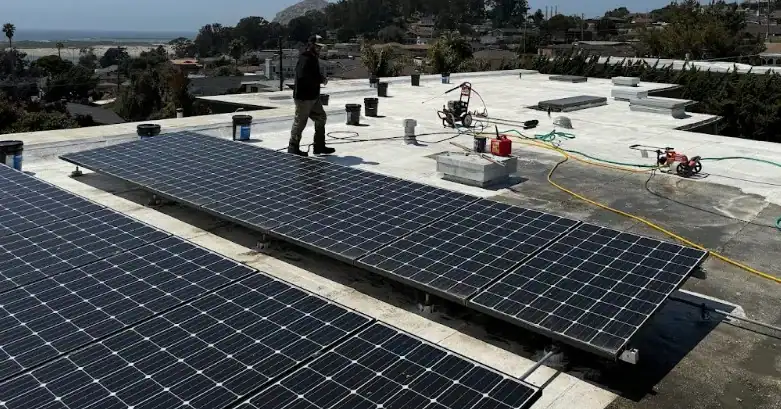
Creative Roofing looks after the roof over a business, from a small storefront to a large building, for properties in Orcutt California and the surrounding area.
Contact us at 805-723-2381 to arrange a visit to the property.
What Sets a Commercial Roof Apart
A building roof is built around drainage and access rather than steep pitch, and that is worth keeping in mind. Where a house roof sheds water by gravity, a flat roof depends on seams and drains, and the quality of those seams decides how long it lasts.
Water coming through a commercial roof can reach inventory, electrical gear and computers, and a little care goes a long way.
What Building Roofs Are Made Of
Many newer commercial roofs use a single-ply membrane over insulation, and the differences matter when comparing proposals. Built-up roofs use alternating layers of asphalt and reinforcing fabric, finished with a surface of gravel or a cap sheet, so they are still specified today. Metal roofing is used on some commercial buildings, particularly those with a steeper pitch, so the building and its use drive the decision.
Keeping Water Moving
Every flat roof is only as good as its drainage, so inspections are best scheduled in late summer. Drains, scuppers and gutters collect water and carry it away from the building, and a clogged drain can load a roof beyond its design.
Rooftop Equipment and Penetrations
A roof with a lot of equipment has a lot of penetrations to maintain, and the flashing around each one has to be right. Repeated traffic on an unprotected membrane leaves it thin and scuffed, and it is easy to overlook.
Reflective Roofs and Cooling Costs
Sun and heat are the steady stresses on a commercial roof in this part of California, so the finish and color are practical choices. Reflective membranes and coatings can lower the temperature of the roof and the space beneath it, and local rules may favor reflective surfaces on some projects.
Maintenance Programs
A commercial roof lasts longest when someone looks at it regularly, and it gives you a record to show a buyer or lender. A visit usually covers drains, flashing, seams, curbs and the condition of the surface, and most items take only a short time.
Deciding What to Do With an Aging Roof
Moisture surveys can show how much of a roof is truly wet inside, and a good contractor will show you what they found. Wet insulation stops insulating and adds heavy weight to the structure, so a clear diagnosis matters.
Keeping the Business Running
Roof work above an operating business needs planning so that normal activity can continue, so the schedule is shared in advance. Barriers and warning lines protect pedestrians from falling tools and materials, and that is a reasonable thing to discuss in advance.
Comparing Commercial Roofing Proposals
The scope of work should list drains, flashing, curbs and any insulation to be added, so compare the line items one by one. A contractor should be willing to explain how the work will be checked while it is in progress, so make it part of the agreement.
Leak Detection on a Flat Roof
Water travels along decking, insulation and ductwork before it shows up on a ceiling, so a careful inspection is worth the time. Common sources include seams, drains, flashing at walls and the base of every pipe, and fixing the cause stops the leak for good. Moisture scans and core samples can show how far water has spread inside the roof, and a little care goes a long way.
Perimeter Details and Attachment
A roof that is poorly attached shows the problem at its edges, and the details are worth a closer look. Coping and edge flashing should be firmly attached and free of gaps, and a gap there can grow quickly in a gust.
Terminations and Transitions
The junction of roof and wall is where movement and water meet, and that is worth keeping in mind. Counterflashing and termination bars hold the membrane to the wall and keep water out, so it helps to look at the wall as well as the roof.
Giving an Older Roof More Time
Roof coatings are liquid products rolled or sprayed onto an existing roof to form a protective skin, and the preparation matters as much as the product. Surface treatments help sound roofs, not ones that are failing underneath, so be wary of anyone who promises it fixes everything.
Scale Changes the Planning
Materials arrive by the truckload and are lifted to the roof with cranes, and the roof can be done in sections. Multi-tenant buildings call for clear communication with every occupant, so the plan should name each area. Planning around families and daily routines matters on a residential property, and it pays to think it through.
Spending Wisely on a Flat Roof
A commercial roof is a major capital item that is best planned years ahead, and regular inspections help estimate the timing. Choosing on the lowest initial figure alone can cost more over the life of the building, and weigh the trade-offs honestly.
Insulation Under the Membrane
Thick boards of insulation do much of the work of holding heat in or out, and it is easy to overlook. Extra layers under the membrane help it resist wear from equipment and walking, and it is worth asking about. Tapered insulation can create slope on a roof that is otherwise dead flat, and it pays to think it through.
A Seasonal Checklist for Managers
A pre-season checklist includes clearing drains and scuppers, checking seams and flashing, and photographing the condition of the surface, and a little care goes a long way.
Ready to Look at the Roof
Managers researching Commercial Roofer Contractors in Orcutt California are welcome to call and ask questions, with 805-723-2381 ready whenever you want to talk. Calling sooner rather than later keeps repair costs and disruption smaller, and we are glad to help you sort it out. A visit to the property turns a general worry into a specific plan, and it is easy to overlook. The history of a roof matters when a building is sold or refinanced, so it pays to begin early.
Verified

Verified
Verified
Verified
Verified






















