
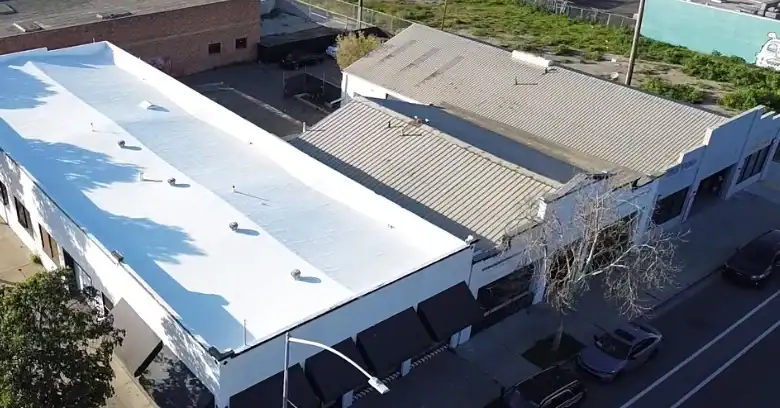
Comparing Commercial Roofing Companies Serving Orcutt California?
Creative Roofing handles building roofs with an eye on drainage, access and daily operations, throughout Orcutt California and the towns nearby.
Phone 805-723-2381 to start planning the work with someone who knows low-slope roofs.
How Building Roofs Differ
A building roof is built around drainage and access rather than steep pitch, and that is worth keeping in mind. Water that stays on a roof for long finds every weakness in the membrane, and it pays to think it through.
A roof leak above a store, warehouse or office damages more than the ceiling, and regular checks pay for themselves.
What Building Roofs Are Made Of
Single-ply membranes such as TPO, PVC and EPDM are among the most common coverings on commercial buildings, and each family has its own seam method. Built-up roofs use alternating layers of asphalt and reinforcing fabric, finished with a surface of gravel or a cap sheet, and the layers add redundancy. Coatings over an existing sound roof can extend its life without a tear-off, and that is worth keeping in mind.
How Water Leaves a Building Roof
Ponding water speeds up wear and adds weight the structure has to carry, and a small amount of tapered insulation can fix ponding. Leaves, seed pods and windblown trash gather in corners and drains over the summer, and the first heavy rain turns it into a plug.
What Sits on the Roof
Pipes, conduits and curbs interrupt the membrane in many spots, and the flashing around each one has to be right. Service technicians walking to equipment can wear a path through a membrane, and a contractor can mark them on the roof.
How the Climate Affects a Building Roof
Direct sun heats a dark roof to a temperature far above the air, and that is why white and light membranes are so common. Owners often look at reflective roofing for the savings on cooling, and local rules may favor reflective surfaces on some projects.
Maintenance Programs
Routine care costs a fraction of an emergency repair, and the best times are before and after the rainy season. A visit usually covers drains, flashing, seams, curbs and the condition of the surface, and the results show up in fewer emergency calls.
Weighing the Options
Not every aging roof needs a full tear-off, and saving a good roof is cheaper than replacing it. Replacing only the surface over saturated insulation hides the problem without solving it, and that is worth keeping in mind.
Roofing Without Disrupting Operations
Many commercial roofs are replaced in sections so that the building is never left open, and early notice prevents most problems. Access to the roof should be controlled while the work is in progress, and a safe site is also an efficient one.
Making Sense of Competing Bids
A good proposal should say what will be removed, what will be installed and how the edges will be finished, and ask about anything that seems vague. A record of the materials and details used helps with later maintenance, and it is easy to overlook.
Tracing a Leak Over a Business
Water travels along decking, insulation and ductwork before it shows up on a ceiling, and guessing leads to repairs in the wrong place. Common sources include seams, drains, flashing at walls and the base of every pipe, and a good survey starts with those. Moisture scans and core samples can show how far water has spread inside the roof, and a clear map makes planning easier.
How Wind Affects a Flat Roof
Strong seasonal winds pull hardest at the perimeter of a low-slope roof, and the details are worth a closer look. Perimeter metal is the first line of defense against uplift, and a small fix now prevents a large one later.
The Seams That Join Roof to Wall
Flashing at the wall is one of the most failure-prone parts of a low-slope roof, and the metal cap on top must stay sealed. Counterflashing and termination bars hold the membrane to the wall and keep water out, and ignoring it can undo a good roof.
Restoring a Roof Without Tearing It Off
A coating can seal small cracks, reflect sunlight and slow the aging of the surface, so cleaning and repairing come first. Surface treatments help sound roofs, not ones that are failing underneath, and ask for the test results first.
When the Roof Covers an Acre
Warehouses and distribution buildings often have very large, uninterrupted roofs, and the roof can be done in sections. A leak in one unit may start above the next one down the line, and a single contractor for the whole roof keeps things simple. Residents expect notice before work begins above their homes, so schedules are shared in writing.
Capital Planning for Building Owners
People who set aside funds for roof work avoid scrambling when the time comes, and regular inspections help estimate the timing. Choosing on the lowest initial figure alone can cost more over the life of the building, and the details are worth a closer look.
Thermal Layers on a Flat Roof
The insulating layer is part of the roof system, not an afterthought, and wet boards lose most of their value. Cover boards add a firm surface that protects insulation from foot traffic and hail-free impacts, and the added cost is modest. Slope built into the insulation is one of the cleanest ways to fix drainage problems, and it is a good time to ask about it.
Late-Summer Readiness Checks
Rooftop units should be examined for loose panels, failed seals and missing fasteners, since a stray panel can let rain into the system, so schedule it like any other maintenance.
Ready to Look at the Roof
Owners comparing Commercial Roofing Companies in Orcutt California can start by describing the building and what concerns them, so dial 805-723-2381 when it suits you. Calling sooner rather than later keeps repair costs and disruption smaller, and we are glad to help you sort it out. Questions about an aging roof are easier to answer once someone has seen it, and the conversation can be brief. Property managers often juggle many buildings and appreciate clear, written answers, so it pays to begin early.
Verified

Verified
Verified
Verified
Verified






















