
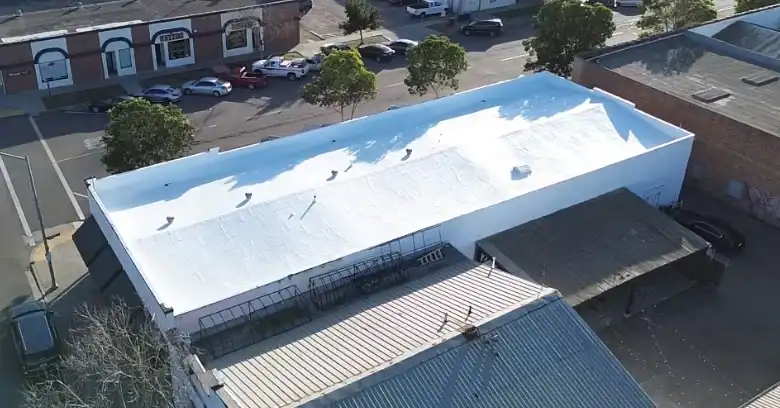
Weighing Flat Roof Companies for a Building in Orcutt California?
Creative Roofing handles the seams, drains and edges where a flat roof succeeds or fails, from Orcutt California out to the surrounding area.
Reach us at 805-723-2381 and describe what you are seeing up there.
How a Flat Roof Differs From a Pitched One
The gentle angle of a flat roof gives water time to find every weakness, so shingles are never the answer. A pinhole in a membrane or a gap in a seam lets in water that sits and keeps seeping, and it pays to think it through.
The Systems You Will Hear About
White single-ply membranes reflect sunlight and help keep the building cooler, and installation requires trained hands. Black EPDM absorbs heat, while a white version reflects more of the sun, and the seam tape is a point to watch over time. Built-up roofing, often called BUR, layers hot or cold asphalt with reinforcing fabric and finishes with gravel or a cap sheet, and it is easy to overlook.
Seams, Corners and Terminations
Seams, corners, edges and penetrations are where problems begin on a low-slope surface, and the field is checked last. Where a flat roof meets a wall, the membrane must turn up and be sealed and capped with flashing, and a small bead of sealant in time prevents a big repair.
Keeping a Level Roof Drained
A roof that holds puddles is telling you about a low spot or a blocked drain, and a little care goes a long way. Angled boards under a new membrane direct water toward the drains and eliminate low spots, and the improvement is permanent.
How Heat Wears a Low-Slope Roof
Long dry summers expose the membrane to intense light for months without a break, and the movement stresses seams and fasteners. A coating adds a protective layer and can seal small cracks and seams, and a coating cannot rescue a roof that is wet inside.
Foot Traffic, Equipment and Penetrations
Skylights and hatches add edges that need careful flashing, and it pays to think it through. Regular foot traffic wears a path in the surface unless it is protected, and avoid storing items on the roof.
Matching the Work to the Roof
A flat roof with a few leaks and a sound membrane can often be repaired for a fraction of the cost of replacing it, and the key is an accurate diagnosis. A restoration coat is a good choice for a roof that is dry beneath and sound in the field, and wet insulation rules out a quick fix. Removing the old layers lets the deck be inspected and any damaged wood replaced, and it should be planned rather than rushed.
Level Roofs at Home
Plenty of ordinary houses have a flat or nearly flat section, whether it is a porch, a garage, a bay or the whole roof of a modern design, so ask whether the company handles low-slope work regularly. Where a flat porch roof meets the wall of the main house, the membrane has to climb the wall and be capped so that water cannot run behind it, and a little care goes a long way. A roof used as living space has to meet higher standards than one that nobody walks on, and avoid fastening anything through the membrane.
Heat Gain and Thermal Layers
Rooms beneath a flat roof often feel warmest in late afternoon, when the surface has soaked up a full day of sun, and it is easy to overlook. Wet insulation loses most of its ability to resist heat and adds weight the roof was never meant to carry, and the map is a useful record.
Keeping a Flat Roof in Shape Through the Year
A check in early autumn catches clogged drains, lifted seams and cracked sealant before the first storm tests them, so make it a fixed date on the calendar. After a heavy storm or a spell of high wind, a quick look from a ladder can show whether anything has shifted, lifted or collected on the surface, and acting quickly limits the damage.
Securing the Roof Against the Wind
After a windy spell it is worth checking the perimeter from a ladder for loose trim, lifted seams and curling edges, and a small problem there grows quickly. A ballasted roof needs a structure strong enough to carry the added load, which is a point to confirm before choosing the system, and the details are worth a closer look. A careful roofer walks the roof beforehand and counts every penetration, then includes them all in the proposal, and write everything down.
Openings That Need Their Own Waterproofing
Each opening is a separate detail, and each one should be listed in the written proposal, and that is worth keeping in mind. The seal around a pipe on a low-slope roof has to be formed to match the membrane, because a generic rubber boot will not bond to every type, and mark each one on a sketch. A drain bowl that is sealed to the membrane with a clamping ring and sealant keeps water from creeping under the sheet at the outlet, and a little care goes a long way.
Questions for a Flat Roof Contractor
The written scope should list the flashing details, the edge metal and the drainage work, so ask for the details in writing. Find out how drainage will be addressed and whether tapered insulation is included, and it is easy to overlook.
Scheduling and Living With a Flat Roof Project
Hot-applied and adhesive systems give off smells while they cure, so windows and vents near the work area are usually closed for a day, and a short conversation beforehand covers the details.
Short Answers About Low-Slope Roofing
Plenty of owners assume a membrane has to be replaced at the first sign of wear, when a repair or a coating would have done the job, and the answers are usually more reassuring than expected.
Tell Us What You Are Dealing With
A conversation about Flat Roof Companies in Orcutt California usually starts with the type and age of the roof, so use 805-723-2381 to set up the next step. There is no pressure in asking about a flat roof, so reach out whenever you are ready.
Verified

Verified
Verified
Verified
Verified






















