
Looking for Residential Roofing Companies Near Orcutt California?
Creative Roofing takes a roofing job from the first look to the last sweep of the yard, for homes in Orcutt California and the towns around it.
Phone 805-723-2381 and we will talk through what the roof needs.
The First Step in a Roofing Project
Before any material is chosen, the existing roof has to be understood, and a rushed visit tends to cost more than it saves. Photographs taken on that first visit become the record for everything that follows, and each one goes into the notes.
Months of direct sun take a steady toll on whatever covers a house, and a roofer who knows the area expects exactly that.
Deciding What the Roof Needs
A roof can be repaired, partly rebuilt or removed entirely, and the evidence decides what is done, and the reasons should be easy to follow. A roofer who explains the reasoning in plain terms is easier to trust with the work, since the plan should make sense to the person paying for it.
Hidden damage found during tear-off is the usual reason a project grows beyond its first outline, so a note on how it will be handled saves arguments later.
Picking a Roof Covering
Homeowners usually end up comparing shingles, tile and metal panels, and the pitch of the roof narrows the field quickly. Sun exposure makes color a practical question as well as a visual one, so do not settle the question from a photograph.
Planning for Rain and Heat
Roofing here follows the weather more than the calendar, and temporary dry-in layers keep the house safe overnight. Roof surfaces get hot enough in July to change how materials behave, and finishing early keeps people and materials in better shape.
What Happens on Demolition Day
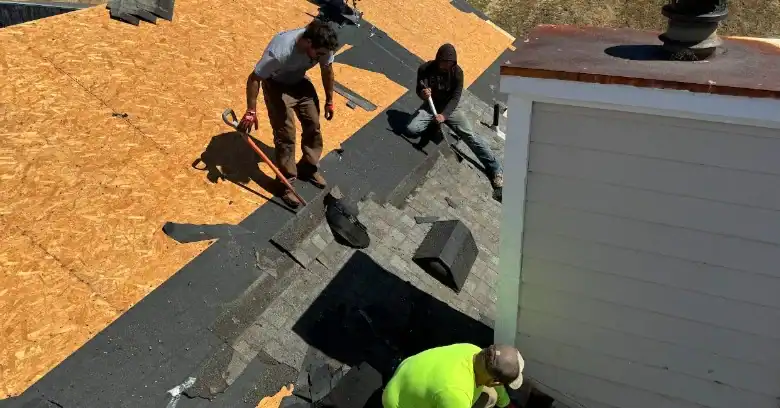
Tear-off gives the first real view of the structure under the roof, and debris goes into a bin or trailer rather than onto the lawn. The deck is checked, mended and made flat for the next layer, since good materials laid over a weak deck do not last.
Protection Under the Covering
The first layer laid over the deck is a barrier against moisture, and chimneys get particular care. Reaching this stage quickly is a sensible way to protect the interior, and the visible covering goes on from there.
Small Metal Pieces, Large Consequences
Chimneys, skylights, vent pipes and walls all need flashing worked into the roof, and the cost is small next to the roof it protects. Pipe seals made of soft materials fail early in strong sun, and a little care goes a long way.
Intake and Exhaust
Heat collects in the space beneath the roof deck unless it has somewhere to go, and the details are worth a closer look. Mixing vent types without a plan can short-circuit the airflow, and it is easy to overlook.
Finishing the Job
A finished roof still leaves a yard full of scraps, nails and packaging, and that is worth keeping in mind. Keeping a short record of the materials used helps with later maintenance, and it makes future repairs and sales smoother.
What the City Wants to See
Rules about reroofing differ from one city to the next, and a little care goes a long way. Fire safety rules in some neighborhoods affect which coverings are allowed, since the covering you pick has to be one the town accepts. Written proposals should describe the materials, the scope and the cleanup in plain words, because what is written down is what everyone remembers.
Protecting the House and Yard
Heavy materials, ladders and falling pieces all share the space around the walls, and it is reasonable to ask how this will be done. Children and animals should stay clear of the yard while the work is underway, and it pays to think it through. Inside the house, vibration can shake items from shelves and loosen attic insulation, and a sheet over stored boxes keeps the grit off.
Disruption and How to Manage It
Most residential projects are finished within days, not weeks, and nobody can promise a date through a rain delay. A quick word with the people next door can head off complaints, so a friendly note goes a long way. Pets are often the ones most bothered by the commotion, and everything returns to normal once the crew packs up.
A Short List for Comparing Proposals
Find out who will be on the roof and who will be in charge of the job, and listen to how the answer is given. Ask for the materials by name and manufacturer so you can look them up, and a little care goes a long way. A change in scope should be written down and approved before the work continues, and it is better to know in advance.
Maintenance After the Job
Regular glances at the roof catch small problems early, so put it on the calendar like any other chore. Sweeping leaves off the roof and out of valleys prevents trouble, so it is worth doing before summer ends. Call a roofer after a major wind event or if you see a stain on a ceiling, so do not wait for the next storm.
Is There a Best Time for a New Roof
Many homeowners wait until a leak appears before they think about a roof, and a little care goes a long way. Any month can work with the right planning and a willingness to move a day, and the covering you choose affects the timing as well.
Checking the Space Beneath the Deck
Looking at the roof from inside the attic before the work begins reveals water stains, damp insulation and daylight where none should enter, so ask the roofer to look inside as well.
Next Steps for Your Roofing Project
Anyone researching Residential Roofing Companies in Orcutt California is one call away from a straight answer, and the number is 805-723-2381. Whether the job is a small section or a whole house, the questions are much the same, and an early conversation costs little. Putting off a roof question rarely makes it easier to answer, and it pays to think it through.
Verified

Verified
Verified
Verified
Verified






















