
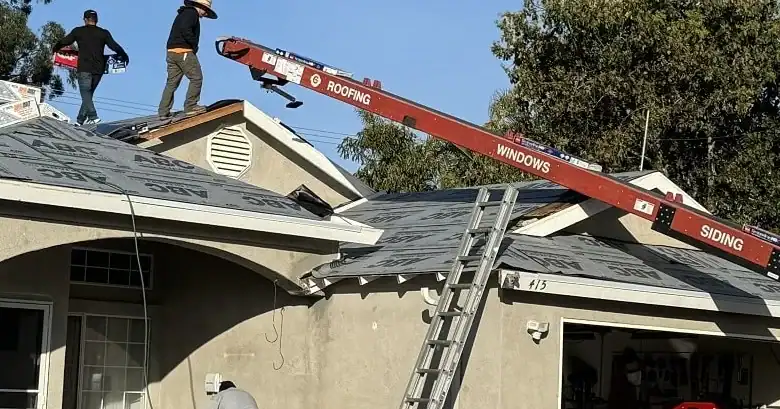
Planning Roof Installation Serving Orcutt California?
Creative Roofing stays with a roofing project from the first walk-around to the final check, serving Orcutt California and the places close by.
Reach out at 805-723-2381 to start a conversation about the roof over your head.
Before Anything Is Torn Off
Nothing gets decided until someone has walked the roof, and the notes from that visit steer every later choice. Signs of wear on top often point to a moisture problem underneath, and the findings are worth asking to see.
Sunny slopes and shaded slopes tell different stories, and both matter, and a roofer who knows the area expects exactly that.
Repair, Patch or Replace
Some roofs need a patch, some need a section redone, and some have reached the end of the road, and an honest roofer will say which one applies. A roofer who explains the reasoning in plain terms is easier to trust with the work, since the plan should make sense to the person paying for it.
Weak spots in the deck only show themselves once the old roof is off, and it is easy to overlook.
Choosing Materials for Your Home
Most houses here wear one of three coverings, and the choice shapes everything else, so structure comes first and appearance second. Color deserves more thought than it usually gets, so do not settle the question from a photograph.
When the Crew Can Work
For most of the year the weather here lets a roof go on with few interruptions, so exposed areas get covered at the end of each day. Crews often start early in summer to get ahead of the hottest hours, and the plan bends to the heat rather than the other way around.
Tear-Off and Preparation
Old roofing comes off in layers, down to the bare decking, and magnets and rakes pick up the nails that fall. Soft or split sheathing is cut out and new panels are fastened down, so this is not the place to save time.
Protection Under the Covering
The first layer laid over the deck is a barrier against moisture, and metal edging is set at the eaves and rakes before the covering. Drying in gives the crew a margin against surprise weather, and that is worth keeping in mind.
Small Metal Pieces, Large Consequences
Flashing is the thin metal that keeps water out where the roof meets something else, so fresh metal is standard practice among careful crews. The seal around a vent pipe rarely lasts as long as the surface around it, and a little care goes a long way.
Intake and Exhaust
Heat collects in the space beneath the roof deck unless it has somewhere to go, and a proper system draws air in low and sends it out high. More vents are not always better, because intake and exhaust have to be balanced, and a roofer should be able to describe it simply.
The Last Day on Site
The job is not over until the yard looks like a yard again, and that is part of the work, not an extra. Looking at the ridge, the valleys and the flashing with the roofer present is time well spent, and it only takes a few minutes.
The Paperwork Side of a Roof
Municipal offices have their own expectations for roof work, and a little care goes a long way. Fire safety rules in some neighborhoods affect which coverings are allowed, and the proposal should reflect them. A clear proposal lists what will be removed, what will be installed and what happens if the deck needs work, and it is easy to overlook.
Looking After Your Property During the Work
The ground around a house takes a beating during a roof project, and it is reasonable to ask how this will be done. Cars parked in the driveway can be struck by falling nails or pieces of shingle, and a short talk the evening before covers the details. Attic contents are best covered or moved before the work starts, and a little care goes a long way.
What the Household Should Expect
Timing depends on the size of the roof, the complexity of the layout and the covering chosen, so ask for the expected start and finish up front. Informing nearby households is a courtesy that pays off, and early starts mean early noise. Working from home during a roof job is possible, though not always pleasant, and a plan for the loud days makes them easier.
What to Ask Every Roofer
Ask how the roof will be ventilated and how the flashing will be handled, and write the answers down. The product line matters as much as the type of covering, and it should be written on the proposal. A change in scope should be written down and approved before the work continues, and settle it before the first day.
Maintenance After the Job
Even a new roof benefits from an occasional look from the ground, so put it on the calendar like any other chore. Trim branches that touch or hang over the roof, and that is worth keeping in mind. Call a roofer after a major wind event or if you see a stain on a ceiling, and it pays to think it through.
When to Schedule the Work
Booking early in the dry season leaves time to compare more than one proposal, and calling in spring avoids the rush. Late summer is hot but dependable, and crews are usually busy, and a good roofer will explain the trade-offs.
Roof Work and Your Attic
Insulation in the attic that is compressed, wet or missing should be noted, since a new roof is a good time to fix the whole assembly, and attic problems are cheaper to deal with during a re-roof.
Talk to Us About Your Roof
Sorting out Roof Installation in Orcutt California is easier with someone who can look at the house, with 805-723-2381 ready whenever you are. Every roof is different, so every conversation starts from the house itself, and the roof will tell the story once someone looks. The sooner the roof is looked at, the more choices you tend to have, and the next step becomes obvious.
Verified

Verified
Verified
Verified
Verified






















