
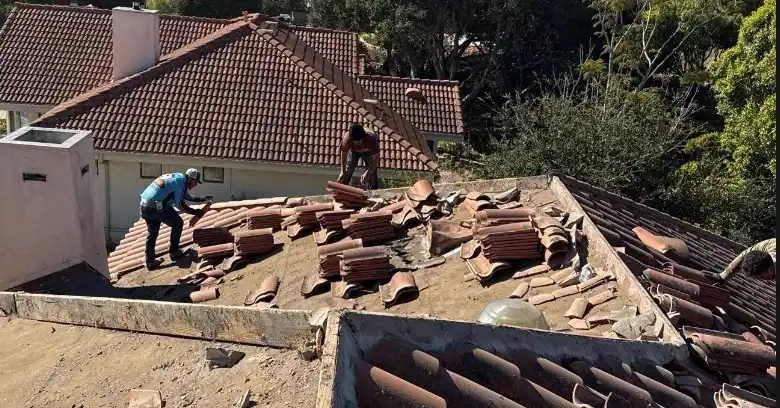
Considering Tile Roofers Throughout Orcutt California?
Creative Roofing works with clay and concrete roofing units, from a single cracked piece to a full re-lay, from Orcutt California out to the surrounding area.
Call 805-723-2381 and describe the roof and what you are seeing.
A Heavy Covering With a Long History
Clay and concrete units are individual pieces hung on a roof, overlapping like fish scales to shed water, and the overlap lets water run off quickly. Both materials resist fire, which has made them popular where wildfire is a concern, and the look varies enormously.
Weight, Framing and What the House Can Carry
The weight of the roof is the first question to settle before changing from lighter material, and a little care goes a long way. Replacing a lighter covering with a heavier one without checking the structure is a serious mistake, and the details are worth a closer look.
The Hidden Layer That Does the Work
Beneath the visible surface lies a waterproof membrane that does the hard work, so even a good surface can hide a tired layer. Sun and heat trapped under the units bake the underlayment for years, until it dries, cracks and fails, and that is worth keeping in mind.
Sun, Heat and Dry Summers
The heavy mass of the pieces absorbs heat during the day and releases it slowly at night, so the look holds up. Concrete may chalk or fade after long exposure, and a clean surface may need a sealer or fresh paint, and a roofer can tell the difference.
Cracks, Slips and Broken Pieces
A piece cracks when someone steps on the wrong spot, and many are broken by workers on the roof for other reasons, so a close inspection from the roof is the only reliable method. A short inspection after any work on the roof catches damage early, and a good roofer will always carry a supply.
Where Pieces Meet Walls and Each Other
Every junction on the roof is a place where craft decides the outcome, and metal valleys should be replaced during a re-lay. The cap line at the top of the roof is one of its most exposed areas, and the repair is far less costly than water damage.
Seasonal Gusts and Embers
Nails, clips and foam adhesive are the common ways to secure units to the roof, and edges and ridges deserve the most attention. A tight installation with proper closures resists embers better than a loose one, and the details are worth a closer look.
Matching the Work to the Condition
The pieces on an old roof may be fine for many more seasons even when the underlayment has given out, so ask for an assessment of the underlayment. Replacing the covering gives the chance to upgrade the structure, the ventilation and the details, and the new material can be a different type.
Ridge Bedding and Edge Details
Cement bedding has been the traditional method for capping a ridge, but it is rigid and breaks as the roof flexes with temperature, and be wary of mortar alone on a ridge. Replacing these strips during a re-lay is inexpensive, and it improves both fire resistance and cleanliness, and a good roofer checks them without being asked.
Dirt, Lichen and Cosmetic Wear
Surface growth tends to be slower in dry summers, though shaded areas may still collect some, and a sealer can slow the return of stains. Pressure washers can strip the coating from concrete units and force water under the overlaps, so they are best avoided or used with great care, and the roof will look and perform better.
Felt, Synthetic and Self-Adhering Options
High-temperature rated products suit the hot conditions found beneath dark units on a sunny slope, and a thoughtful answer is a good sign. Self-adhering membrane is often used in valleys, around penetrations and along the eaves, where leaks are most likely to begin, and it adds only modestly to the cost.
Rooftop Additions on a Roof of Many Pieces
The best time to add rooftop equipment is when the roof is being re-laid, because the openings can be built in properly, and a little care goes a long way. Telling every visitor about the fragility of the surface prevents a surprising amount of damage, and the details are worth a closer look. Valleys and low points on a roof of this kind carry the heaviest flow in a downpour, and the units along their edges are cut to fit and sealed with care, and a small repair now prevents a leak later.
Picking the Right Unit for the House
Between the two, concrete is usually the more economical, while clay is prized for its authentic look and its long record of service, and the better choice depends on the house and the budget. Barrel tiles are laid in alternating channels and caps, while interlocking units are single pieces that lock together along their edges, and it pays to think it through.
Questions Worth Asking
Look for details on the underlayment type, the valley metal and the ridge system, and a little care goes a long way. Ask how the crew will handle the pieces, where they will be stored and how breakage will be managed, and a confident contractor will welcome them.
Stages of a Careful Re-Lay
Work in stages keeps the house covered at the end of every day, so that a sudden rain does not find an open roof, so a re-lay is slower than a shingle job.
Seasonal Readiness for a Tile Roof
Trimming branches back from the roof and keeping a clear margin around the house reduces the risk to the roof and the building, and repair broken pieces before the winds arrive.
Notes That Help the Next Owner
After a re-lay or a repair, keep the photographs, the proposal and a few spare units stored somewhere safe, because color and profile matching gets harder with time, and store them with the house papers.
Start the Conversation
People researching Tile Roofers in Orcutt California are welcome to call with questions, and the number is 805-723-2381. Whether the roof is leaking now or you are planning ahead, an early conversation keeps your options open, and the roof will tell the story once someone looks.
Verified

Verified
Verified
Verified
Verified






















