
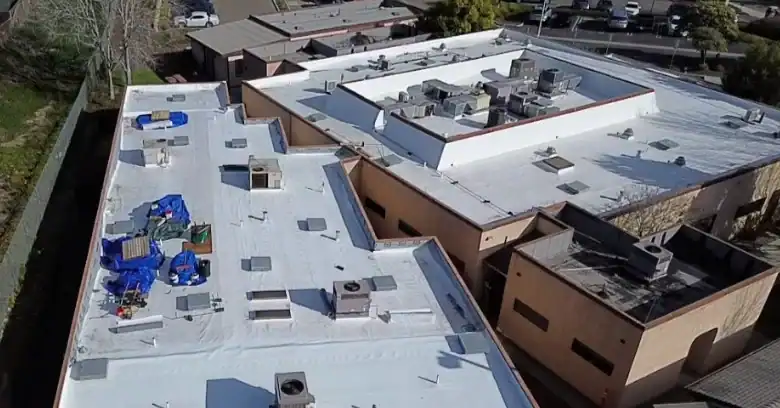
Weighing TPO Membrane Roof Services for a Building in Orcutt California?
Creative Roofing installs membranes, coatings and built-up layers on roofs that barely shed water on their own, throughout Orcutt California and the neighboring communities.
Phone 805-723-2381 and we will explain the options for a level roof.
A Roof With Almost No Slope
Where a pitched roof sheds rain in seconds, a level roof holds it for hours or days, and the materials and details are chosen for it. Because water stays on the surface, small flaws that a pitched roof would forgive become leaks on a flat one, so it pays to hire people who work on flat roofs regularly.
Types of Flat Roofing
White single-ply membranes reflect sunlight and help keep the building cooler, and the quality of the welds is the main concern. Black EPDM absorbs heat, while a white version reflects more of the sun, and the details are worth a closer look. Built-up roofing, often called BUR, layers hot or cold asphalt with reinforcing fabric and finishes with gravel or a cap sheet, so the structure has to carry it.
Following the Water to Its Source
Most flat roof leaks start at a detail rather than in the middle of the roof, and the field is checked last. Where a flat roof meets a wall, the membrane must turn up and be sealed and capped with flashing, and the work is simple for a roofer.
When Water Will Not Leave
Ponding is the condition of standing water on a roof, and it accelerates wear on any membrane, so check drains before the rains begin. Adding drains or enlarging scuppers helps when the old ones were undersized, and the improvement is permanent.
Sunshine, Heat and Aging
Heat makes a membrane expand during the day and shrink at night, and sunlight is the main cause of aging. Liquid coatings are rolled or sprayed onto a sound roof to form a continuous reflective skin, and that is worth keeping in mind.
Anything That Pokes Through or Sits on Top
Boots, pitch pockets and flashing collars around pipes must be sound and sealed, and it pays to think it through. Roof-mounted air conditioners and other equipment bring service people who walk on the membrane, and a little care goes a long way.
Matching the Work to the Roof
Targeted repairs buy time and protect the interior while a bigger plan is made, and the details are worth a closer look. When the surface is simply worn, a coating or an overlay can refresh it without a full tear-off, and an honest answer starts with a survey. Removing the old layers lets the deck be inspected and any damaged wood replaced, and it should be planned rather than rushed.
Level Roofs at Home
Many homes combine a pitched main roof with flat sections at the back or the sides, and the two meet in a joint that needs careful flashing, and the repair needs a roofer who works with membranes. A bead of caulk across that joint might hold for a season, but a proper counterflashing is the lasting answer, and a little care goes a long way. A deck surface over a roof has to be lifted to repair the layer beneath, which makes prevention far cheaper than correction, and the details should be planned with the whole project.
Keeping Rooms Cool Below a Flat Surface
Rooms beneath a flat roof often feel warmest in late afternoon, when the surface has soaked up a full day of sun, and it is easy to overlook. Replacing only the saturated sections can restore performance while leaving the dry parts in place, so ask whether a survey is part of the process.
Keeping a Flat Roof in Shape Through the Year
The best time to look at a flat roof is at the end of the dry season, when leaves and debris have piled up and the rains are about to test every drain, so make it a fixed date on the calendar. After a heavy storm or a spell of high wind, a quick look from a ladder can show whether anything has shifted, lifted or collected on the surface, and call early rather than late.
Edges Take the Brunt
Gusts lift a flat roof from its edges and corners, where the pressure is highest, and a membrane that is not firmly attached there can peel back like the lid of a can, so ask how the edges will be attached. A ballasted roof needs a structure strong enough to carry the added load, which is a point to confirm before choosing the system, and the gravel does a great deal of quiet work. A careful roofer walks the roof beforehand and counts every penetration, then includes them all in the proposal, and a thorough walk-through prevents them.
Openings That Need Their Own Waterproofing
Replacing a worn skylight and its curb flashing together with the roof is far cheaper than doing the two jobs separately, and expect specific answers. Gathering the pipes and conduits into fewer penetrations reduces the number of places where leaks can begin, and every opening is one more detail to watch. Leaves and trash that collect around a drain strainer can cause the water level to rise until it overflows into the building, and a blocked outlet loads a roof beyond its design.
Reading Competing Bids
Look for the manufacturer system and the type of seam, whether welded, glued or taped, and it lets you compare two bids fairly. Ask how the crew will test the seams, how the old roof will be disposed of and how the interior will be protected, and notice who answers plainly.
Preparing the Property for a Membrane Job
Workers on a low-slope roof often arrive early, because the surface heats up quickly and some products behave better in the cool of the morning, so ask how the schedule will work.
Short Answers About Low-Slope Roofing
A roof with no visible slope is not necessarily failing, since most are designed with a gentle fall toward the drains, and an honest opinion is the goal.
Talk to Us About Your Flat Roof
A conversation about TPO Membrane Roof Services in Orcutt California usually starts with the type and age of the roof, with 805-723-2381 ready whenever you want to talk. Calling before a problem becomes urgent makes it easier to compare options and schedules, and the roof will tell the story once someone looks.
Verified

Verified
Verified
Verified
Verified