
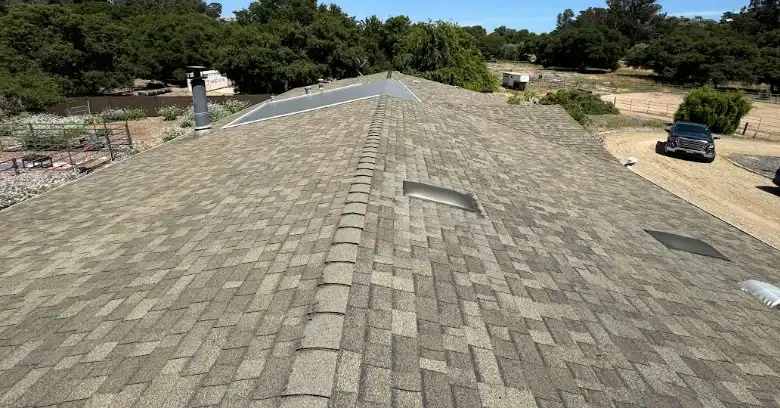
Ready for Architectural Shingle Roof Services Close to Sacramento California?
Creative Roofing lays asphalt, architectural and designer shingles over carefully prepared decks, throughout Sacramento California and the neighboring communities.
Call 805-723-2381 and ask about a shingle roof for your house.
The Anatomy of an Asphalt Shingle
The common residential shingle starts as a reinforcing mat, which is coated with asphalt and then surfaced with mineral granules, and each part has a job to do. Without a surface of mineral granules, the asphalt beneath would dry and crack in a short time, so a handful of grit in a downspout tells a story.
Shingle Grades Explained
Traditional three-tab shingles are a single flat layer cut into three tabs, and they are the lightest and plainest option, and fewer new roofs use it today. Architectural shingles are made of two or more laminated layers that give the roof depth and shadow, and the thicker body stands up better to sun. Designer shingles are heavier and carefully styled to resemble natural slate or cedar, and a sample on site shows the difference clearly.
Heat Is the Slow Enemy
Months of direct sunshine take a toll that the eye picks up slowly, and the shaded side tells a different story. A shingle that has begun to curl no longer lies flat against the roof, and each one is a place a leak can start.
Light Versus Dark
The color of a roof affects both its appearance and its temperature, and a sample held up outdoors shows the shade truthfully. Some manufacturers offer cool-roof shingles with special granules that reflect more infrared light, and local rules sometimes encourage them.
The Craft Behind a Good Install
Fastening is the quiet detail that separates a durable roof from a poor one, and check that they are driven flush. Offsetting the seams from row to row keeps leaks from lining up, and a straight line of shingles is a sign of care. Ridge caps finish the roof where two slopes meet and shed water over the crest, and the ventilation opening below the cap should stay clear.
Holding Down Under Pressure
The adhesive bond is what keeps tabs flat against the roof in a strong wind, so the two work together. Strong seasonal winds can lift tabs that have lost their seal and tear them off the roof, and the details are worth a closer look.
Keeping the Attic Breathing
Poor ventilation is one of the quietest causes of early shingle failure, so check that the soffit openings are not blocked by insulation. Blocking the soffit vents with insulation is a common mistake that undermines the whole system, and a roofer can assess the layout in a short visit.
Valleys, Walls and Pipes
The underlayment is the water-resistant layer under the shingles that catches whatever gets past the surface, and the choice affects how the roof performs. Chimneys, walls and skylights need step flashing and counterflashing worked into the shingle courses, and these details cause most leaks on shingle roofs.
Signs of Wear and Choosing Repair or Replacement
A roof that sheds grit, lifts at the edges and shows dark patches is reaching the end of its life, and one sign alone may not mean much. Spot repairs are a good choice when most of the roof still has plenty of life left, and it is easy to overlook. A roof that is worn out everywhere will keep leaking in new places however many patches it gets, and choose the new shingles with care.
Tear-Off, Layers and the Deck Beneath
Down to bare wood is how a careful crew starts, because new shingles are only as sound as the surface they are nailed to, and it pays to think it through. Laying new shingles over old ones is sometimes allowed, but it hides the deck and adds weight to the structure, and the savings are usually smaller than they seem. Rotted boards and delaminated plywood are usually found around leaks, valleys and plumbing vents, so ask how surprises will be handled.
What the Site Should Look Like at the End
Tarps along the walls, plywood over delicate plantings and a bin positioned below the edge keep the mess contained, and a little preparation prevents most complaints. A professional crew checks the ground more than once, including the gutters, where granules and nails often collect, and the work is not finished until the cleanup is. Checking the gutters after the first big rain is a good habit, and it takes only a few minutes, and it costs little to keep them clear.
Planning Around Rain and Heat
Timing a project well means picking a stretch of dry days and leaving some room for delays, and flexibility makes scheduling easier. Shade, water and early starts are the usual ways of coping with the heat on a dark roof, and a rushed job in extreme heat is a poor bargain.
Working Around Things That Share the Roof
Openings in a roof have a real effect on the quality and cost of a shingle project, and it is easy to overlook. Ideally the roof is renewed before panels are installed, so that the new system is not removed again within a few seasons, so ask both contractors how they would proceed.
Matching Shingles After a Repair
A roofer can often borrow shingles from a hidden slope or the back of the house to repair a more visible area, which gives the best match, and a small color difference is not a defect.
Where Shingles End and Gutters Begin
A drip edge along the eave and the rake guides water into the gutter and keeps it from running behind the fascia, where it would rot the wood, and fixing it now costs less than later.
Apples to Apples
A proposal that only says new shingles leaves out the details that matter, and a thorough contractor will be happy to explain. Ask how many layers of old roofing will be removed and how the deck will be inspected, so take notes during the conversation.
Ready to Compare Options
A conversation about Architectural Shingle Roof Services in Sacramento California usually starts with the age of the current roof, and 805-723-2381 reaches someone who can help. Even a quick call can clear up questions about shingle grades, colors and timing, and the roof will tell the story once someone looks.
Verified

Verified
Verified
Verified
Verified






















