
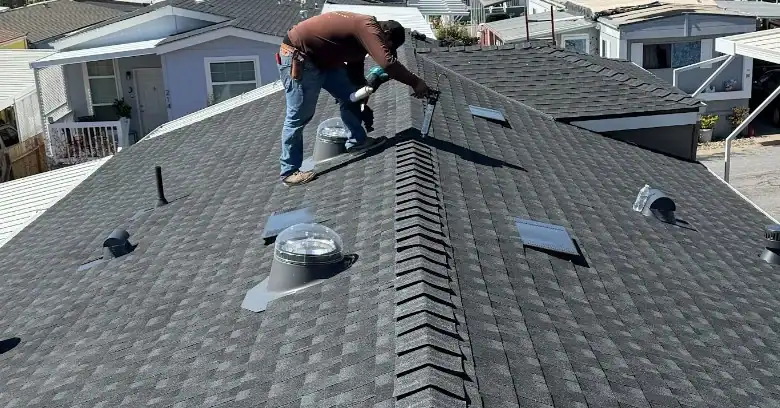
Ready for Asphalt Shingle Roofers Close to Sacramento California?
Creative Roofing handles shingle roofing from the first nail to the last ridge cap, from Sacramento California out to the surrounding area.
Reach us at 805-723-2381 and we will go over what a shingle roof involves.
The Anatomy of an Asphalt Shingle
The common residential shingle starts as a reinforcing mat, which is coated with asphalt and then surfaced with mineral granules, and that is worth keeping in mind. Without a surface of mineral granules, the asphalt beneath would dry and crack in a short time, and bare patches show up as dark spots.
Shingle Grades Explained
The basic strip shingle is a simple product with a simple appearance, and fewer new roofs use it today. The extra layer adds weight and strength, and the cut pattern breaks up the lines, so there is something for most houses. Designer shingles are heavier and carefully styled to resemble natural slate or cedar, and the framing should be checked before choosing the heaviest types.
Strong Sun on Asphalt
Months of direct sunshine take a toll that the eye picks up slowly, and the difference shows how much the sun contributes. Blisters appear when trapped moisture or heat pushes up the surface, and it pays to think it through.
Picking a Shade That Works in the Sun
Shingles in dark shades absorb more heat, and they can run noticeably hotter on a summer afternoon, so consider how the house sits in the sun. A reflective product can ease the burden on air conditioning, and the details are worth a closer look.
Nails, Courses and Starter Strips
The number and position of nails are set by the manufacturer for a reason, so ask how many nails go into each shingle. A starter strip along the eave and the rake gives the first course a sealed edge and extra grip, and crooked rows are a warning. The cap shingles on a ridge take extra abuse from sun and wind, and replacing a ridge is simple when done in time.
Holding Down Under Pressure
Heat from the sun is what finishes the job on a new roof, and a little care goes a long way. Edges and ridges are where wind does the most damage, so a loose shingle should not wait for the next storm.
Air Movement Under the Deck
A hot attic cooks the shingles from underneath, and the damage adds to what the sun does on top, and the plan should be part of the proposal. More vents is not better, and mixing types can short-circuit the flow, and avoid anyone who ignores the question.
Valleys, Walls and Pipes
Felt paper or synthetic sheets cover the deck and give a second line of defense, and it matters most when the roof is open to weather. Valley flashing has to be formed correctly and sealed well, or water finds a way in, and replacing flashing during a re-roof is standard practice.
Reading the Roof
A roof that sheds grit, lifts at the edges and shows dark patches is reaching the end of its life, so take the whole picture into account. Spot repairs are a good choice when most of the roof still has plenty of life left, and the savings can be substantial. Replacement is the sensible answer once the field of shingles has lost its protective surface, and a full replacement gives a fresh start.
What Lies Under the Existing Roof
Removing every old layer is the usual starting point, since it exposes the deck and shows whether anything underneath needs repair, and it pays to think it through. Laying new shingles over old ones is sometimes allowed, but it hides the deck and adds weight to the structure, and the savings are usually smaller than they seem. Agreeing on how replacement boards are measured and charged prevents a dispute halfway through the job, and good communication keeps everyone calm.
What the Site Should Look Like at the End
Tarps along the walls, plywood over delicate plantings and a bin positioned below the edge keep the mess contained, so ask how the yard will be protected. Tires and bare feet find stray nails more often than anyone expects, so a thorough pickup at the end is essential, and it is reasonable to inspect it together. Gutters should be cleared of granules and debris once the new roof is on, since the first rains will wash any leftovers into the downspouts, so make it part of the routine.
When to Schedule a New Roof
A roof installed in warm weather bonds sooner than one finished in cool, damp conditions, and that early bond helps in wind, and flexibility makes scheduling easier. Crews adjust to the heat by working early and finishing before the worst of the afternoon, which protects the material and the people, and a rushed job in extreme heat is a poor bargain.
Coordinating With Other Trades
Roofers work around fixed obstacles all the time, but each one adds time and adds a place where water might enter, and a thorough roofer will count them. Ideally the roof is renewed before panels are installed, so that the new system is not removed again within a few seasons, and a little planning saves a lot of expense.
Making a Repair Look Right
Older shingles lose color and granules in the sun, so a few fresh ones will stand out until the surrounding roof catches up, and it pays to think it through.
Gutters, Drip Edge and the Roofline
A drip edge along the eave and the rake guides water into the gutter and keeps it from running behind the fascia, where it would rot the wood, and fixing it now costs less than later.
What to Look for in Writing
A proposal that only says new shingles leaves out the details that matter, and read them slowly. Ask about the schedule and how the roof will be covered if rain is forecast, so take notes during the conversation.
Next Steps for Your Roof
Homeowners weighing Asphalt Shingle Roofers in Sacramento California can begin by describing the house and the look they want, so dial 805-723-2381 when it suits you. Calling before a problem becomes urgent makes it easier to compare materials and schedules, and the roof will tell the story once someone looks.
Verified

Verified
Verified
Verified
Verified






















