
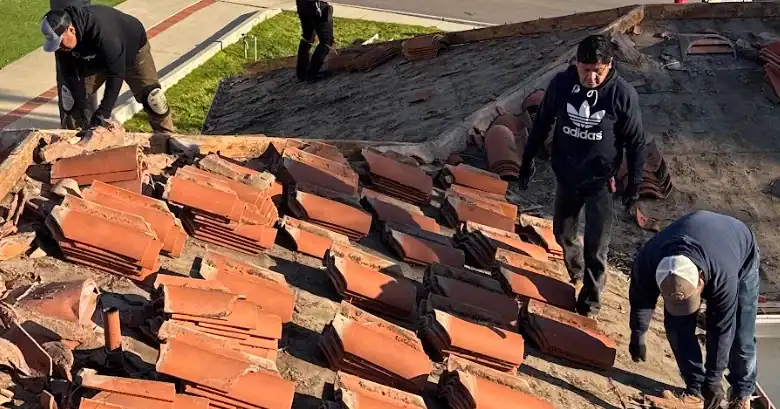
Ready for Clay Tile Roofer Services Around Sacramento California?
Creative Roofing knows how to walk a fragile surface, find the broken piece and replace it cleanly, for homes in Sacramento California and the towns around it.
Phone 805-723-2381 and we will explain what is involved.
What Makes a Roof Out of Fired Clay or Molded Concrete Different
Clay and concrete units are individual pieces hung on a roof, overlapping like fish scales to shed water, and the overlap lets water run off quickly. Clay is formed and fired in a kiln, which gives it a rich natural color that does not fade, and the look varies enormously.
Weight, Framing and What the House Can Carry
The weight of the roof is the first question to settle before changing from lighter material, so a visual check is where the process begins. Replacing a lighter covering with a heavier one without checking the structure is a serious mistake, and the details are worth a closer look.
Why Leaks Start Below the Surface
Beneath the visible surface lies a waterproof membrane that does the hard work, so even a good surface can hide a tired layer. A roof can look perfect from the street and be failing underneath, so ask what product will go under the units.
Dry Climate, Durable Roof
Clay and concrete handle strong sun far better than lighter coverings, which is a large part of their appeal here, and it pays to think it through. Efflorescence, a white powdery bloom, can show on concrete units and is mostly cosmetic, so ask before assuming the roof is failing.
Walking on a Fragile Roof
Falling branches and windblown debris can also crack pieces in a storm, and waiting makes the repair more expensive. Anyone who walks a roof of this kind needs to know where to step, because the wrong spot breaks the piece, and the cost of a few replacements is small.
Edges and Intersections
Every junction on the roof is a place where craft decides the outcome, and a hurried job shows up in the first heavy rain. Ridge and hip pieces are bedded in mortar or fastened with mechanical systems, and the old mortar often fails before the roof does, and it pays to think it through.
Seasonal Gusts and Embers
Nails, clips and foam adhesive are the common ways to secure units to the roof, and local rules in windy areas may require specific fastening. Clay and concrete are noncombustible, which is a strong advantage in a region with wildfire seasons, and local rules may set requirements for roof assemblies.
Options for a Tired Roof
A re-lay means lifting the units, replacing the underlayment and flashing, and setting the pieces back in place, and the savings from a re-lay can be considerable. Replacing the whole roof is the right call when the pieces themselves are failing, the framing is damaged or the style no longer suits the house, and a good roofer will lay them out plainly.
Adhesives, Clips and Mortar
Foam adhesives are widely used to secure units, particularly in areas where wind is a concern, because they bond quickly and resist uplift, and the best answer is specific to your roof. Eave closures and bird stops fill the gap beneath the lowest course, keeping out birds, rodents, leaves and windblown embers, and a good roofer checks them without being asked.
Washing, Sealing and Surface Care
A gentle low-pressure wash can restore the appearance of a roof, but harsh pressure damages the surface and loosens the pieces, and a clean roof looks years younger. Soft washing with a mild solution and a gentle rinse removes growth without harming the surface, and the roof will look and perform better.
Felt, Synthetic and Self-Adhering Options
Basic and premium underlayment differ little in cost when set against the cost of the roof, and that is worth keeping in mind. A sticky rubberized sheet seals around fasteners and clings to the deck, providing waterproofing even if the surface layer is breached, and the extra layer is inexpensive protection.
Penetrations Through Fragile Surfaces
Mounting an array on a roof of this type means lifting or cutting units around every bracket and sealing the opening beneath, so coordinate the roofer with any other trade. Satellite dishes, antennas and holiday lights are small additions that can break units if the installer is careless or the fasteners are driven in the wrong place, and a short sign near the hatch helps. Valleys and low points on a roof of this kind carry the heaviest flow in a downpour, and the units along their edges are cut to fit and sealed with care, so make valleys the first stop on any check.
Two Materials, Two Personalities
Cast from cement and sand, concrete units take their color from pigment in the mix or from a coating applied to the surface, and that is worth keeping in mind. Matching the profile to the style of the house is the first design decision, and it affects the cost and the installation method, so hold them against the house.
Comparing Tile Roofing Proposals
A proposal that only says re-lay the roof does not tell you enough, and compare two bids line by line. Ask how the structure will be checked and what happens if damage is found, so do not hesitate to ask.
Stages of a Careful Re-Lay
Sorting the units as they come off lets the roofer count how many replacements will be needed and order matching pieces, and the result is a roof that looks as it did and performs like new.
Roofs of Fired Clay and Concrete in Wind and Fire Country
Trimming branches back from the roof and keeping a clear margin around the house reduces the risk to the roof and the building, and a tidy roof is a safer roof.
Keeping Track of a Long-Lived Roof
Photographs taken during the work show what lies under the units, which is a view that nobody sees again for decades, and store them with the house papers.
Tell Us What You Are Seeing
A conversation about Clay Tile Roofer Services in Sacramento California usually starts with the age and condition of the roof, and the number is 805-723-2381. Calling before a problem becomes urgent makes it easier to compare materials and schedules, and the first step is just a phone call.
Verified

Verified
Verified
Verified
Verified






















