
Thinking About Clay Tile Roofing for a Home in Sacramento California?
Creative Roofing handles the underlayment, battens and hand-shaped details that a fired or molded roof depends on, across Sacramento California and nearby.
Dial 805-723-2381 to talk through what a tile roof needs.
What Makes a Roof Out of Fired Clay or Molded Concrete Different
Fired clay and molded concrete are the two materials used for the heavy, durable coverings found across the region, and the real waterproofing sits underneath. Natural clay holds its color for a very long time, while concrete may need more attention to its finish, and the style often follows the architecture of the house.
Heavy Roofs Need a Sound Structure
Many houses built for tile are designed to carry it, while others would need reinforcement, and it should happen before materials are ordered. A house that was built for shingles may not be safe under a full load of concrete, and a careful contractor raises the issue unprompted.
What Sits Beneath the Pieces
Beneath the visible surface lies a waterproof membrane that does the hard work, and a membrane that has dried out is a common reason for leaks. Sun and heat trapped under the units bake the underlayment for years, until it dries, cracks and fails, and that is worth keeping in mind.
Dry Climate, Durable Roof
The pieces rarely wear out from sun alone, which is why a well-built roof can last so long, and that is why roofs of this kind are so common in warm regions. Concrete may chalk or fade after long exposure, and a clean surface may need a sealer or fresh paint, and it fades or washes off with time.
Why Pieces Break
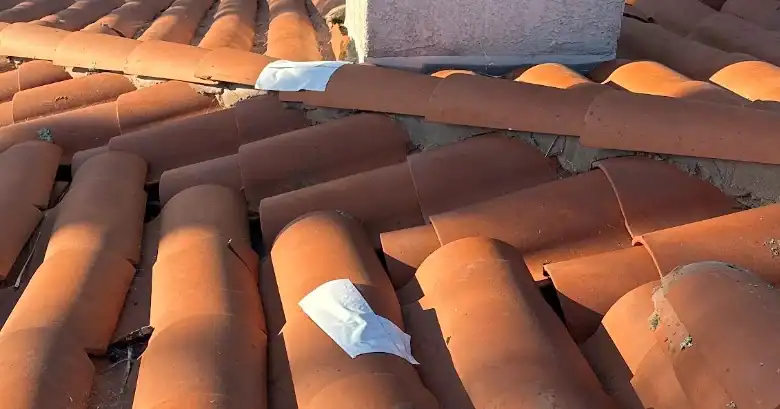
A piece cracks when someone steps on the wrong spot, and many are broken by workers on the roof for other reasons, and the damage may not show from the ground. Satellite installers, painters and gutter cleaners are common causes of damage, and a good roofer will always carry a supply.
Flashing, Valleys and Ridges
Details where the pieces meet something else are the places most likely to leak, and a hurried job shows up in the first heavy rain. Repointing or replacing the ridge bedding is a routine part of keeping the roof in good shape, so look for loose or missing cap pieces.
Seasonal Gusts and Embers
Though heavy, individual pieces must be fastened properly or they can slide or lift in strong gusts, and local rules in windy areas may require specific fastening. A tight installation with proper closures resists embers better than a loose one, so ask how gaps will be kept closed.
Options for a Tired Roof
The decision depends on how many pieces are cracked and how the underlayment is holding up, and it is easy to overlook. Replacing the covering gives the chance to upgrade the structure, the ventilation and the details, and the structure should be reviewed first.
How Units Are Bedded and Secured
Modern installations often replace mortar with clips, screws or flexible adhesive that tolerate movement without failing, and it pays to think it through. Eave closures and bird stops fill the gap beneath the lowest course, keeping out birds, rodents, leaves and windblown embers, so these small parts deserve attention.
Dirt, Lichen and Cosmetic Wear
Dust, pollen and shade can leave a roof of this type looking dull and streaked, even when it is perfectly sound, and the details are worth a closer look. Pressure washers can strip the coating from concrete units and force water under the overlaps, so they are best avoided or used with great care, and fix any breakage before the rains.
Felt, Synthetic and Self-Adhering Options
Heavy felt, synthetic sheets and self-adhering membranes are the common options, and they differ in heat resistance and tear strength, so ask which product is specified. Combining a sturdy base layer with extra protection at critical points gives a roof two lines of defense, and the extra layer is inexpensive protection.
Working Around Obstacles
Mounting an array on a roof of this type means lifting or cutting units around every bracket and sealing the opening beneath, and ask who is responsible for the seals. A roofer can place a few walkway planks or marked steps to protect the routes that others will use, and inspect after every visit. Clearing debris from valleys before the rainy season is the simplest way to protect the underlayment beneath them, and it is easy to overlook.
Choosing Between Clay and Concrete
Both materials are heavy, fire-resistant and durable, and either can give a house a distinctive character, and compare how they look in daylight. Profiles vary from the rounded barrel shape seen on Spanish and Mediterranean homes to flat slabs and interlocking designs that look like slate or shake, and a good supplier will lend a few.
How to Weigh Two Bids
A proposal that only says re-lay the roof does not tell you enough, and the details are what you are really buying. Questions about experience are reasonable, and the answers say a great deal, and a confident contractor will welcome them.
Planning a Re-Lay Step by Step
Pieces are removed row by row from the top down, and the crew takes care to avoid cracking more units than the roof already has, and the crew has to be careful with every piece.
Roofs of Fired Clay and Concrete in Wind and Fire Country
Clearing leaves and needles from valleys, gutters and the back of chimneys removes fuel that could ignite from a flying ember, and a roofer can check them quickly.
Keeping Track of a Long-Lived Roof
A small stack of leftover pieces from the original job is worth more than almost any other record, since replacements are rarely identical, and a clear record makes repairs simpler.
Tell Us What You Are Seeing
Those comparing Clay Tile Roofing in Sacramento California can reach us by phone, so dial 805-723-2381 when it suits you. There is no pressure in asking about your roof, so reach out whenever you are ready.
Verified

Verified
Verified
Verified
Verified






















