
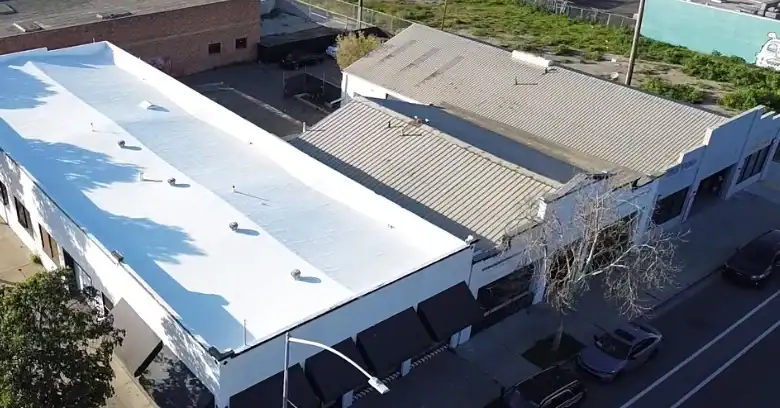
Considering Commercial Roofing Companies Near Me in Sacramento California?
Creative Roofing works on the roofs of shops, offices, warehouses and apartment buildings, wherever a building needs a sound roof around Sacramento California.
Call 805-723-2381 to arrange a visit to the property.
What Sets a Commercial Roof Apart
Low slopes make a commercial roof a different problem from a house roof, so the finer points carry the weight. Water that stays on a roof for long finds every weakness in the membrane, and the quality of those seams decides how long it lasts.
The cost of a failed roof is often higher inside the building than on top of it, and a dry building is the whole point.
What Building Roofs Are Made Of
Many newer commercial roofs use a single-ply membrane over insulation, and none of them is right for every building. Asphalt-based systems are proven and repairable but heavier than single-ply sheets, so they are still specified today. Standing seam metal panels cover warehouses, schools and retail buildings, and each option has conditions where it works best.
Where the Rain Goes
Water that sits on a membrane ages it faster than water that runs off, and a small amount of tapered insulation can fix ponding. Interior drains, edge scuppers and perimeter gutters each have their own failure points, and a little care goes a long way.
Working Around Machinery
Every unit on a roof is a potential entry point for water, so those details deserve the most attention in an inspection. Foot traffic that is not planned for wears the roof where it matters most, and everyone benefits from the protection.
Sun, Heat and Energy Use
Long dry summers expose a membrane to strong ultraviolet light month after month, and that is why white and light membranes are so common. A cooler roof surface lowers the strain on air conditioning in hot months, so ask a contractor to explain what to expect.
Looking After a Roof Between Repairs
Roof maintenance is a habit more than a project, so owners often tie visits to the seasons. Maintenance work is mostly cleaning, tightening and resealing, and the details are worth a closer look.
Choosing the Right Level of Work
Localized damage can be repaired without touching the rest of the roof, and testing is better than guessing. A roof that is wet inside cannot be coated or patched into good health, and the cost of delay grows with every storm.
Working in an Occupied Building
Roof work above an operating business needs planning so that normal activity can continue, and early notice prevents most problems. Safety at the edge of a roof is a serious matter for the crew and for people below, and a little care goes a long way.
Apples to Apples
The scope of work should list drains, flashing, curbs and any insulation to be added, and the details are worth a closer look. Ask how the work will be inspected and what documentation will be provided at the end, so make it part of the agreement.
Finding the Source of a Commercial Leak
A stain on a tile may be many feet from the opening in the membrane, and the real source is usually near equipment or an edge. Common sources include seams, drains, flashing at walls and the base of every pipe, and a good survey starts with those. A survey gives facts to base a decision on, and a clear map makes planning easier.
Perimeter Details and Attachment
Gusts act on a roof like air over an aircraft wing, trying to lift it, so careful edge details are a mark of good work. Coping and edge flashing should be firmly attached and free of gaps, and it is easy to overlook.
Parapet Walls and Their Weak Points
Where a flat roof stops against a wall, flashing has to turn the membrane up and seal it, and that is worth keeping in mind. Mortar joints and wall coatings are part of the roof story, and a good roofer will point out what belongs to the wall.
Giving an Older Roof More Time
Restoration coatings are meant for roofs that are still basically sound, so cleaning and repairing come first. A coating is not a cure for a failed roof, and the details are worth a closer look.
Large Roofs, Warehouses and Retail Centers
Warehouses and distribution buildings often have very large, uninterrupted roofs, and the roof can be done in sections. Multi-tenant buildings call for clear communication with every occupant, and the owner usually coordinates the work. Apartment and multifamily buildings add residents, balconies and shared walkways to the mix, and it pays to think it through.
Planning a Roof Budget Without Surprises
Thinking about the roof as a recurring cost makes budgeting easier, and a little care goes a long way. The cheapest proposal is not always the best value, and the details in the scope explain the difference.
Insulation Under the Membrane
The insulating layer is part of the roof system, not an afterthought, and they are protected by the membrane above. Cover boards add a firm surface that protects insulation from foot traffic and hail-free impacts, so many owners include it. Tapered insulation can create slope on a roof that is otherwise dead flat, and the drawings show where the water will go.
A Seasonal Checklist for Managers
Rooftop units should be examined for loose panels, failed seals and missing fasteners, since a stray panel can let rain into the system, and the visit takes only a short time.
Next Steps for Your Commercial Roof
Managers researching Commercial Roofing Companies Near Me in Sacramento California are welcome to call and ask questions, and 805-723-2381 reaches someone who can help. A roof that is checked before a failure is easier to plan around, so reach out whenever you are ready. A visit to the property turns a general worry into a specific plan, so call when you have a moment. Good records and photographs make those conversations easier, and that starts with a good first inspection.
Verified

Verified
Verified
Verified
Verified






















