
Weighing Flat Roofs Near Sacramento California?
Creative Roofing knows how a roof without a pitch is built, why it leaks and how to make it last, from Sacramento California out to the surrounding area.
Ring 805-723-2381 to talk through repair, coating or replacement.
How a Flat Roof Differs From a Pitched One
The gentle angle of a flat roof gives water time to find every weakness, and drainage is the central question. Careful work at the seams, edges and drains is what keeps one dry, and it pays to think it through.
A Guide to the Main Options
White single-ply membranes reflect sunlight and help keep the building cooler, and installation requires trained hands. Black EPDM absorbs heat, while a white version reflects more of the sun, and the seam tape is a point to watch over time. Layered asphalt systems have been used for generations and are valued for redundancy, and the gravel hides the condition of the membrane.
The Weak Points of a Level Roof
The open field of a membrane is usually the toughest part of the whole system, so the inspection follows a set order. Parapet caps and copings protect the top of the wall and must be sound, and a small bead of sealant in time prevents a big repair.
Standing Water Is a Warning
Water that does not drain adds weight, breeds algae and ages the surface faster, and the first storm of the season shows the problems. Angled boards under a new membrane direct water toward the drains and eliminate low spots, and the improvement is permanent.
How Heat Wears a Low-Slope Roof
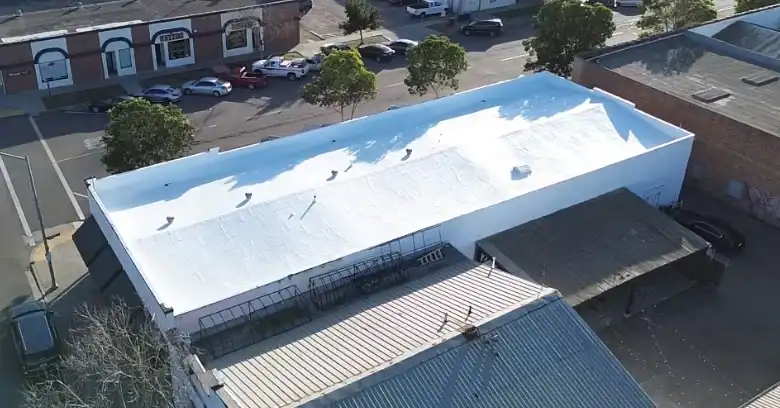
Heat makes a membrane expand during the day and shrink at night, and sunlight is the main cause of aging. Liquid coatings are rolled or sprayed onto a sound roof to form a continuous reflective skin, and the benefit depends on the existing roof.
Protecting the Surface From Wear
Skylights and hatches add edges that need careful flashing, so these spots deserve regular checks. A roof used as a patio or deck needs a protective layer or pavers, and avoid storing items on the roof.
Options for an Aging Flat Roof
Localized seams, flashings and punctures can be fixed without touching the rest of the roof, so ask to see where the water is getting in. A restoration coat is a good choice for a roof that is dry beneath and sound in the field, and wet insulation rules out a quick fix. A new roof is also a chance to improve slope, drains and edges, and ask about drainage improvements in particular.
Small Flat Roofs With Big Responsibilities
Residential low-slope roofs turn up over additions, covered patios, carports and contemporary houses designed with clean horizontal lines, and the wrong material on a flat roof will leak. A bead of caulk across that joint might hold for a season, but a proper counterflashing is the lasting answer, so look at the wall as well as the roof. Roof decks and patios built over living space need a waterproofing layer under the finished surface, and a failure there can be expensive to reach, and the details should be planned with the whole project.
What Sits Between the Roof and the Ceiling
A flat roof has little or no attic, so the layers of the roof itself have to do the work that attic insulation and ventilation do on a pitched house, so ask what insulation is part of the proposal. Water that gets into the insulation layer spreads sideways, so the damp area can be much larger than the visible stain on the ceiling, and that is often cheaper than a full tear-off.
Before the Rains and After the Storms
A check in early autumn catches clogged drains, lifted seams and cracked sealant before the first storm tests them, and the work is quick. Noting the date and the weather when a leak appears helps the roofer find the cause, and acting quickly limits the damage.
Wind, Edges and Fastening on a Level Roof
Gusts lift a flat roof from its edges and corners, where the pressure is highest, and a membrane that is not firmly attached there can peel back like the lid of a can, and repairs should not wait for the next storm. Gravel on a flat roof is not decoration, because it protects the membrane from sun and holds it in place against uplift, and the stone should be kept out of the drains. Walkways, curbs and equipment supports need to be flashed and fastened as part of the membrane, and the details on a crowded roof take real time to do properly, and write everything down.
Everything That Breaks the Surface
A curb lifts the opening above the level of standing water, which is the main reason it exists, and the membrane must climb it and be sealed at the top, and no skylight should be roofed over without a plan. Plumbing vents, conduits and exhaust ducts pass through the membrane and need boots, collars or pitch pockets that suit the material, and a tidy roof is easier to maintain. Drains and scuppers are also penetrations, and the flashing around them has to be watertight while still letting the water through quickly, and a quick look takes only a minute.
What the Paperwork Should Say
Specific wording is your best protection against disputes, and it lets you compare two bids fairly. Ask who will supervise the work and how weather delays will be handled, and trust the overall impression.
Access, Fumes and Noise
Removing items from the roof, such as furniture and planters, saves time and prevents damage on the day the work begins, so ask how the schedule will work.
Clearing Up a Few Misconceptions
A roof with no visible slope is not necessarily failing, since most are designed with a gentle fall toward the drains, and bring photographs if you have them.
Ready to Look at Options
A conversation about Flat Roofs in Sacramento California usually starts with the type and age of the roof, and 805-723-2381 reaches someone who can help. Whether the roof is leaking now or you are planning ahead, an early conversation keeps your options open, and the first step is just a phone call.
Verified

Verified
Verified
Verified
Verified






















