
Looking for Residential Roof Installation Serving Sacramento California?
Creative Roofing handles the planning, the tear-off and the cleanup of a roof job, from Sacramento California out to the surrounding area.
Ring 805-723-2381 to start a conversation about the roof over your head.
Where a Roofing Job Begins
Every roofing job starts with someone climbing up to see what is actually there, and the notes from that visit steer every later choice. A proper look covers the slopes seen from the yard and the ones that are not, and each one goes into the notes.
Months of direct sun take a steady toll on whatever covers a house, and a roofer who knows the area expects exactly that.
Deciding What the Roof Needs
Whether to fix or replace comes down to the condition of the layers beneath the surface, and the reasons should be easy to follow. Ask to see the problem areas, either in photographs or from the ladder, since the plan should make sense to the person paying for it.
Weak spots in the deck only show themselves once the old roof is off, and nobody should be surprised when it happens.
Shingle, Tile or Metal
Most houses here wear one of three coverings, and the choice shapes everything else, and the style of the neighborhood often plays a part. Color deserves more thought than it usually gets, and a full-size piece seen outdoors beats a catalog picture.
Planning for Rain and Heat
Roof work is easiest to schedule in the long dry stretch between rains, so exposed areas get covered at the end of each day. Heat affects the work as well, and finishing early keeps people and materials in better shape.
Getting to a Clean Surface
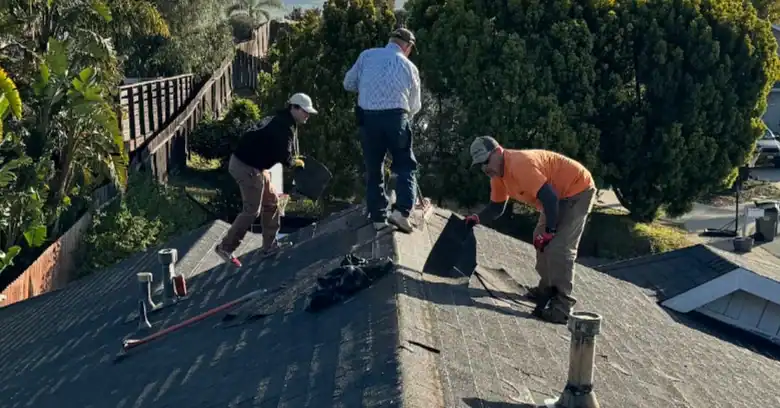
Tear-off gives the first real view of the structure under the roof, and magnets and rakes pick up the nails that fall. Repairs to the deck happen now, before anything new is installed, and it is easier to fix now than after the roof is finished.
Waterproofing Beneath the Surface
Underneath the visible covering sits a water-resistant layer that does much of the work, so self-adhering membrane goes where leaks tend to begin. Drying in gives the crew a margin against surprise weather, and the visible covering goes on from there.
Small Metal Pieces, Large Consequences
Flashing is the thin metal that keeps water out where the roof meets something else, and it pays to think it through. The seal around a vent pipe rarely lasts as long as the surface around it, so this is an easy step to ask about.
Ventilation in a Warm Climate
An attic under a hot roof can reach extreme temperatures in summer, since warm air rises on its own when it is given a path. More vents are not always better, because intake and exhaust have to be balanced, and the answer should be part of the proposal.
Leaving the Property Clean
Final cleanup means more than a quick sweep, and that is worth keeping in mind. Looking at the ridge, the valleys and the flashing with the roofer present is time well spent, and a saved record answers questions nobody has thought to ask yet.
Local Rules and Paper Trails
Replacing a roof usually involves the local building department in some way, so it is fair to ask who pulls the permit. Areas with wildfire exposure often have extra requirements for roofing materials and vents, so ask how the plan meets the rules for your street. Vague wording on a proposal is a reason to ask questions, and it is easy to overlook.
What Happens to the Yard
Roof work is hard on landscaping unless it is planned for, and that is worth keeping in mind. Children and animals should stay clear of the yard while the work is underway, and keep a path clear for deliveries. Hammering on the deck above can rattle a ceiling and drop dust into the rooms below, so it is wise to take down fragile pictures first.
What the Household Should Expect
A new roof usually takes a few days for an average house, though weather and size change that, and the details are worth a closer look. Informing nearby households is a courtesy that pays off, and it is easy to overlook. Remote workers may want a quiet spot elsewhere for a day or two, so consider a day out of the house if you can.
Questions Worth Asking Before You Agree
Ask how the roof will be ventilated and how the flashing will be handled, since confident answers come easily to people who do this daily. Ask for the materials by name and manufacturer so you can look them up, and a good roofer will be glad you asked. A change in scope should be written down and approved before the work continues, and it is better to know in advance.
Keeping a Roof in Good Shape
Checking the roof twice a year takes only a few minutes, so put it on the calendar like any other chore. Overhanging trees drop material that collects in corners and valleys, and that is worth keeping in mind. Waiting on a small problem usually makes it more expensive, and it pays to think it through.
Is There a Best Time for a New Roof
Booking early in the dry season leaves time to compare more than one proposal, and a calm decision is nearly always a better one. Late summer is hot but dependable, and crews are usually busy, so do not feel the choice is locked in.
Attic Findings That Change the Plan
Looking at the roof from inside the attic before the work begins reveals water stains, damp insulation and daylight where none should enter, and the findings can change the scope.
Talk to Us About Your Roof
Sorting out Residential Roof Installation in Sacramento California is easier with someone who can look at the house, so use 805-723-2381 to talk through the roof and the next step. Every roof is different, so every conversation starts from the house itself, and that is worth keeping in mind. The sooner the roof is looked at, the more choices you tend to have, and nobody will rush you.
Verified

Verified
Verified
Verified
Verified






















