
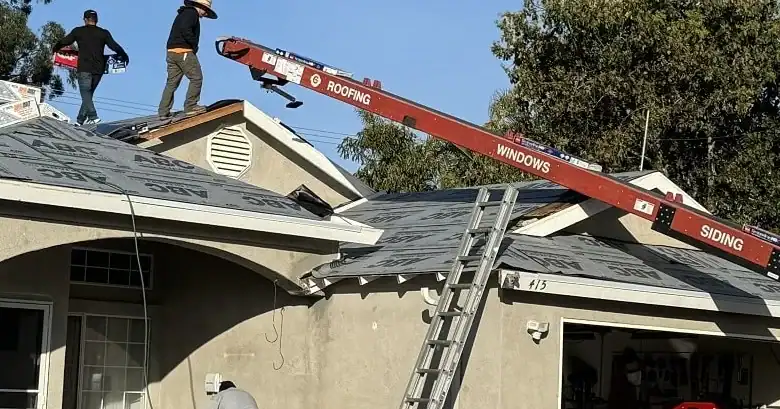
Weighing Roof Services Serving Sacramento California?
Creative Roofing takes a roofing job from the first look to the last sweep of the yard, for homes in Sacramento California and the towns around it.
Ring 805-723-2381 and tell us what has you thinking about the roof.
Day One of a Roof Project
The first visit is about gathering facts rather than picking a product, and that is worth keeping in mind. Photographs taken on that first visit become the record for everything that follows, and it pays to think it through.
Long dry summers and strong sun leave their mark on nearly every roof in California, so the wear is rarely even from one side to the next.
Setting the Scope of Work
The right answer depends on how much sound material is left on the house, and the details are worth a closer look. A roofer who explains the reasoning in plain terms is easier to trust with the work, so do not feel awkward about asking.
When the decking underneath is damaged, the scope of the job grows, and it helps to know that before the work begins.
Matching the Covering to the House
Most houses here wear one of three coverings, and the choice shapes everything else, since heavy coverings need a frame built to carry them. A roof that faces strong sun all afternoon behaves differently depending on its shade, so hold a sample against the house in daylight.
Planning for Rain and Heat
Roofing here follows the weather more than the calendar, so exposed areas get covered at the end of each day. Roof surfaces get hot enough in July to change how materials behave, and a little care goes a long way.
Removing the Old Roof
Tear-off gives the first real view of the structure under the roof, so landscaping and windows are covered before the first piece comes up. The deck is checked, mended and made flat for the next layer, since good materials laid over a weak deck do not last.
Protection Under the Covering
Beneath every roof is a membrane that catches whatever the surface lets through, and chimneys get particular care. With the barrier in place the roof can shed rain even before the covering is finished, and rows are laid from the eave upward, each lapping the last.
Flashing and the Fiddly Parts
The places where a roof is interrupted are the places most likely to leak, and reusing old flashing under a new roof often comes back to bite. Plumbing vents are among the most common sources of small leaks, and a new roof should not depend on a seal that is already tired.
Intake and Exhaust
An attic under a hot roof can reach extreme temperatures in summer, and a proper system draws air in low and sends it out high. A ventilation plan is worth a conversation before the job starts, and a roofer should be able to describe it simply.
Cleanup and the Final Walk-Through
A finished roof still leaves a yard full of scraps, nails and packaging, and covers come off the landscaping and the beds are inspected. Questions are easier to settle while the crew is still on site, and a saved record answers questions nobody has thought to ask yet.
Permits and Paperwork
Rules about reroofing differ from one city to the next, so it is fair to ask who pulls the permit. Fire safety rules in some neighborhoods affect which coverings are allowed, so ask how the plan meets the rules for your street. Vague wording on a proposal is a reason to ask questions, so keep a copy where you can find it.
What Happens to the Yard
The ground around a house takes a beating during a roof project, and a careful crew sets them before the work begins. Pets, children and cars are best kept away from the work area, and a little planning prevents most accidents. Hammering on the deck above can rattle a ceiling and drop dust into the rooms below, and it is best done the night before.
What the Household Should Expect
Timing depends on the size of the roof, the complexity of the layout and the covering chosen, and nobody can promise a date through a rain delay. A quick word with the people next door can head off complaints, and it is easy to overlook. Household routines bend a little while the work is under way, and the noise settles once the old roof is gone.
Getting Clear Before the Work Begins
Ask what will be done with the old material and how the deck will be handled, since confident answers come easily to people who do this daily. Knowing exactly what is going on the house removes a common source of disputes, and a little care goes a long way. Ask what happens if something unexpected turns up under the old roof, and keep the discussion friendly but specific.
Maintenance After the Job
Checking the roof twice a year takes only a few minutes, and the best times are before the rainy season and after the first big storm. Overhanging trees drop material that collects in corners and valleys, and it protects the investment you just made. Early attention to a leak is almost always cheaper than late attention, and it pays to think it through.
Is There a Best Time for a New Roof
Many homeowners wait until a leak appears before they think about a roof, and a calm decision is nearly always a better one. Any month can work with the right planning and a willingness to move a day, and a good roofer will explain the trade-offs.
Checking the Space Beneath the Deck
Insulation in the attic that is compressed, wet or missing should be noted, since a new roof is a good time to fix the whole assembly, and bring a flashlight if you can.
Start the Conversation
Homeowners comparing Roof Services in Sacramento California can simply pick up the phone, and the number is 805-723-2381. The size of the project changes the schedule but not the principle, and the roof will tell the story once someone looks. The decision often feels bigger before the call than it turns out to be, and that is a good place to begin.
Verified

Verified
Verified
Verified
Verified






















