
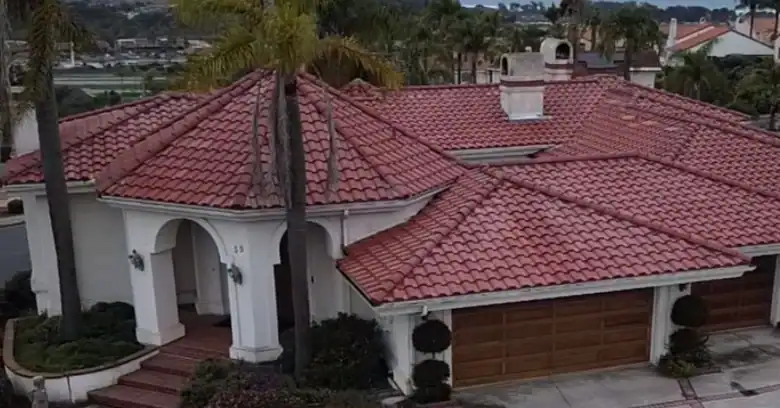
Thinking About Tile Roof Services in Sacramento California?
Creative Roofing knows how to walk a fragile surface, find the broken piece and replace it cleanly, across Sacramento California and nearby.
Reach us at 805-723-2381 and describe the roof and what you are seeing.
What Makes a Roof Out of Fired Clay or Molded Concrete Different
The surface you see is only the first line of defense on a roof like this, and the system works only when every piece is in place. Concrete units are molded from cement and sand and colored through the body or on the surface, and the style often follows the architecture of the house.
Load and Support
Heavy coverings put real stress on rafters, trusses and walls, which is why the structure is checked first, and it should happen before materials are ordered. Even a roof originally built for heavy units can lose strength over time if water has damaged the wood, and the details are worth a closer look.
The Hidden Layer That Does the Work
The membrane is out of sight, which is why it is easy to forget, so even a good surface can hide a tired layer. Sun and heat trapped under the units bake the underlayment for years, until it dries, cracks and fails, and high-temperature types are worth the small extra cost.
How Heat Behaves Under the Pieces
Clay and concrete handle strong sun far better than lighter coverings, which is a large part of their appeal here, and the color stays true for decades. Moss and lichen are less of a problem in dry summers, though shaded areas may collect some, and it fades or washes off with time.
Cracks, Slips and Broken Pieces
Falling branches and windblown debris can also crack pieces in a storm, and the damage may not show from the ground. Satellite installers, painters and gutter cleaners are common causes of damage, so ask for a check after other work is done.
Flashing, Valleys and Ridges
Metal flashing and sealant protect these joints, and both age in strong sun, so look at how the work is finished. Repointing or replacing the ridge bedding is a routine part of keeping the roof in good shape, and the repair is far less costly than water damage.
Seasonal Gusts and Embers
Though heavy, individual pieces must be fastened properly or they can slide or lift in strong gusts, and local rules in windy areas may require specific fastening. A tight installation with proper closures resists embers better than a loose one, and local rules may set requirements for roof assemblies.
Repair, Re-Lay or Replace
Many of these roofs are restored two or three times over the life of the building, and a careful inspection answers both questions. Replacing the whole roof is the right call when the pieces themselves are failing, the framing is damaged or the style no longer suits the house, and a good roofer will lay them out plainly.
Adhesives, Clips and Mortar
Older roofs of this kind used mortar to bed the ridge and hip pieces and to seal the edges, and that mortar eventually cracks and crumbles, and be wary of mortar alone on a ridge. Eave closures and bird stops fill the gap beneath the lowest course, keeping out birds, rodents, leaves and windblown embers, and a little care goes a long way.
Dirt, Lichen and Cosmetic Wear
Dust, pollen and shade can leave a roof of this type looking dull and streaked, even when it is perfectly sound, and the result can be striking. Soft washing with a mild solution and a gentle rinse removes growth without harming the surface, and the roof will look and perform better.
Specifying the Hidden Layer
Heavy felt, synthetic sheets and self-adhering membranes are the common options, and they differ in heat resistance and tear strength, and the choice should be in writing. Self-adhering membrane is often used in valleys, around penetrations and along the eaves, where leaks are most likely to begin, and it adds only modestly to the cost.
Rooftop Additions on a Roof of Many Pieces
Each penetration through the covering is a place where a unit must be cut, and cut pieces are more likely to crack later, and ask who is responsible for the seals. Telling every visitor about the fragility of the surface prevents a surprising amount of damage, and inspect after every visit. Valleys and low points on a roof of this kind carry the heaviest flow in a downpour, and the units along their edges are cut to fit and sealed with care, and the dry season is the time to do it.
Two Materials, Two Personalities
Clay units are fired at high temperature, and their color runs all the way through, so a chip or scratch does not show a different shade beneath, and that is worth keeping in mind. Barrel tiles are laid in alternating channels and caps, while interlocking units are single pieces that lock together along their edges, so hold them against the house.
What Should Be Written Down
The best contractors put the specifics in writing, and compare two bids line by line. Questions about experience are reasonable, and the answers say a great deal, and trust the tone of the conversation.
Planning a Re-Lay Step by Step
Work in stages keeps the house covered at the end of every day, so that a sudden rain does not find an open roof, and the crew has to be careful with every piece.
Roofs of Fired Clay and Concrete in Wind and Fire Country
Pieces that are cracked or slipped leave gaps, and in a region with wildfire season, gaps are where embers find a way into the roof, and a roofer can check them quickly.
What to Save After a Restoration
A note of the underlayment type, the flashing metal and the fastening method helps any roofer who works on the roof later, and a clear record makes repairs simpler.
Ready to Look at Options
Those comparing Tile Roof Services in Sacramento California can reach us by phone, so use 805-723-2381 to set up the next step. Planning ahead usually leads to better choices than reacting to an emergency, and we are glad to help you sort it out.
Verified

Verified
Verified
Verified
Verified






















